
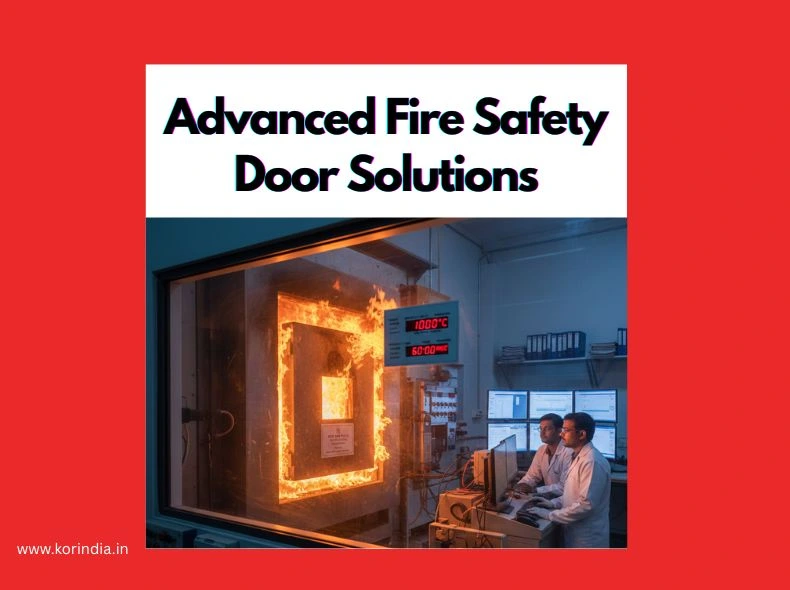
When a fire emergency strikes, every second matters—and the difference between disaster and controlled containment often comes down to a single architectural decision: the doors protecting your building. While most facility managers focus on visible fire suppression systems, they frequently overlook one of the most critical passive fire safety components: proper fire-rated door manufacturer solutions. This oversight can prove catastrophic, as standard doors provide virtually no protection against the spread of flames, toxic smoke, and dangerous temperatures that characterize fire emergencies.
A fire-rated door manufacturer specializing in advanced fire safety door solutions plays a pivotal role in building protection strategies. These specialized doors function as silent guardians, compartmentalizing fire spread, buying precious evacuation time, and safeguarding both human lives and critical infrastructure. Moreover, for building owners and facility managers, the right fire safety door solutions represent compliance with increasingly stringent building codes, insurance protection, and—most importantly—peace of mind knowing that occupants have adequate protection when emergencies occur.
This comprehensive guide explores everything you need to know about advanced fire safety door solutions, from fundamental principles to installation best practices, helping you make informed decisions about protecting your building.
Understanding Fire-Rated Door Manufacturer Standards and What Makes Advanced Fire Safety Door Solutions Effective
The Science Behind Fire Protection
A fire-rated door manufacturer doesn’t simply slap fire-resistant paint on standard doors and call it protection. Instead, these sophisticated fire safety door solutions employ multi-layered engineering principles designed specifically to resist extreme temperatures, prevent material warping, and maintain structural integrity during the most intense fire conditions.
Additionally, advanced fire safety door solutions incorporate intumescent seals—special strips installed around door edges that remain dormant at normal temperatures but expand dramatically when exposed to heat above 68°C. This expansion creates an exceptionally tight seal between the door and frame, effectively sealing gaps that could otherwise allow flames and toxic smoke to penetrate. Furthermore, smoke seals work in tandem with intumescent technology to prevent the spread of combustible gases and deadly particulates, giving occupants clearer escape routes and reducing respiratory hazard exposure.
The structural integrity of fire-rated door manufacturer products depends entirely on construction quality and material selection. Similarly, the frame itself must achieve matching fire ratings—a common oversight that undermines otherwise excellent door performance. Construction standards require that both door and frame work as unified systems, creating complete fire barriers without weak points.
Industry Standards and 2025 Compliance Requirements
For facilities across India, compliance with fire safety regulations has become non-negotiable. Therefore, understanding the standards applicable to fire-rated door manufacturer products is essential for informed procurement decisions. The Bureau of Indian Standards (BIS) established IS 3614 Part 2 as the primary testing protocol for fire doors in Indian applications, specifying requirements for both integrity and stability under extreme thermal stress.
Beyond the Indian standard, many architects and engineers specify British Standard BS 476 Part 22 or European EN 1634-1 to meet international project requirements. Moreover, organizations pursuing global certifications often require UL (Underwriters Laboratories) certification, particularly for equipment destined for international markets. Consequently, comprehensive fire-rated door manufacturer capabilities now include multi-standard testing and certification, demonstrating commitment to quality across diverse regulatory frameworks.
The National Building Code 2016 provides specific fire rating requirements based on building type, occupancy classification, and exit requirements. For instance, fire command centers require 120-minute rated doors, while standard exit corridors typically need 60-minute ratings. Meanwhile, utility shafts and non-naturally ventilated areas demand compliance with specific dimensional requirements and hardware specifications outlined in the code provisions.
Advanced Fire Safety Door Solutions: Types, Materials, and Specialized Applications
Steel Fire-Rated Door Manufacturer Products
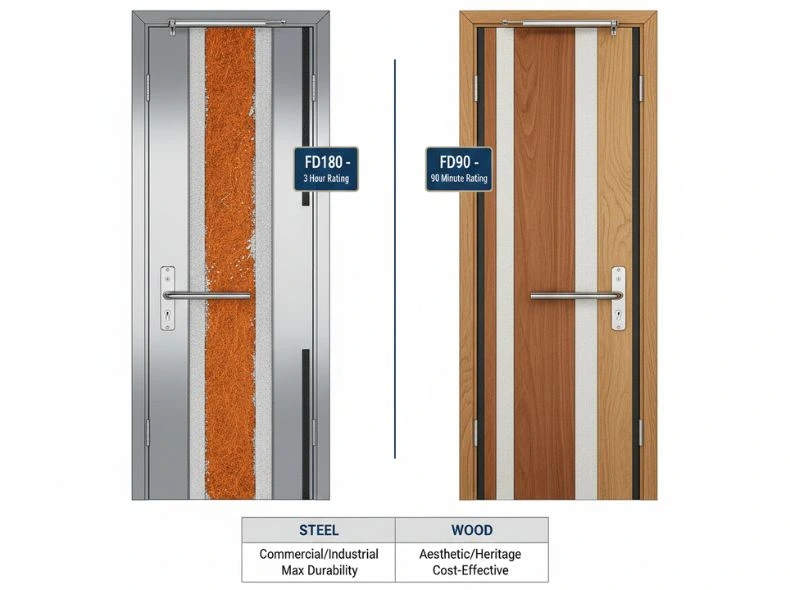
Steel stands as the premium choice among fire-rated door manufacturer offerings, particularly for high-risk commercial and industrial environments. Steel doors provide ratings extending to 240 minutes—far exceeding most building code requirements—while maintaining structural integrity under conditions that would render lesser materials unusable. The galvanized steel construction resists corrosion throughout extended service life, and the hollow core filled with high-density mineral wool or honeycomb insulation provides exceptional thermal resistance.
Additionally, steel fire-rated door manufacturer solutions offer superior security benefits beyond fire protection. The robust construction deters forced entry attempts, making steel doors ideal for facilities requiring dual security and fire safety performance. Moreover, steel’s predictable behavior under extreme heat makes testing results highly reliable, ensuring consistent performance across manufacturing batches.
Wooden Fire-Rated Door Manufacturer Solutions
Contrary to common misconceptions, properly engineered wooden fire doors from qualified fire-rated door manufacturer providers deliver excellent fire protection comparable to steel alternatives at significantly reduced costs. Solid timber cores possess predictable char rates—approximately 0.6mm per minute—allowing engineers to calculate precise fire resistance ratings based on core thickness and material density.
Furthermore, wooden doors offer aesthetic advantages that appeal to heritage building conservation projects and facilities where interior design aesthetics matter significantly. The natural appearance integrates seamlessly with existing architectural styles while providing fire safety protection equal to steel alternatives. Composite wooden doors combining solid timber with fire-resistant infill materials offer optimal balance between cost-effectiveness and performance durability.
Composite and Specialized Fire Safety Door Solutions
Modern fire-rated door manufacturer innovation has produced composite fire doors combining multiple materials for optimized performance across diverse applications. These advanced fire safety door solutions incorporate mineral wool insulation, magnesium oxide boards, gypsum core materials, and specialized intumescent expansion strips—each component selected for specific performance characteristics.
Consequently, composite doors enable customization for specialized applications. For instance, data center fire safety door solutions incorporate enhanced density core materials protecting sensitive IT equipment. Meanwhile, pharmaceutical and cleanroom facilities require specific composite configurations ensuring contamination prevention alongside fire protection. Similarly, healthcare facilities often specify doors with antimicrobial properties and flush construction facilitating rapid sanitization protocols.
Fire-Rated Sliding Door Solutions for Space-Constrained Applications
When architectural constraints limit traditional hinged door installations, advanced fire safety door solutions include top-hung sliding mechanisms providing fire protection in large openings without sacrificing functional floor space. These sophisticated fire-rated door manufacturer products employ fusible links and automatic closing mechanisms activated by thermal detection.
Moreover, sliding fire doors offer advantages for high-traffic corridors, emergency assembly areas, and large commercial spaces requiring unrestricted evacuation flow during emergencies. The top-hung design eliminates floor-level obstacles that could impede emergency movement, particularly critical for facilities serving elderly populations or individuals with mobility challenges.
The Critical Role of Fire-Rated Door Manufacturer Solutions in Building Safety Compartmentalization
Fire Compartmentation: Passive Fire Protection in Action
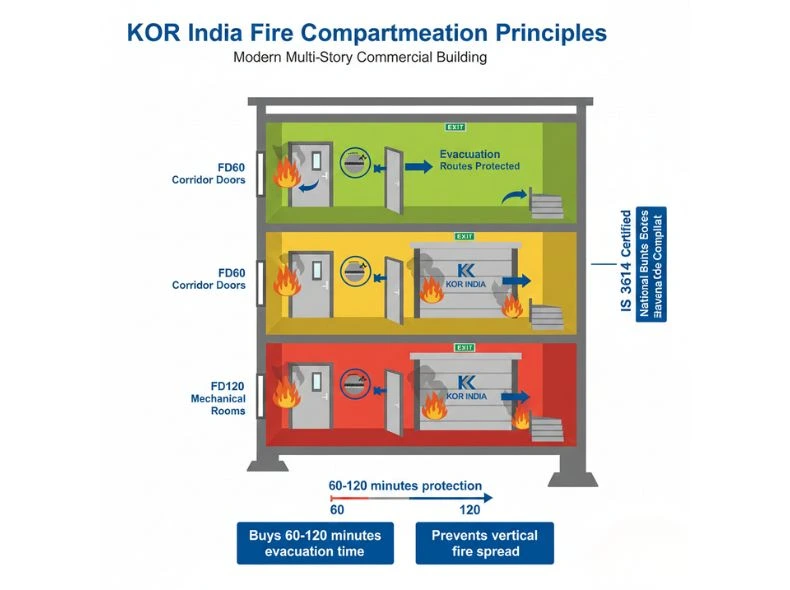
Advanced fire safety door solutions function as core components within comprehensive fire compartmentation strategies. This systematic approach divides buildings into isolated sections using fire-rated walls, floors, and specially engineered fire-rated door manufacturer products that collectively prevent fire spread beyond designated compartments.
Therefore, understanding compartmentation principles is essential for effective building fire protection. Rather than attempting to suppress fires everywhere simultaneously, compartmentation accepts that fires will occur while containing their destructive impact to limited areas. Fire-rated door manufacturer solutions enable this containment by sealing openings through fire-rated walls, preventing horizontal flame spread and smoke migration between compartments.
Additionally, effective compartmentation extends evacuation timelines dramatically. While unprotected buildings experience rapid fire spread threatening multiple floors simultaneously, properly compartmentalized facilities with advanced fire safety door solutions concentrate fires in origin areas, allowing occupants in adjacent compartments extended evacuation windows. This principle has saved countless lives across commercial buildings, hospitals, data centers, and industrial facilities.
Meeting National Building Code Requirements
The National Building Code 2016 specifies precise fire rating requirements for various building zones and occupancy types. Consequently, fire-rated door manufacturer compliance with these requirements becomes legally mandated rather than optional. Fire command centers require 120-minute rated doors with full frame assemblies meeting identical fire ratings.
Meanwhile, exit corridors in high-rise buildings demand minimum 60-minute fire ratings and specific hardware configurations ensuring reliable operation under emergency conditions. Similarly, utility shafts penetrating multiple floors require properly rated shaft doors preventing vertical fire spread through building vertical chase systems. Non-naturally ventilated areas throughout commercial facilities typically mandate 120-minute rated fire safety door solutions, recognizing increased hazard risks in these protected compartments.
Moreover, the code explicitly requires certification labels prominently displayed on fire-rated door manufacturer products, documenting compliance and providing inspectors with rapid verification capabilities. These certification markings serve dual purposes: protecting building owners through documented compliance and protecting manufacturers by clearly communicating product capabilities and limitations.
Professional Fire-Rated Door Manufacturer Installation: Why Expertise Matters
The Critical Role of Proper Installation Execution
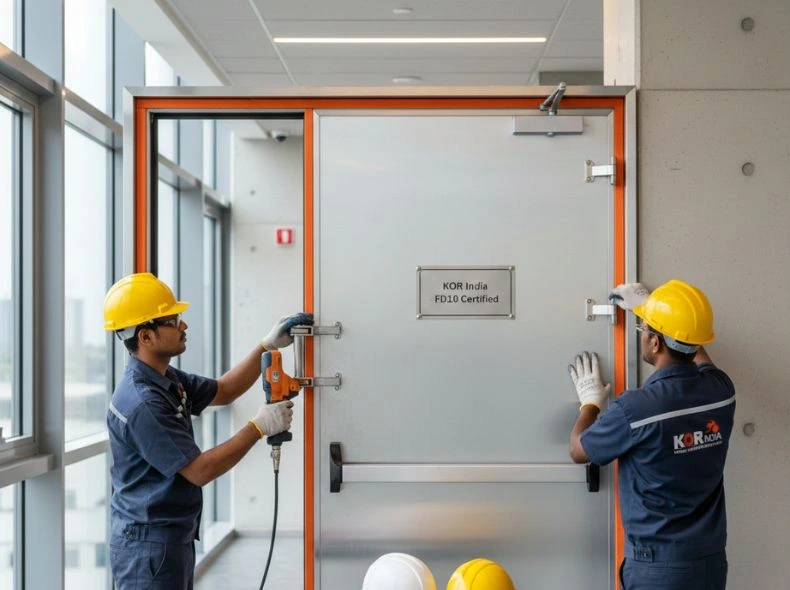
Even the most sophisticated advanced fire safety door solutions fail catastrophically if installation procedures lack precision and expertise. Fire-rated door manufacturer products demand specialized installation protocols far exceeding standard carpentry practices. Intumescent seals must be fitted with exacting precision, ensuring complete seal continuity without gaps, overlaps, or compromised seal contact with door frames and doors.
Furthermore, fire-rated hardware installation requires verification that all components—hinges, closers, locks, and latch mechanisms—possess matching fire ratings documented through test certificates. Additionally, the frame assembly must be perfectly square and plumb, with shims positioned to maintain uniform gaps throughout door operation. Consequently, professional installation by certified technicians ensures these technical requirements receive proper attention.
The installation process itself typically requires 2-3 hours of specialized labor from experienced fire-rated door manufacturer technicians or certified contractors. Meanwhile, DIY installation attempts by untrained personnel frequently result in incomplete intumescent seal application, improper frame preparation, and hardware incompatibilities that completely invalidate fire protection performance. Therefore, professional installation represents essential investment in reliable fire safety door solutions.
Building Inspector Verification and Documentation
After installation, professional fire-rated door manufacturer installation includes comprehensive documentation and building inspector verification. This process confirms that all components meet specifications, hardware functions smoothly throughout full operating range, and self-closing mechanisms operate reliably under both normal and emergency conditions.
Moreover, this verification creates essential documentation protecting building owners legally and financially. Insurance companies frequently require proof of professional installation and inspector verification before covering fire-related losses. Simultaneously, this documentation demonstrates regulatory compliance should building inspections or fire authority audits occur.
Applications of Advanced Fire Safety Door Solutions Across Diverse Building Types
Commercial Office Buildings and Corporate Facilities
Modern commercial buildings require sophisticated fire safety door solutions protecting occupants across multiple floors and extensive floor plates. Consequently, fire-rated door manufacturer specifications for commercial buildings typically require 60-minute rated doors in exit corridors, stairwells, and service areas, alongside 120-minute ratings for mechanical rooms, electrical closets, and fire command centers.
Additionally, commercial applications increasingly demand aesthetic integration with contemporary office design. Therefore, fire-rated door manufacturer products now incorporate architectural finishes matching standard commercial decor—natural wood veneers, glass vision panels for security, and contemporary hardware selections meeting both fire safety and design requirements.
Healthcare Facilities: Hospitals, Clinics, and Medical Centers
Healthcare environments present unique fire safety challenges, requiring fire-rated door manufacturer solutions specifically engineered for medical facility requirements. Hospital corridors need reliable fire containment preventing smoke migration into patient care areas while maintaining accessibility for emergency medical procedures.
Moreover, pharmaceutical preparation areas, surgical suites, and intensive care units demand fire safety door solutions preventing both fire spread and contamination risk. Consequently, healthcare fire-rated door manufacturer solutions incorporate flush construction enabling rapid sanitization, antimicrobial properties preventing bacterial colonization, and specialized hardware supporting infection control protocols.
Additionally, healthcare facilities require automatic door opening systems for emergency access, necessitating fail-safe mechanisms ensuring doors remain functional during power outages. Therefore, advanced fire safety door solutions for healthcare include manual override capabilities and redundant closing systems meeting patient safety and emergency response requirements.
Data Centers and IT Infrastructure Protection
Data centers represent extraordinarily valuable facilities requiring maximum fire protection despite their relatively compact floor areas. Consequently, advanced fire safety door solutions for data center applications incorporate enhanced density infill materials protecting sensitive IT equipment from thermal exposure and smoke infiltration.
Furthermore, data center fire-rated door manufacturer products include automatic closing mechanisms triggered by smoke or thermal detection, enabling fire containment even if facility personnel are absent during incidents. Meanwhile, specialized data pod separation doors create compartmented protection zones allowing isolated fire containment while maintaining continuous IT operations in adjacent compartments.
Industrial Facilities and Manufacturing Plants
Industrial environments present distinctive fire hazards stemming from combustible materials, equipment heat sources, and production processes creating elevated fire risk. Therefore, industrial fire-rated door manufacturer solutions often require maximum fire ratings (120-180 minutes) protecting maintenance personnel and valuable production equipment.
Additionally, industrial applications frequently demand specialized door configurations accommodating material transport, equipment movement, and workflow requirements impossible with standard hinged installations. Consequently, fire-rated door manufacturer products for industrial use often incorporate sliding mechanisms, large dimensional specifications, and reinforced construction supporting heavy use patterns.
Residential Buildings and Multi-Family Housing
Multi-family residential buildings increasingly require advanced fire safety door solutions protecting residents across numerous individual units. Consequently, residential fire-rated door manufacturer products balance fire protection with aesthetic integration into residential design schemes and cost considerations for affordable housing projects.
Moreover, residential fire safety door solutions must operate reliably for 20-30+ years with minimal maintenance, accommodating diverse resident experience levels and maintenance capabilities. Therefore, residential fire-rated door manufacturer products incorporate simple, intuitive self-closing mechanisms and durable finishes withstanding extended use.
Selecting the Right Fire-Rated Door Manufacturer: Quality Indicators and Procurement Guidance
Verifying Certification and Testing Documentation
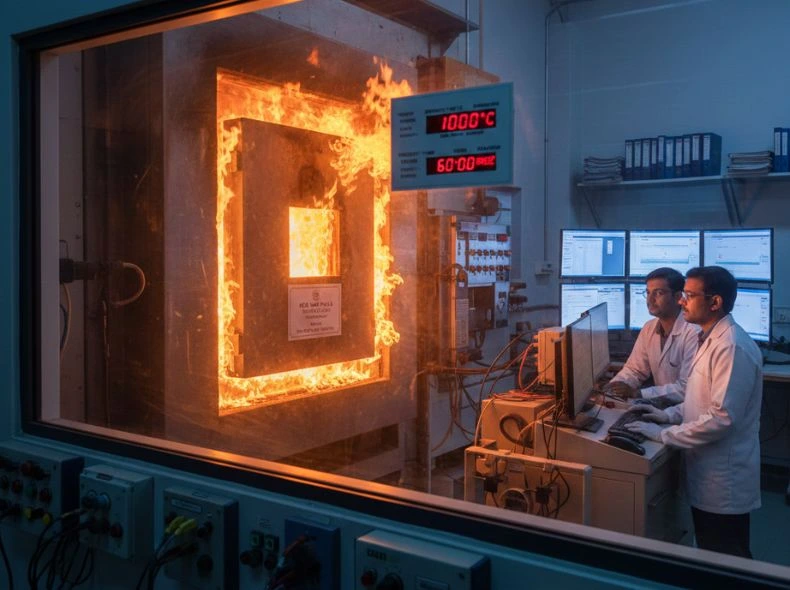
Reputable fire-rated door manufacturer providers maintain comprehensive testing documentation from accredited laboratories validating their product performance claims. Therefore, when evaluating fire-rated door manufacturer options, always request complete test certificates from recognized testing facilities meeting relevant standards.
Furthermore, authentic certification includes detailed testing conditions, temperature-time curves, and specific pass/fail criteria demonstrating that products withstand rigorous testing protocols. Meanwhile, manufacturers unable or unwilling to provide original testing documentation raise serious concerns regarding product authenticity and performance reliability.
Additionally, multi-standard certification (IS 3614, BS 476, EN 1634-1, UL) demonstrates manufacturer commitment to quality and global market recognition. Consequently, fire-rated door manufacturer selection should prioritize providers maintaining certifications across applicable standards.
Assessing Manufacturing Capability and Quality Control
Advanced fire safety door solutions require sophisticated manufacturing equipment and rigorous quality control processes ensuring consistent performance across entire production batches. Therefore, evaluating fire-rated door manufacturer facility capabilities provides crucial insight into product reliability.
Moreover, manufacturers implementing ISO 9001 quality management systems and NABL (National Accreditation Board for Testing and Calibration Laboratories) accreditation demonstrate commitment to systematic quality assurance. Consequently, these certifications indicate that fire-rated door manufacturer operations meet international quality standards and undergo regular independent audits.
Warranty Offerings and Long-Term Support
Premium fire-rated door manufacturer providers offer comprehensive warranties spanning 3-5 years or longer, covering both structural integrity and finish performance. Furthermore, extended warranty offerings indicate manufacturer confidence in product durability and quality.
Additionally, reliable fire-rated door manufacturer partners provide technical support throughout door service life, including maintenance guidance, hardware replacements, and emergency repairs ensuring continuous protection. Consequently, warranty terms and after-sales support availability should factor significantly into manufacturer selection processes.
Fire-Rated Door Maintenance: Ensuring Long-Term Performance and Regulatory Compliance
Regular Inspection Protocols
Fire-rated door manufacturer products require ongoing maintenance ensuring continued reliable operation. Consequently, building owners should implement systematic inspection schedules verifying door condition and component functionality.
Monthly visual inspections should verify that intumescent seals remain intact and undamaged, self-closing mechanisms function smoothly, and no gaps or warping has developed. Additionally, inspections should confirm that signage remains legible and doors aren’t propped open using wedges or makeshift holding devices—common practices that completely compromise fire protection capabilities.
Moreover, buildings exceeding 11 meters height require quarterly formal inspections by qualified professionals documenting door condition and component functionality. Meanwhile, annual comprehensive inspections should include professional hardware testing, seal verification, and functional testing of closing mechanisms under full operating conditions.
Cleaning, Care, and Preventive Maintenance
Proper maintenance extends fire-rated door manufacturer product service life and ensures reliable operation when emergencies occur. Consequently, regular cleaning using mild non-abrasive cleaners preserves door finishes and prevents debris accumulation in hardware mechanisms.
Furthermore, hinges require periodic lubrication preventing squeaking and ensuring smooth operation, while closers occasionally need adjustment maintaining proper closing speed and latch engagement. Additionally, intumescent seals should be inspected annually, with any deterioration or damage prompting immediate replacement.
Documentation and Compliance Records
Building owners should maintain comprehensive documentation of all fire-rated door maintenance activities, professional inspections, and component replacements. Moreover, this documentation proves regulatory compliance during building inspections and fire authority audits, simultaneously providing evidence of responsible facility management.
Additionally, maintenance records facilitate quick identification of problems requiring attention and justify insurance coverage during fire-related incidents, demonstrating that facility management maintained fire safety equipment to professional standards.
Advanced Fire Safety Door Solutions: Cost Considerations and Financial Planning
Initial Installation Investment
Fire-rated door manufacturer costs vary significantly based on fire rating specifications, door dimensions, material selection, and frame requirements. Average installation costs typically range from ₹33,000 to ₹75,000 per door opening for complete assemblies, though premium installations or specialized applications may exceed these ranges considerably.
Moreover, professional installation labor costs approximately ₹3,300 to ₹7,500 per hour, with typical installations requiring 2-3 hours for experienced technicians. Therefore, total door installation investment should budget for both product costs and professional installation services ensuring proper execution.
Furthermore, building owners should recognize that fire safety door solutions represent permanent building infrastructure investments expected to function reliably for 20-30+ years with proper maintenance. Consequently, comparing quotations based solely on initial cost without considering durability and performance reliability leads to false economy and potential future safety compromises.
Long-Term Cost-Benefit Analysis
Advanced fire safety door solutions provide substantial long-term value extending far beyond initial installation investments. Additionally, comprehensive cost-benefit analysis should consider insurance premium reductions frequently available for facilities maintaining certified fire protection systems.
Moreover, fire-rated door manufacturer products protect property from fire damage potentially costing millions of rupees, while simultaneously protecting human lives—an incalculable value. Furthermore, regulatory compliance facilitated by proper fire-rated door solutions prevents legal liability exposure and operational disruptions from building code violations.
Consequently, viewing fire safety door solutions as essential infrastructure investment rather than expense produces appropriate prioritization and justifies budgeting for quality installations and ongoing maintenance programs.
Fire-Rated Door Manufacturer Innovation: Emerging Technologies and Future Developments
Smart Integration and Monitoring Systems
Modern advanced fire safety door solutions increasingly incorporate smart monitoring capabilities providing real-time door condition alerts and historical performance data. Consequently, building management systems can track door functionality, alert maintenance staff to developing problems, and document compliance automatically.
Additionally, IoT-enabled fire-rated door manufacturer products enable remote verification of door closure status, automatic alerting if doors are propped open, and integration with building fire detection systems. Furthermore, these emerging technologies provide facility managers unprecedented visibility into fire safety infrastructure condition.
Sustainable Manufacturing and Eco-Friendly Materials
Contemporary fire-rated door manufacturer innovation addresses sustainability concerns, incorporating recycled materials and environmentally responsible manufacturing processes. Additionally, certifications like Cradle-to-Cradle and environmental product declarations document life-cycle environmental impact.
Moreover, advanced fire safety door solutions increasingly feature modular designs enabling component replacement rather than entire door removal, extending product service life while reducing waste. Consequently, sustainable fire-rated door manufacturer offerings address both fire safety requirements and environmental responsibility.
Enhanced Accessibility Features
Emerging fire-rated door manufacturer designs incorporate accessibility features ensuring individuals with mobility limitations can safely operate fire safety door solutions during emergencies. Additionally, hardware innovations like lever handles replacing traditional knobs, reduced opening force requirements, and tactile fire rating indicators accommodate diverse accessibility needs.
Conclusion: Comprehensive Fire Safety Through Advanced Fire-Rated Door Solutions
Advanced fire safety door solutions represent essential infrastructure protecting both occupants and property within buildings of all types and sizes. Consequently, selecting a qualified fire-rated door manufacturer and implementing professional installations creates the foundation for comprehensive passive fire protection strategies.
Furthermore, fire-rated door manufacturer compliance with IS 3614, BS 476, and applicable building codes ensures products meet rigorous performance standards while delivering reliable protection when emergencies occur. Additionally, proper maintenance and ongoing inspection protocols ensure continued protection throughout extended service life.
Ultimately, investing in advanced fire safety door solutions from reputable fire-rated door manufacturer providers demonstrates commitment to occupant protection, regulatory compliance, and responsible facility management. Meanwhile, building owners who view fire safety door solutions as essential rather than optional position their facilities for superior long-term performance and occupant confidence.
Therefore, don’t compromise on fire protection. Partner with KOR India, your trusted fire-rated door manufacturer specializing in advanced fire safety door solutions engineered for your specific building requirements. Our team of expert engineers combines technical excellence with comprehensive customer support, ensuring your facility receives optimal fire protection meeting all applicable standards and exceeding baseline code requirements.
Frequently Asked Questions About Fire-Rated Door Manufacturer Solutions
What fire rating does my building require according to the National Building Code?
Fire rating requirements vary based on building type, occupancy classification, and specific room functions. Commercial buildings typically require 60-minute ratings in exit corridors and 120-minute ratings in mechanical rooms and fire command centers. Healthcare facilities, data centers, and industrial buildings have distinct specifications. KOR India’s expert consultation team can evaluate your specific building requirements and recommend appropriate fire-rated door manufacturer solutions meeting all applicable National Building Code provisions.
How long do fire-rated doors last before requiring replacement?
Properly maintained fire-rated door manufacturer products typically function reliably for 20-30+ years, often exceeding standard building component service life expectations. Longevity depends on maintenance consistency, environmental conditions, and use frequency. KOR India’s fire-rated doors, backed by comprehensive warranty coverage and professional maintenance support, deliver reliable protection throughout extended service life.
Can existing door openings accommodate fire-rated door manufacturer products without structural modification?
In most cases, fire-rated door manufacturer products can be installed in existing openings using standard frame modifications. However, some specialized applications or unusual opening dimensions may require structural adjustments. KOR India’s installation specialists conduct detailed site assessments identifying any structural requirements before commencing professional installation.
Are fire-rated doors visible to building occupants, or can they integrate seamlessly with standard decor?
Modern fire-rated door manufacturer solutions incorporate diverse aesthetic options including natural wood finishes, laminate selections, and contemporary hardware enabling seamless integration with contemporary building design. Additionally, specialized architectural finishes accommodate diverse interior design requirements. KOR India offers extensive finishing options ensuring fire-rated doors complement your building’s aesthetic while delivering maximum fire protection.
What maintenance schedule should my facility implement for fire-rated door manufacturer products?
Monthly visual inspections verify seal and hardware condition, while quarterly formal inspections by qualified professionals document component functionality. Annual comprehensive testing confirms closing mechanisms operate smoothly and all fire-rated hardware functions properly. KOR India’s professional maintenance support team can establish customized inspection schedules meeting your specific facility requirements and regulatory obligations.
How do fire-rated sliding doors compare to traditional hinged fire-rated door manufacturer products?
Sliding doors provide space-efficient solutions for large openings where hinged doors would consume excessive floor area. Functionally, both sliding and hinged fire-rated door manufacturer products achieve identical fire protection when properly installed and maintained. Selection depends on architectural constraints and specific facility requirements. KOR India offers comprehensive fire safety door solutions including both sliding and hinged configurations meeting diverse building needs.
Call to Action
Ready to implement comprehensive fire safety door solutions for your facility? Contact KOR India today for expert consultation with our fire-rated door manufacturer specialists. We’ll evaluate your specific building requirements, recommend optimal fire safety door solutions, and coordinate professional installation ensuring complete protection for occupants and property.
Call KOR India now for your fire safety door consultation—where advanced protection meets professional expertise.