Main Takeaway: Adhering to fire door regulations in India under the National Building Code (NBC 2016) and state/local variations is non-negotiable for life safety, legal compliance, and risk mitigation. Leveraging KOR India’s expertise ensures seamless implementation, documentation, and ongoing maintenance of fire-rated doors across all building types.
Introduction
Every minute counts when a fire breaks out. Fire doors are lifesaving barriers that compartmentalize buildings, slow smoke spread, and protect evacuation routes. Yet, the regulations governing fire doors in India can be intricate—spanning national codes, state amendments, and distinct requirements for residential, commercial, and industrial structures. This comprehensive guide demystifies the regulatory landscape, highlights practical implementation steps, and positions KOR India as your fire safety compliance partner.
1. National Building Code (NBC 2016) Requirements
1.1 Fire Rating and Performance Standards
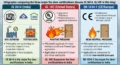
Under NBC 2016, fire doors must achieve specific fire resistance ratings—commonly FRR (Fire Resistance Rating) of 30, 60, 90, or 120 minutes—depending on the building’s occupancy and height.
- Material Criteria: Steel, timber, or composite assemblies tested per IS 3614.
- Smoke Control: Seals and intumescent strips must prevent smoke leakage for at least 30 minutes.
1.2 Installation and Location
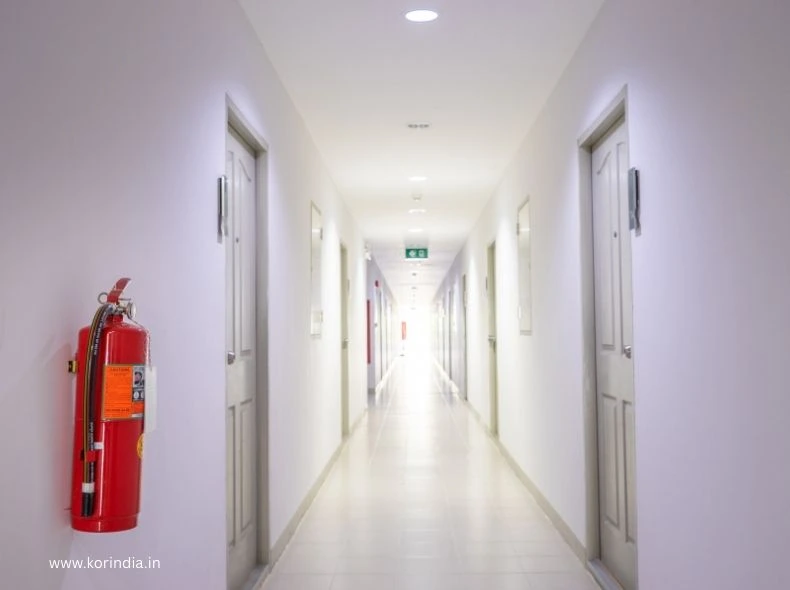
- Escape Routes: Fire doors must be installed on all protected staircases, corridors, and elevator lobbies.
- Gap Tolerances: Clearances around door leaves must not exceed 3 mm at sides/top and 8 mm at bottom.Complete-SEO-Keyword-Strategy-Guidelines-for-KOR-India.docx
1.3 Hardware and Accessories
- Self-Closing Devices: Hydraulic or spring hinges to ensure doors close automatically.
- Door Holders: Electromagnetic hold-open devices tied to alarm systems.
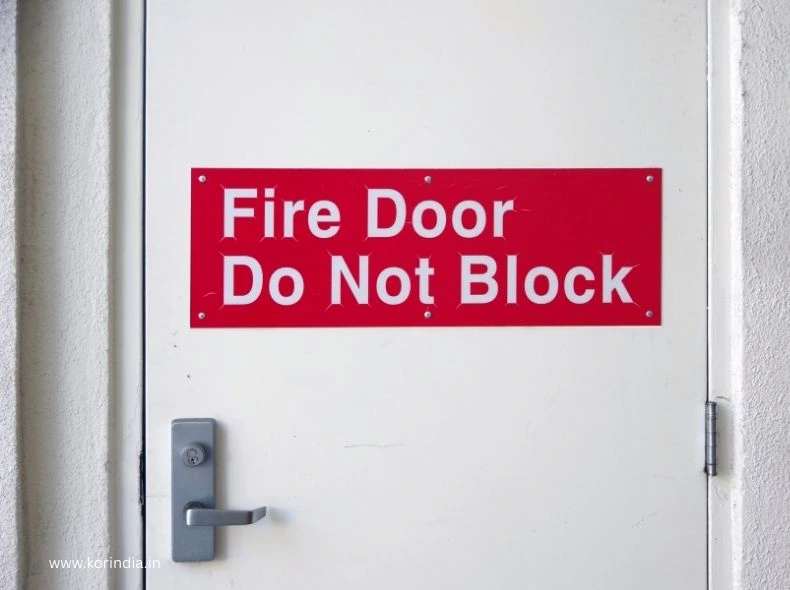
- Signage: “Fire Door—Do Not Obstruct” signage per IS 2379.
2. State and Local Regulation Variations
While the NBC provides a uniform framework, states may issue amendments:
| State/UT | Amendment Highlight |
| Maharashtra | Additional requirement for fire door color coding |
| Delhi NCR | Mandatory CBRI certification for all fire assemblies |
| Tamil Nadu | Enhanced inspection frequency for high-rise buildings |
| Karnataka | Integration with local disaster management protocols |
Note: Always verify municipal bylaws and district fire department guidelines before installation.
3. Building-Type Specific Compliance
3.1 Residential Buildings
- Low-Rise Apartments (≤15 m): FRR 30 minutes for internal doors; FRR 60 minutes for exit route doors.
- High-Rise Towers (>15 m): Minimum FRR 90 minutes for all staircase and refuge area doors.
- Common Pitfall: Using non-certified timber doors in gated communities leads to code violations.
3.2 Commercial Structures
- Office Complexes & Malls:
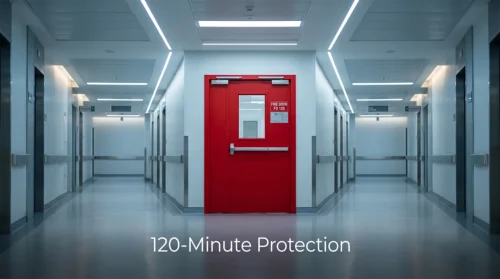
- FRR 60 minutes for internal shaft doors; FRR 120 minutes for ground-to-roof staircases.
- Connectivity to fire alarm panels for door release controls.
- FRR 60 minutes for internal shaft doors; FRR 120 minutes for ground-to-roof staircases.
- Hotels & Hospitals:
- Additional requirement: auto-closing doors in guest rooms and ICU corridors for smoke control.
- Additional requirement: auto-closing doors in guest rooms and ICU corridors for smoke control.
3.3 Industrial Facilities
- Warehouses & Manufacturing Units:
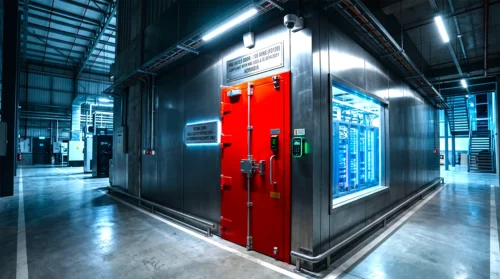
- FRR 120 minutes preferred for high-hazard zones (chemical storage, boiler rooms).
- Integration with sprinkler and smoke-control systems.
- FRR 120 minutes preferred for high-hazard zones (chemical storage, boiler rooms).
4. Documentation Requirements and Penalties
4.1 Essential Documentation
- Test Certificates: IS 3614 test reports from NABL-accredited labs.
- Shop Drawings: Door schedules, hardware lists, and installation drawings.
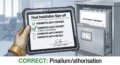
- Maintenance Logs: Quarterly inspection records signed by a certified fire safety engineer.
4.2 Penalties for Non-Compliance
- First Offense: Monetary fine up to INR 50,000 and stop-work order.
- Repeat Violations: Fines up to INR 200,000, legal notice, possible building seal-off.
- Liability: Director/owner can face personal prosecution under the National Building Code Act.
5. Ongoing Compliance Maintenance
5.1 Regular Inspections
- Frequency: Biannual inspections by qualified technicians; immediate check post-fire-alarm activation.
- Checklist Highlights:
- Door-leaf alignment and gap measurements
- Functionality of self-closers and smoke seals
- Condition of fire-resistant glazing, if applicable
- Door-leaf alignment and gap measurements
5.2 Maintenance Best Practices
- Intumescent Strip Replacement: Every 3 years or after any damage.
- Lubrication & Adjustment: Hinges and closers checked quarterly.
- Retrofitting: Older buildings may require door frame reinforcement for FRR upgrades.
5.3 Training and Awareness
- Conduct quarterly drills demonstrating correct door operation and evacuation routes.
- Display maintenance records and inspection certificates at main fire-control room.
Infographic: Fire Door Compliance Workflow
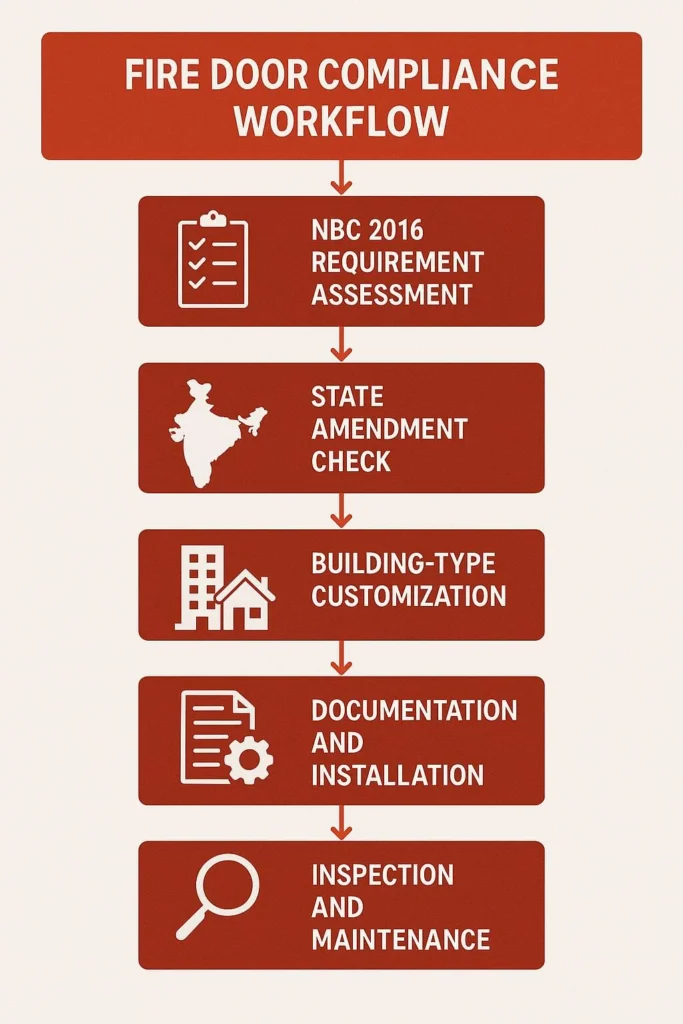
NBC 2016 requirement assessment → state amendment check → building-type customization → documentation and installation → inspection and maintenance
FAQs
Q1: What is the minimum fire resistance rating for apartment stairwell doors?
In high-rise residential buildings (>15 m), stairwell doors must achieve a minimum FRR of 90 minutes per NBC 2016.
Q2: Can I install a timber fire door instead of steel?
Yes—timber fire doors are permitted if tested per IS 3614 and achieve the required FRR, though steel is more common for higher ratings.
Q3: How often should intumescent seals be replaced?
Replace intumescent strips every 3 years or immediately if damaged to maintain smoke-sealing performance.
Q4: Are local fire department approvals mandatory?
Absolutely—beyond NBC compliance, you must obtain a “No Objection Certificate” from the district fire office.
Q5: What penalties apply for missing maintenance logs?
Absence of logs can incur fines up to INR 50,000 for the first offense and stop-work notices until records are updated.
Ready to enhance your industrial facility’s safety and efficiency?
Contact KORINDIA today for expert guidance and advanced door solutions tailored to your industry’s needs!