
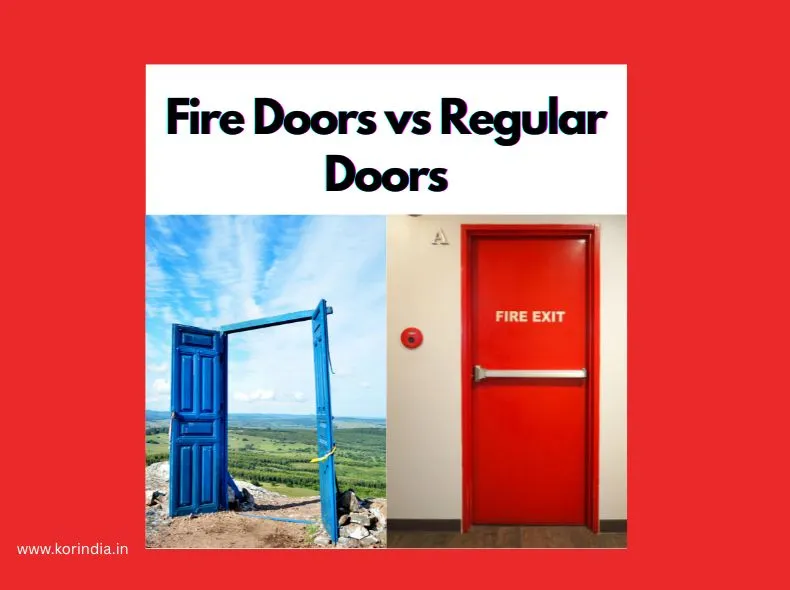
Every year, thousands of buildings face fire emergencies. What separates a controlled evacuation from a tragedy is often measured in minutes—precious seconds that allow occupants to escape safely and emergency responders to act. At the heart of this life-saving mechanism lie fire doors, yet many building managers and homeowners remain unaware of how fundamentally different these specialized doors are from the ordinary doors in their homes and offices. At the heart of this life-saving mechanism lie fire doors vs regular doors made from standard materials like untreated wood or hollow cores, fire doors use fire-resistant materials such as treated timber, steel, or composites to withstand high temperatures and prevent warping.
Unlike regular doors that serve basic aesthetic and functional purposes, fire doors represent advanced engineering specifically designed to combat one of humanity’s most destructive forces. The distinction between fire doors and regular doors extends far beyond appearance; it encompasses materials, construction techniques, testing protocols, and real-world performance metrics that can determine survival during a crisis.
This comprehensive guide explores every aspect of fire doors vs regular doors, helping you understand why this distinction matters critically in India’s building landscape today.
Understanding the Core Difference: Fire Doors vs Regular Doors Explained
The most apparent difference between fire doors and regular doors lies in their fundamental purpose. While regular doors serve entry, exit, and visual partitioning functions, fire-rated doors are engineered barriers designed to resist flames, extreme heat, and toxic smoke for specific time durations. This distinction shapes everything about their design and construction.
The Fire Resistance Rating System
When discussing fire doors vs regular doors, understanding fire ratings becomes essential. Fire-rated doors are classified according to their ability to withstand fire under controlled testing conditions. These ratings indicate protection duration:
- FD30 provides 30 minutes of fire protection, commonly used in offices, schools, and light commercial spaces where fire spread occurs more slowly. This rating allows occupants in adjacent areas valuable time to reach safe zones or exit routes.
- FD60 offers 60 minutes of protection, specified for hospitals, hotels, stairwells, and buildings with higher occupancy rates. The additional 30 minutes proves critical in high-rise structures where evacuation takes longer.
- FD90 extends protection to 90 minutes, mandatory in industrial facilities, manufacturing plants, and areas containing flammable materials requiring maximum fire compartmentalization.
- FD120 represents maximum protection at 120 minutes, reserved for critical infrastructure including military installations, nuclear facilities, and high-security government buildings where any fire spread could cause catastrophic consequences.
In stark contrast, regular doors carry no fire rating whatsoever. A standard wooden door, untreated and unrated, may collapse or allow flames to penetrate in as little as 5-10 minutes when exposed to intense heat, offering virtually no protection.
Material Composition: Why Fire Doors vs Regular Doors Are Built Differently
The construction differences between fire doors and regular doors reflect their vastly different purposes. Regular doors typically use basic materials selected for appearance, cost-efficiency, and convenience—solid wood, plywood, or MDF (medium-density fiberboard).
Fire Door Materials and Their Properties
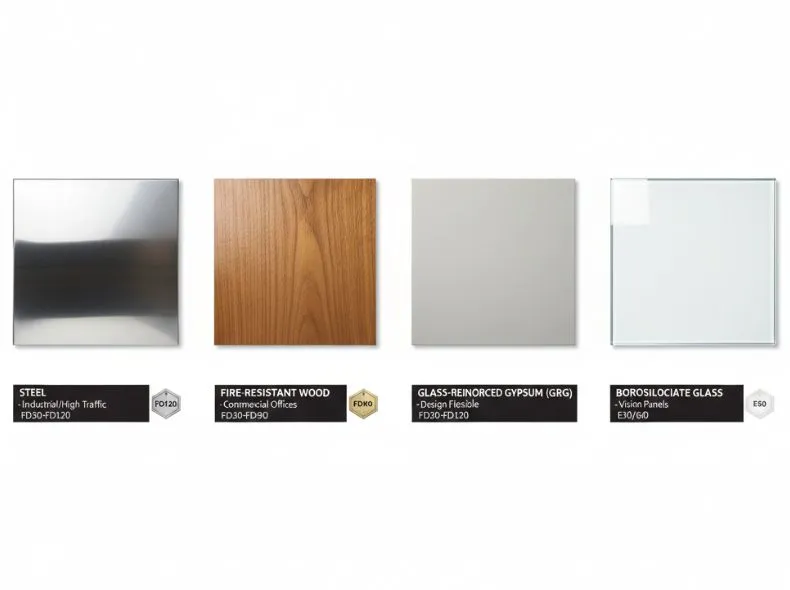
- Steel Fire Doors represent the most robust option in the fire doors vs regular doors comparison. Steel remains strong at extreme temperatures, resists warping, and provides exceptional durability for high-traffic industrial environments. Steel fire doors can withstand impact and mechanical stress while maintaining structural integrity during fires. The material’s non-combustibility makes it the preferred choice for manufacturing facilities and warehouses housing flammable materials.
- Fire-Resistant Treated Wood offers a middle ground between aesthetics and protection. Special treatment processes infuse wood with fire-resistant chemicals that delay combustion and prevent rapid flame spread. Tested timber fire doors supplied by certified manufacturers have demonstrated average protection times exceeding their rated durations—averaging 46 minutes for FD30-rated doors in independent testing.
- Glass-Reinforced Gypsum (GRG) combines exceptional fire resistance with design flexibility. GRG can be customized into various shapes and sizes, accommodating diverse architectural requirements while maintaining fire ratings up to 120 minutes. This material offers lightweight installation advantages compared to steel, reducing labor costs and structural load considerations.
- Composite Materials increasingly feature in modern fire-rated door construction, combining multiple materials’ best properties. These engineered solutions offer superior insulation, enhanced sound dampening, and extended fire resistance while maintaining aesthetic appeal.
Regular doors rarely employ these specialized materials. Standard wooden doors lack fire-resistant treatment. Ordinary MDF doors contain highly flammable resins and adhesives that accelerate fire spread. This fundamental material difference represents perhaps the most critical distinction in any fire doors vs regular doors discussion.
Intumescent Seals and Smoke Control: The Hidden Heroes
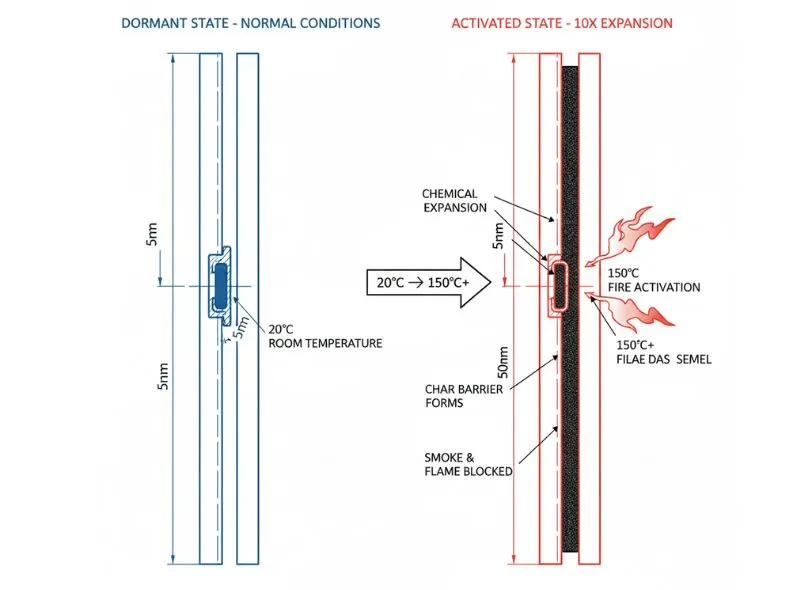
A crucial aspect of fire doors vs regular doors technology involves components invisible to casual observation. Intumescent seals represent sophisticated passive fire protection technology absolutely essential to fire-rated door functionality.
These remarkable seals remain dormant under normal conditions, seated in grooves around the door frame. When exposed to temperatures typically exceeding 120-200°C during a fire, intumescent material undergoes thermal decomposition. This chemical reaction causes the seal to foam and expand—sometimes growing to 10 times its original volume—creating a char-like barrier that prevents fire, smoke, and toxic gases from passing through gaps between the door and frame.
This expansion happens automatically without electricity, batteries, or human intervention. In contrast, regular doors feature standard rubber or foam seals that offer no temperature response, allowing smoke to freely penetrate through minimal gaps—often as little as 1-2mm between door and frame.
Smoke seals, distinct from intumescent elements, work from the moment a fire door closes. These soft brush strips or flexible blade seals prevent smoke passage during both cold and hot phases of a fire. Since smoke typically causes more fire fatalities than flames themselves in real emergencies, these seals prove absolutely critical. Regular doors provide no equivalent smoke control, allowing toxic fumes to spread throughout buildings within minutes.
Hardware and Components: Engineered for Extremes
Fire doors vs regular doors also differ dramatically in their hardware specifications. Fire-rated doors require fire-tested components including:
- Fire-Rated Hinges withstand extreme heat without losing strength or deforming, maintaining door integrity throughout the fire duration. Standard hinges, conversely, often warp or fail under intense heat, causing doors to sag and lose their seal.
- Positive-Latching Door Closers automatically close and latch fire doors, preventing air circulation that could feed flames. These devices possess specialized mechanisms allowing controlled closing speed—fast enough for safety, slow enough to prevent slamming injuries. Regular doors typically use basic closers lacking these sophisticated features.
- Fire-Tested Locks and Latches maintain mechanical function at extreme temperatures, ensuring doors remain closed throughout the fire’s duration. Standard locks may jam or fail when exposed to heat.
- Fire-Rated Glass Assemblies offering vision panels comply with strict specifications ensuring the glass maintains its structure and prevents flame passage. Borosilicate fire-rated glass rated E30 or E60 provides visibility while maintaining compartmentalization integrity. Regular door glass offers no fire protection and shatters at lower temperatures, compromising the door’s sealing ability.
Installation Standards: Precision Matters
Understanding fire doors vs regular doors extends to installation requirements. Regular doors tolerate installation variations—larger gaps, misaligned frames, or slightly loose hinges rarely compromise basic functionality.
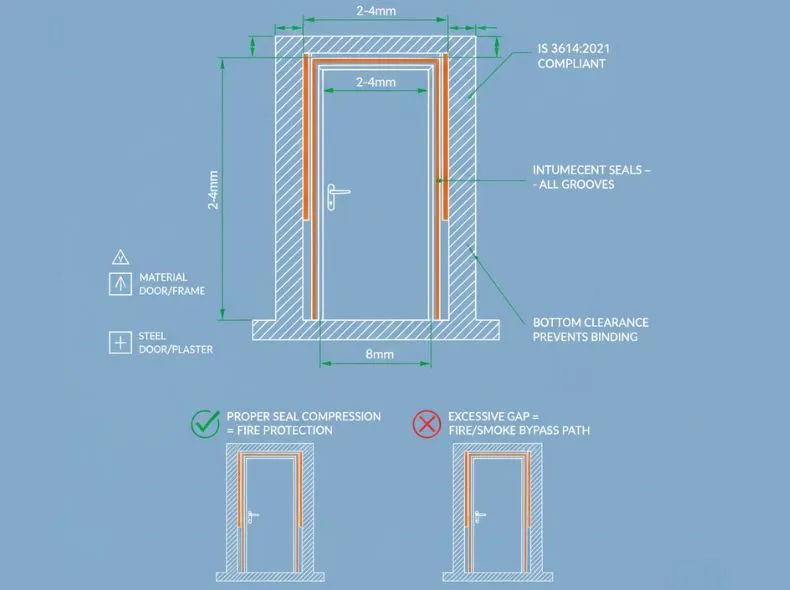
Fire-rated doors demand precision installation. According to India’s National Building Code (NBC) 2016 and IS 3614:2021 standards, specific gap requirements must be maintained:
- Gaps around door perimeter: typically 2-4mm for optimal seal compression
- Bottom door gap: up to 8mm, allowing door operation and minor floor irregularities
- Frame alignment: strict tolerances ensuring seals compress uniformly
Intumescent seals’ effectiveness depends on consistent compression around the entire door perimeter. Gaps exceeding specification reduce seal contact, creating pathways for fire and smoke to bypass the door’s protection. Improper installation represents a leading cause of fire door failures in real emergencies—a critical distinction between fire doors vs regular doors maintenance requirements.

Fire Ratings in Practice: What These Numbers Really Mean
Fire doors vs regular doors comparison becomes concrete when understanding fire ratings’ actual implications. An FD60 rating doesn’t merely indicate a door withstands 60 minutes of fire. Testing procedures involve exposing one side of the door to flames exceeding 1000°C while monitoring three critical performance criteria:
- Stability – The door maintains its structural integrity and vertical position, not warping or deforming excessively. A door collapsing inward would collapse the compartmentalization barrier, defeating its core purpose.
- Integrity – The door prevents flames from passing through it, blocking fire’s direct spread to protected spaces on the opposite side.
- Insulation – The door minimizes heat transfer through its mass, preventing ignition of materials on the unexposed side. This criterion proves especially critical in hospitals and care facilities where bedridden patients cannot move independently.
Regular doors fail all three criteria within minutes. They warp, crack, allow flames to penetrate, and transfer extreme heat to opposite sides—completely failing to provide protection in real fire scenarios.
Real-World Safety Impact: The Statistics That Demand Attention
The consequences of inadequate fire door protection manifest clearly in safety data. Research revealing that 75% of fire doors in the UK do not meet required safety standards highlights the critical gap between fire doors vs regular doors specifications and actual building compliance. More alarmingly, 31% of these installed doors are improperly installed, negating their protective capabilities entirely.
Fire doors properly installed and maintained provide occupants crucial evacuation time. Buildings equipped with compliant FD30 or FD60 doors have demonstrated significantly better survival outcomes during emergencies compared to buildings relying on regular door protection. This difference translates directly to lives—fire service research indicates that each additional minute of fire containment increases survival probability by approximately 15-20% among building occupants.
The statistics underscore an uncomfortable truth: the distinction between fire doors vs regular doors literally means the difference between life and death during building emergencies.
Applications Across Building Types: Where Fire Doors vs Regular Doors Matter Most
Different building categories require different fire door specifications, reflecting their unique risk profiles and occupancy considerations.
Commercial Office Buildings
Modern office spaces mandate fire-rated doors in stairwells, emergency exits, and areas separating different occupancy types. FD30 ratings typically suffice for single-floor commercial spaces, while FD60 becomes necessary in multi-story buildings requiring longer evacuation periods. These applications represent the largest segment in India’s commercial sector, with organizations increasingly recognizing fire door compliance implications for insurance coverage and legal liability.
Healthcare Facilities and Hospitals
Hospitals present unique fire door challenges. FD60 ratings are standard, reflecting patient populations with limited mobility. Fire-rated doors in medication storage areas, operating theaters, and intensive care units prove essential because these spaces often contain flammable materials or house patients unable to self-evacuate during emergencies. Fire-rated glazing allowing medical staff visibility while maintaining compartmentalization becomes particularly important.
Educational Institutions
Schools and universities require fire-rated doors reflecting their large occupancy of often-unfamiliar evacuees. FD30 ratings minimum in corridors and classrooms, with FD60 in equipment rooms or labs containing flammable materials. Children’s fire safety requires reliable fire door protection, making maintenance and regular inspections absolutely critical responsibilities.
Industrial Facilities and Manufacturing Plants
Industrial buildings present perhaps the most stringent fire door requirements due to materials stored and processed on-site. Warehouses containing chemicals, textiles, or petroleum products typically require FD90 or FD120 rated doors. Heavy machinery and high traffic demands durable steel fire doors that withstand impact and mechanical stress. These applications showcase where fire doors vs regular doors distinctions become matters of facility-wide safety and regulatory compliance.
Hospitality and Leisure Venues
Hotels, restaurants, and entertainment venues face unique fire challenges with overnight guests, customers in unfamiliar environments, and public spaces with high turnover. FD60 ratings predominate in stairwells and guest corridors. Restaurants and kitchens present particular challenges due to cooking operations, requiring fire doors in kitchen access points and equipment rooms.
The BIS Certification and Standards Framework in India
Understanding fire doors vs regular doors in the Indian context requires familiarity with certification standards. IS 3614:2021, India’s primary standard for fire doors and doorsets, establishes rigorous specifications for design, construction, materials, and fire resistance testing.
BIS (Bureau of Indian Standards) certification under IS 3614:2021 ensures fire doors have undergone independent testing and performance validation. Certified doors receive ISI marking indicating compliance with:
- Material specifications ensuring fire resistance without hazardous substances
- Construction methods guaranteeing proper component assembly
- Hardware compatibility confirmed through testing
- Fire resistance performance validated in accredited laboratories including CBRI (Central Building Research Institute)
NBC 2016 (National Building Code) provides comprehensive guidelines specifying minimum fire door requirements for various building categories and occupancies. These regulations mandate specific fire ratings for different building types and fire compartmentalization strategies.
Regular doors fall entirely outside these regulatory frameworks—they carry no certification requirements and need not meet any standardized safety criteria. This regulatory distinction underscores the fundamental difference between fire doors vs regular doors from legal, insurance, and safety perspectives.
Installation and Maintenance: Ensuring Fire Doors Function When Needed
A comprehensive fire doors vs regular doors comparison must address maintenance realities. Installing fire-rated doors represents only the initial step; ongoing maintenance determines whether they actually protect occupants during emergencies.
Critical Maintenance Requirements
Regular Professional Inspections at minimum every six months (more frequently in high-traffic areas) verify that:
- Seals remain intact with no visible damage, gaps, or deterioration
- Hardware functions smoothly without corrosion or mechanical failure
- Doors close and latch properly, with closers providing appropriate closing force
- Vision panels remain intact without cracks compromising fire ratings
- Gaps around door perimeters remain within specification
- Signage remains visible and properly posted
Seal Replacement typically becomes necessary every 3-5 years as intumescent materials age and lose effectiveness. Damaged seals must be replaced immediately—compromised seals cannot expand properly during fires, completely negating the door’s protective value.
Hinges and Hardware Lubrication ensures smooth operation and prevents jamming. Proper lubrication also protects metal components from corrosion, particularly in humid industrial environments.
Damage Prevention and Immediate Repair requires vigilant attention. Even minor damage to seals or frames can compromise fire ratings. Fire doors cannot be repaired using standard methods; any modifications or repairs must follow manufacturer specifications and regulatory requirements.
Regular doors, conversely, require minimal specialized maintenance. Missing hinges, damaged frames, or loose seals rarely compromise their basic functionality—they simply continue operating adequately for normal use.
Cost Considerations: Analyzing Fire Doors vs Regular Doors Investment
Fire-rated doors typically cost 2-4 times more than equivalent regular doors. This price differential reflects specialized materials, rigorous testing protocols, fire-rated components, and professional installation requirements. A typical FD60 steel fire door with frame and hardware costs significantly more than a standard steel door, reflecting real engineering and safety investments.
However, cost analysis must incorporate long-term perspectives. The true cost comparison between fire doors vs regular doors includes:
- Life Safety Value – The primary purpose of fire doors is preventing loss of life. This value cannot be adequately quantified in monetary terms; no price justifies failing to provide occupants basic survival opportunities.
- Property Protection – Proper fire compartmentalization through fire doors contains fires to specific areas, dramatically reducing overall property damage. A fire contained to one room rather than spreading through multiple floors results in losses measured in lakhs or crores less than uncontained fires.
- Insurance Implications – Buildings with certified, maintained fire doors often qualify for reduced insurance premiums reflecting their lower fire risk profile. Non-compliance, conversely, may result in policy voidance or significantly increased premiums.
- Legal Liability Reduction – Building owners with compliant fire doors demonstrate duty-of-care fulfillment, substantially reducing legal exposure in the unfortunate event of fire-related incidents or injuries.
- Regulatory Compliance Avoidance – Non-compliant buildings face penalties under NBC and local building codes. Fines, construction stops, and forced retrofitting impose far greater costs than initial proper installation.
When evaluating fire doors vs regular doors investment, the distinction becomes not whether to install fire-rated doors, but rather whether to accept the substantial liability and risk of their absence.
Visual Panel Fire Doors: Maintaining Visibility Without Compromising Safety
Modern fire door design increasingly incorporates vision panels or glazing elements, particularly in office environments and retail spaces where visual connection across doorways enhances functionality and aesthetics.
Fire-rated glazing, typically borosilicate glass rated E30 or E60, maintains structural integrity during fires while providing visibility. This specialized glass differs fundamentally from regular window glass, which shatters at relatively low temperatures and loses any fire resistance capability.
Vision panels in fire doors must meet specific standards ensuring that glass failure doesn’t compromise the door’s overall fire rating. Frames, seals, and mounting systems for glazed elements undergo the same rigorous testing as solid-panel doors. Improperly glazed fire doors may appear compliant while actually failing to meet their fire ratings.
Regular doors may include any glass without regard to fire performance, representing another critical distinction in fire doors vs regular doors safety considerations. The visual appeal of glazed fire doors must never compromise their protective capabilities—a balance modern manufacturers achieve through rigorous design and testing.
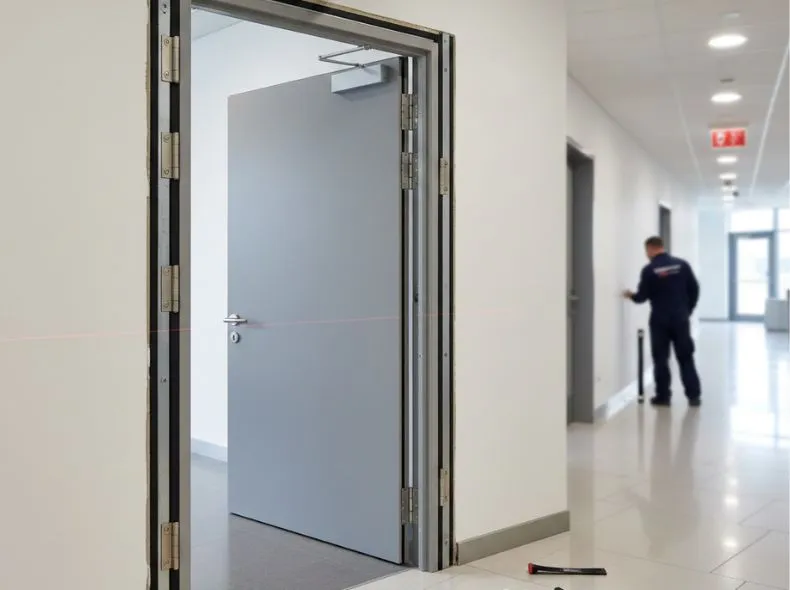
Installation Best Practices: Getting It Right From the Start
Proper fire door installation represents absolutely critical work that determines whether these specialized doors will actually function during emergencies. Professional installation by certified specialists ensures:
- Frame Preparation – Door frames must be properly aligned and installed to specification, with correct gap maintenance around entire perimeters. Poorly aligned frames create uneven seal compression, reducing fire resistance effectiveness.
- Seal Installation – Intumescent and smoke seals must be continuous around the entire door with no gaps or breaks. Seals are typically seated in specifically routed grooves, ensuring proper positioning and preventing displacement during door operation.
- Hardware Installation – Fire-rated hinges, closers, locks, and latches must be installed precisely according to manufacturer specifications. Incompatible or improperly installed hardware can prevent doors from closing and latching reliably.
- Gap Adjustment – Installation must achieve specification gap tolerances, ensuring seals compress properly without preventing door operation. Gaps that are too tight prevent smooth door movement; gaps that are too loose allow seal bypass.
- Testing and Documentation – After installation, professional testing confirms doors operate correctly, close reliably, and form proper seals. Documentation proving compliance and testing results becomes essential for regulatory verification and insurance purposes.
Many fire door failures trace back to improper installation rather than material defects or design issues. This reality emphasizes why professional installation represents a critical investment distinct from installation of regular doors.
The Global Fire Door Market and India’s Growing Recognition
The international fire door market reflects growing safety consciousness globally. The global fire door market was valued at USD 18.0 billion in 2025, with projections reaching USD 28.0 billion by 2035—representing a compound annual growth rate of 4.5%. This expansion reflects increasing regulatory stringency, greater awareness of fire risks, and urbanization driving construction growth.
Within this context, India represents an increasingly important market. Economic growth, expanding commercial construction, healthcare facility development, and manufacturing growth all drive fire door demand. Indian building standards increasingly align with international best practices, with IS 3614:2021 evolving to incorporate technical advances and safety research findings.
KOR India, as a leading fire door manufacturer in Greater Noida, recognizes this growth trajectory and the critical importance of quality manufacturing and professional installation. The company’s commitment to BIS certification, NBC compliance, and customer education helps elevate Indian fire safety standards to international levels.
Choosing the Right Fire Door Manufacturer: Critical Selection Criteria
The fire doors vs regular doors distinction extends to manufacturer selection. Not all manufacturers producing items labeled “fire doors” actually produce certified, compliant products. Critical manufacturer selection considerations include:
- Certification Verification – Confirm the manufacturer holds BIS certification under IS 3614:2021 and has products tested at CBRI or equivalent accredited laboratories. Demand to see test certificates for specific door models you’re considering.
- Standards Compliance – Verify adherence to NBC requirements and relevant Indian Standards. The manufacturer should provide documentation proving compliance with current 2025 regulations.
- Experience and Track Record – Manufacturers with substantial experience in diverse applications typically maintain higher quality standards. Verify references from similar building types requiring equivalent fire ratings.
- Customization Capabilities – Different projects have unique requirements. Reputable manufacturers offer customization options for sizing, glazing, finishes, and hardware while maintaining fire ratings.
- Installation Support – Quality manufacturers provide or coordinate professional installation and verify compliance through post-installation testing.
- After-Sales Support – Fire door maintenance and seal replacement requirements persist long after installation. Established manufacturers maintain spare part availability and provide maintenance guidance.
- Warranties and Guarantees – Clear warranties covering material defects and fire rating performance provide confidence in manufacturer commitment to quality.
- Common Mistakes in Fire Door Selection and Installation
Understanding fire doors vs regular doors also requires recognizing mistakes that compromise their protective value:
- Using Incorrect Ratings – Selecting fire doors with insufficient ratings for the building type or occupancy creates dangerous false security.
- Improper Installation Tolerances – Installation exceeding specification gap tolerances dramatically reduces fire protection effectiveness.
- Inadequate Seal Maintenance – Neglecting regular seal inspection and replacement allows progressive degradation of fire resistance.
- Non-Fire-Rated Hardware – Installing standard closers, locks, or hinges incompatible with fire ratings can cause door failures during actual fires.
- Improper Alterations – Drilling holes for wiring, installing locks requiring holes, or modifying frames compromises fire door integrity and voids certifications.
- Missing Vision Panel Testing – Glazed fire doors without proper glass certification and frame testing fail fire rating requirements.
- Insufficient Inspection Frequency – Infrequent or absent inspections allow problems to develop undetected until fire emergencies occur.
Understanding these common mistakes enables building managers and owners to ensure their fire doors actually provide intended protection.
Fire Door Safety Week and Awareness Initiatives in 2025
Fire Door Safety Week, entering its 12th year in 2025, highlights the critical importance of fire door compliance and maintenance. The campaign particularly emphasizes that fire doors remain effective only when properly installed and regularly maintained.
Research conducted during previous Fire Door Safety Week initiatives revealed that 57% of surveyed individuals cannot identify fire door safety issues—a sobering statistic indicating widespread public knowledge gaps. Additionally, findings that 75% of fire doors in inspected buildings don’t meet required standards underscore the magnitude of compliance challenges.
These statistics motivate intensive focus on fire door education, professional training, and compliance improvement. Building managers, facility personnel, and property owners increasingly recognize their responsibilities to ensure fire door compliance, particularly as regulatory enforcement intensifies.
FAQ: Your Questions About Fire Doors vs Regular Doors Answered
Q1: What makes fire doors so much more expensive than regular doors?
Fire-rated doors command higher prices due to specialized fire-resistant materials, rigorous third-party testing at accredited laboratories, fire-rated hardware components, and professional installation requirements. Each fire door undergoes intensive testing validating its fire rating—tests that cost thousands of rupees per door model. This testing investment, combined with material costs, justifies the price premium that reflects real safety investment and engineering excellence.
Q2: Can regular doors be treated to become fire doors, or do they need replacement?
Regular doors cannot be reliably converted to fire-rated doors through surface treatments alone. Intumescent seals can be retrofitted to existing doors, but the core door material, frame, and overall assembly must meet fire rating specifications. Professional assessment is essential to determine whether retrofitting can achieve desired fire ratings or whether replacement is necessary. This is why proper fire door selection during initial construction or renovation proves far more cost-effective than attempting retrofits afterward.
Q3: How often should fire doors be inspected, and who should perform inspections?
BIS standards and NBC guidelines recommend minimum semi-annual inspections for normal occupancy buildings, with more frequent inspections (quarterly or more) in high-traffic areas. Professional specialists should conduct formal inspections, verifying seal integrity, hardware function, gap specifications, and overall compliance. Many building managers also conduct informal monthly visual checks between professional inspections to identify obvious issues requiring immediate attention.
Q4: What should I do if I notice damage to fire door seals or hardware?
Contact qualified fire door specialists or your original door manufacturer immediately. Even minor damage to intumescent seals or hardware can compromise fire ratings. Replacement seals must be identical to originals and installed precisely to specification. Attempting repairs with non-fire-rated components or materials will invalidate certifications and safety ratings. Professional specialists maintain proper replacement parts ensuring restored compliance.
Q5: Are fire doors required in residential buildings and apartments in India?
NBC regulations increasingly mandate fire-rated doors in multi-occupancy residential buildings (flats), particularly in common areas and escape routes. Requirements vary based on building height, occupancy classification, and local amendments to NBC guidelines. Single-family homes typically have less stringent requirements, though fire protection remains important for life safety. Consulting local building authorities or professional fire safety consultants clarifies specific requirements for your property type and location.
Conclusion: Understanding Why Fire Doors vs Regular Doors Matter
The distinction between fire doors and regular doors represents far more than a technical classification. This difference reflects a fundamental commitment to occupant safety, property protection, and regulatory compliance. Every component—from specialized materials to intumescent seals to fire-rated hardware—serves one critical purpose: providing precious minutes during which occupants can evacuate safely and emergency responders can intervene.
Real fire emergencies validate this protection. Buildings equipped with properly installed and maintained fire doors consistently demonstrate better survival outcomes and reduced property damage compared to buildings relying on regular door protection. These aren’t theoretical advantages—they represent verified performance in actual fire conditions.
For Indian building managers, facility owners, and construction professionals, recognizing fire doors vs regular doors distinctions proves absolutely essential. Compliance with IS 3614:2021 and NBC 2016 requirements isn’t merely regulatory obligation—it represents commitment to occupant safety and professional responsibility.
As India’s urban landscape continues expanding with new commercial buildings, healthcare facilities, educational institutions, and industrial complexes, fire door protection becomes increasingly critical. Choosing certified, properly installed fire-rated doors from reputable manufacturers like KOR India—companies committed to BIS certification, NBC compliance, and professional standards—ensures buildings provide the protection their occupants deserve.
The investment in quality fire doors today represents insurance for tomorrow’s emergencies. When fires occur, these specialized doors provide the critical time difference between orderly evacuation and tragedy. That difference is worth far more than any cost consideration—it’s quite literally the difference between life and death.
Is your building protected with compliant, certified fire doors? Contact KOR India for professional consultation on fire door requirements for your specific building type and occupancy classification. Our team of experts helps ensure your fire door strategy meets current regulations while providing maximum life safety protection.