
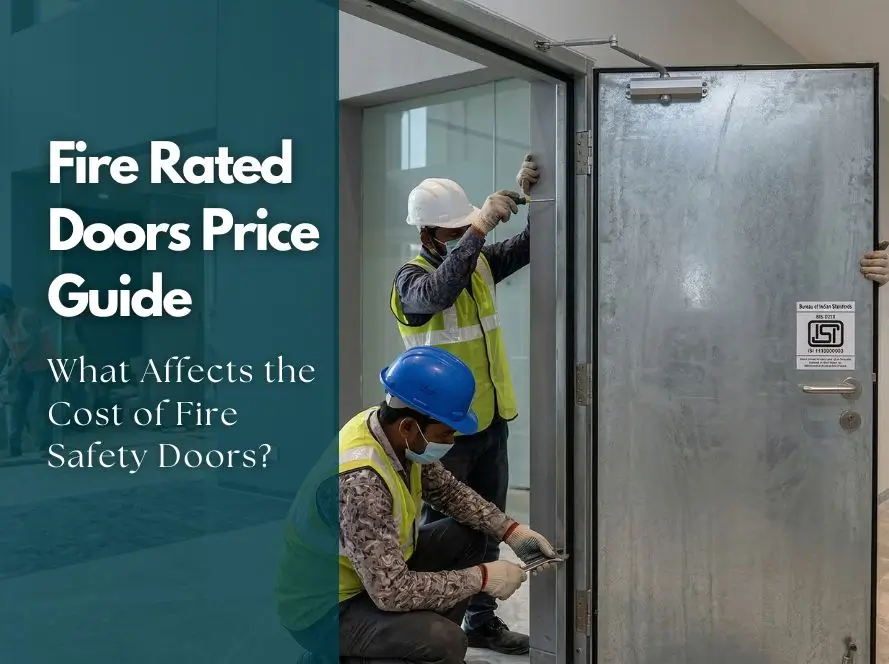
Imagine a building where every second counts during an emergency. Fire spreads fast, but the right barriers can save lives and property. In India, as urban spaces grow denser, building owners face tough choices on safety investments.
This guide breaks down the fire rated doors price guide, helping you understand costs without the guesswork. We’ll explore key factors influencing fire door expenses, from materials to certifications, all while keeping 2026 regulations in mind. Whether for homes, offices, or factories, knowing these details ensures smarter decisions. And if you’re ready for quality solutions, KOR India stands ready to help.
Why Fire Rated Doors Matter in 2026
Fire rated doors form the backbone of passive fire protection in buildings. They block flames, smoke, and heat for crucial minutes, allowing safe evacuation. According to the National Building Code (NBC) 2016-still the benchmark in 2026 with updates-fire doors must meet strict integrity and insulation standards.
In high-rises and commercial spaces, these doors prevent fire spread between compartments. Recent incidents highlight their role; non-compliant doors often fail first. For Indian builders, choosing BIS-certified options under IS 3614:2021 ensures compliance and peace of mind.
Moreover, 2026 sees tighter enforcement. The draft NBC 2025 pushes for better compartmentation and mixed-occupancy rules, making reliable fire resistant doors essential. At KOR India, we craft doors that exceed these norms, blending safety with durability.
Key Regulations Shaping Fire Door Choices
India’s fire safety landscape relies on clear standards. The Bureau of Indian Standards (BIS) mandates IS 3614:2021 for fire doors and doorsets, covering design, materials, and testing for fire resistance.
NBC Part 4 outlines requirements: exits need self-closing fire doors with intumescent seals, rated 60-120 minutes based on building type. High-risk areas like kitchens demand 60-minute separations. For 2025, updates emphasize gravity tanks and ventilation in high-rises over 45m, indirectly boosting demand for robust fire doors. Non-compliance risks fines or shutdowns. KOR India’s BIS-certified fire rated doors meet these seamlessly-contact us for a compliance check.
Types of Fire Rated Doors and Their Base Prices
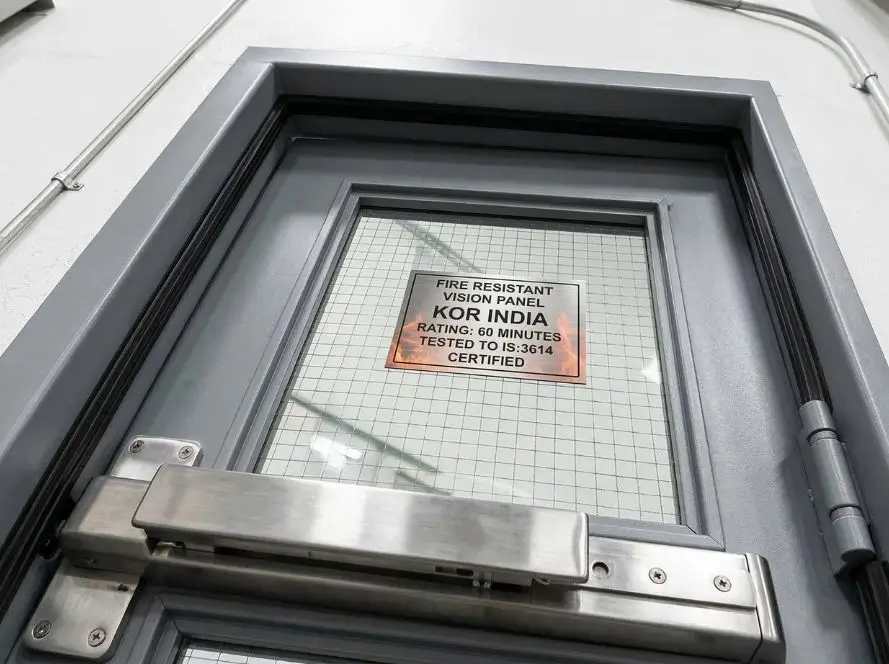
Fire doors vary by material and rating, directly impacting cost. Steel dominates for its strength, while wood suits aesthetics.
Here’s a comparison table of common types in India (prices per sqm, approx. 2026 estimates based on market data):
| Type | Fire Rating | Material | Base Price (Rs/sqm) | Best For |
| Steel Fire Door | 60-120 min | Galvanized Steel | 4,000-6,000 | Commercial, Industrial |
| Wooden Fire Resistant Door | 60 min | Fire-Retardant Wood | 6,000-9,000 | Residential, Hotels |
| Vision Panel Fire Doors | 60-90 min | Steel + Fire Glass | 7,000-12,000 | Offices, Visibility Needs |
| Composite Fire Door | 120 min | Mineral Core + Steel | 5,500-8,000 | Hospitals, High-Traffic |
Prices fluctuate with steel rates, up 10-15% in 2025 due to imports. KOR India offers competitive rates on steel variants, starting at Rs 5,500/sqm for single-leaf exits. Transitioning to specifics, let’s see what drives these numbers up or down.
Material Choices: The Biggest Cost Driver
Materials dictate 40-50% of fire rated doors price. Galvanized steel (GI) leads at Rs 4,000-5,500/sqm for its rust resistance and 120-minute ratings.
Wooden fire doors use vermiculite cores for insulation but cost more (Rs 6,000+) due to processing. Composites blend affordability with performance.
Fire-resistant glass for vision panels adds Rs 2,000-4,000/sqm; wired or ceramic types withstand heat without cracking. Volatility in steel prices-linked to global markets-affects all. For instance, 2025 hikes pushed GI sheets up 12%.
KOR India sources premium GI for longevity. Why settle? Our materials pass rigorous BIS tests, ensuring value over time.
Fire Resistance Ratings and Price Impact
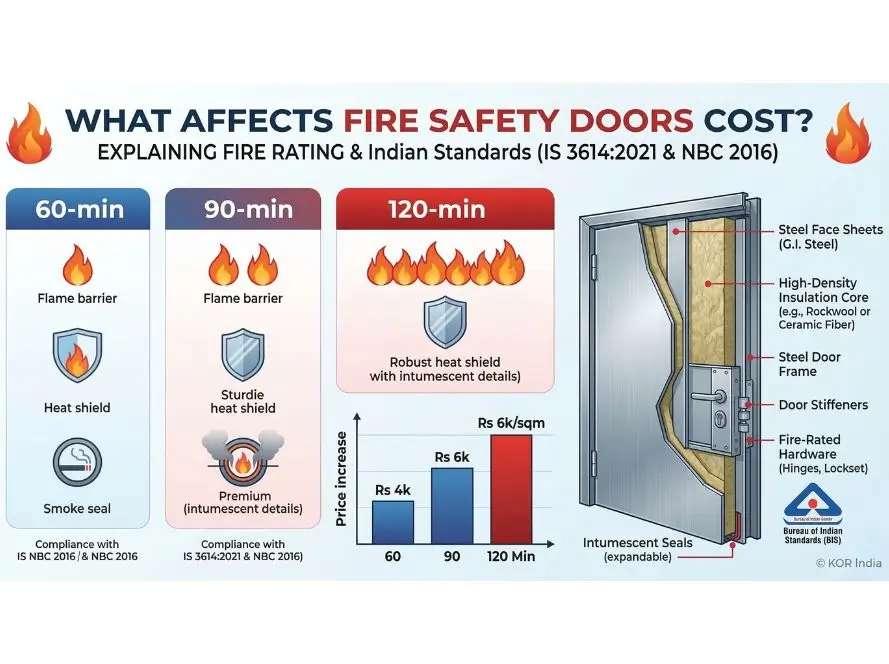
Higher ratings mean pricier doors. A 60-minute fire door suffices for low-risk areas at Rs 4,000/sqm, but 120-minute ones for exits hit Rs 6,000+.
Testing per IS 3614:2021 verifies integrity (no flames) and insulation (low heat transfer). 180-minute rare birds? They command premiums for factories.
In practice, NBC requires 20-60 minutes for most, but high-rises need more. Upgrading from 60 to 120 minutes adds 20-30% cost via thicker cores.
At KOR India, we tailor ratings to your building’s needs. This balance keeps costs reasonable while maximizing safety.
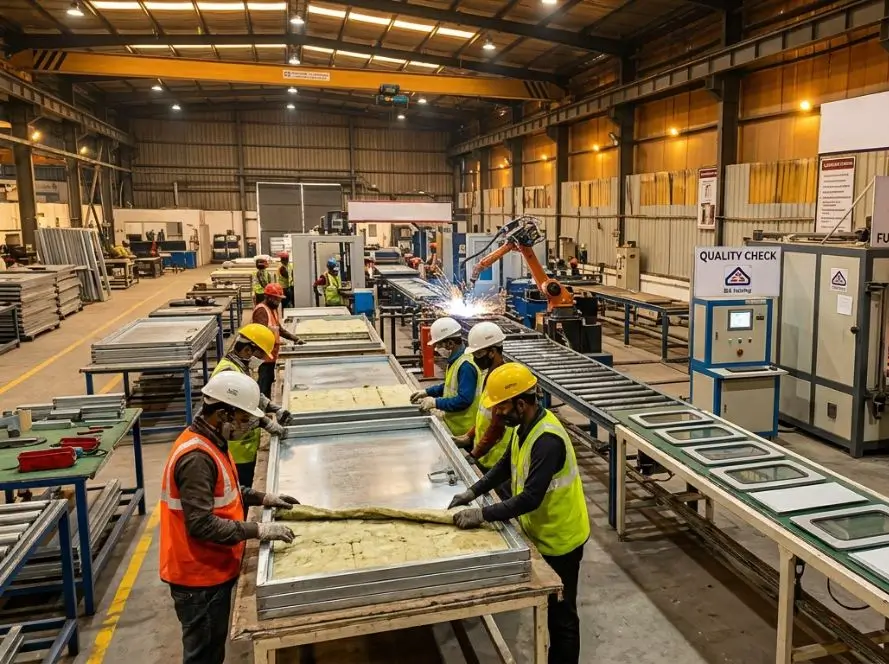
Size, Customization, and Design Features
Standard sizes (900x2100mm) keep prices low, but customs inflate by 15-25%. Double doors or odd dimensions require extra framing.
Vision panel fire doors integrate glazed sections for light, adding Rs 3,000/sqm for certified glass. Finishes like powder coating (Rs 500 extra) resist corrosion.
Hardware-fire-rated hinges, closers-adds Rs 1,000-2,000. Smoke seals and intumescent strips are musts per NBC.
Aesthetic customizations, like wood veneers on steel, appeal to hotels. These push prices to Rs 10,000/sqm but enhance appeal.
KOR India excels in custom fire resistant doors. Share your specs; we’ll quote transparently.
Certification, Testing, and Compliance Costs
BIS certification under IS 3614:2021 isn’t cheap-labs charge for furnace tests simulating fires. Certified doors carry ISI marks, mandatory for approvals.
This adds 10-15% to base price but avoids legal hassles. Third-party audits ensure quality.
In 2025, NBC drafts tighten mixed-occupancy rules, demanding verified ratings. Uncertified? Expect rejections.
KOR India’s fully certified range saves you headaches. Invest in compliance; it’s cheaper than rework.
Installation and Maintenance Expenses
- Installation runs Rs 1,000-2,000/sqm, needing certified pros for gaps under 3mm. Poor fits void ratings.
- Annual checks-seals, closers-cost Rs 500/door yearly. NBC mandates self-closing mechanisms.
- Total ownership? Factor 20% over 10 years. Bulk projects cut per-unit install by 30%.
- KOR India provides end-to-end service, including site surveys. One call handles it all.
Market Prices in India: 2026 Outlook
- Current ranges: Rs 3,800-7,500/sqm for basics, Rs 15,000-30,000 per standard door (2sqm).
- Vision panel variants: Rs 15,000/piece upwards. Bulk drops 10-20%.
- 2026 forecast: 5-8% rise from steel volatility, offset by local manufacturing.
- KOR India prices start competitively at Rs 5,500/sqm, with volume discounts. Compare us-you’ll see the difference.
Comparison: KOR India vs. Market Averages
| Feature | Market Average | KOR India Advantage |
| Steel Fire Door (120 min) | Rs 5,000/sqm | Rs 5,500/sqm, lifetime warranty |
| Vision Panel Add-On | +Rs 4,000 | +Rs 3,000, clear fire glass |
| Certification | BIS optional | Always BIS + NBC compliant |
| Install Time | 2-3 days/door | 1 day with expert teams |
Our edges come from in-house testing and efficient supply chains. Choose proven quality.
Long-Term Value of Investing in Quality Fire Doors
Cheap doors fail tests; quality ones last 20+ years. ROI? Reduced premiums, faster approvals.
In fires, they buy time-priceless. 2025 regs reward certified installs. Ready to upgrade? KOR India’s fire rated doors deliver unmatched value. Contact our experts today for a free quote.
FAQ
What is the average price of fire rated doors in India 2026?
Basic steel fire doors range Rs 4,000-6,000/sqm, higher for customs. Vision panels add Rs 2,000-4,000.
How do fire ratings affect fire door costs?
60-min doors cost less (Rs 4,000/sqm) than 120-min (Rs 6,000+), due to thicker materials and testing.
Are vision panel fire doors more expensive?
Yes, by 20-40% for fire-rated glass, but they offer visibility without compromising safety.
What certifications do fire resistant doors need in India?
BIS IS 3614:2021 and NBC compliance; look for ISI marks.
Does installation add much to fire safety doors cost?
Rs 1,000-2,000/sqm, but essential for warranty and performance.