

India’s fire safety landscape is undergoing rapid transformation, driven by stringent building codes, increased awareness, and mandatory compliance requirements outlined in the National Building Code 2025. With the fire-rated metal doors market projected to reach $1,710.32 million by 2032, growing at a 6.7% CAGR, selecting the right fire rated door manufacturers becomes crucial for ensuring both safety and regulatory compliance.
Fire rated door highlighting different fire resistance durations: FD30, FD60, FD90, and FD120 minutes with lock mechanisms and technical drawing details
Fire rated doors serve as critical barriers against flames and smoke, providing precious evacuation time during emergencies. These specialized doors undergo rigorous testing to meet IS 3614:2021 standards established by the Bureau of Indian Standards (BIS), ensuring they can withstand fire for predetermined durations ranging from 30 to 120 minutes.
Understanding Fire Rated Doors: Beyond Basic Safety
Fire door manufacturers India must comply with increasingly sophisticated regulations. These doors function through several key mechanisms: they compartmentalize fire spread, protect escape routes, and maintain structural integrity under extreme heat conditions. Moreover, modern fire doors incorporate intumescent seals that expand when exposed to high temperatures, effectively sealing gaps between door and frame to prevent smoke infiltration.
The top fire door companies differentiate themselves through the use of advanced materials, precision manufacturing, and comprehensive testing protocols. Contemporary fire doors utilize galvanized steel sheets (1.2-1.6mm thickness), high-density mineral wool or honeycomb core infill, and specialized hardware rated for extreme conditions.
Market Landscape: Growth Drivers and Opportunities
India’s fire door sector demonstrates remarkable expansion, with the fire doors and partitions market generating $1,383.4 million in 2024 and expected to reach $2,525.4 million by 2030. This 10.6% compound annual growth rate reflects several converging factors:
Urbanization Impact: With 39% of India’s population projected to live in urban areas by 2036, high-rise construction demands sophisticated fire safety solutions. Commercial projects increasingly require FD30, FD60, FD90, and FD120 rated doors for different applications.
Regulatory Evolution: The IS 3614:2021 standard mandates stricter testing protocols, including integrity, insulation, and stability assessments. Buildings exceeding 15 meters height must obtain Fire Services Department approval, necessitating certified fire doors throughout the structure.
Industrial Growth: Manufacturing facilities, hospitals, educational institutions, and hospitality projects drive demand for specialized fire doors with custom specifications.
1. KOR India – Excellence in Fire Protection
KOR India stands at the forefront of fire rated door manufacturing, combining cutting-edge technology with meticulous craftsmanship. The company specializes in producing BIS-certified fire doors that exceed industry standards while delivering exceptional value for commercial, industrial, and residential applications.
Key Strengths:
- Comprehensive range of FD30 to FD120 rated doors
- Advanced manufacturing facilities with precision tooling
- Customization capabilities for architectural requirements
- Expert installation and after-sales support
- Competitive pricing without compromising quality
2. JC Fire Door – German Technology Pioneer
JC Fire Door leverages cutting-edge German technology to manufacture fire doors across industrial, commercial, and residential sectors. The company has delivered doors worldwide, establishing itself as a leading Indian brand.
Specializations:
- Fire-rated, acoustic, and blast-resistant doors
- UL certification and international compliance
- Steel, glazed, and specialized door variants
- Comprehensive project execution capabilities
3. Shakti Hormann – First BIS-Certified Excellence
Shakti Hormann achieved a historic milestone by becoming the first company in India to receive ISI mark certification for fire doors under IS 3614:2021. Their products undergo testing at prestigious facilities including CBRI, Warrington, TBW, and Underwriters Laboratory.
Certifications:
- Certifire: CF 5191 (mineral wool), CF 815 (honeycomb)
- UL: R26117 (frames), R26118 (doors and positive pressure)
- Fire ratings: 60, 90, 120, and 180 minutes
- Multiple infill options: honeycomb and high-density mineral wool
4. Nitsui India – Japanese Technology Integration
Nitsui India combines Japanese manufacturing precision with Indian market understanding, offering comprehensive fire safety solutions. The company manufactures steel fire doors, wooden fire doors, UL fire doors, and automatic steel fire doors with swing mechanisms.
Product Range:
- Steel glazed fire doors with visibility features
- Wooden fire-rated doors with aesthetic appeal
- Commercial doors with BIS compliance
- Motorized rolling shutters with fire resistance
5. Adiba Fire Doors – Comprehensive Solutions Provider
Adiba Fire Doors has established itself as a trustworthy manufacturer serving commercial, industrial, institutional, hospitality, and residential sectors. The company emphasizes complete solutions under one roof, from design through installation.
Service Portfolio:
- Fire exit doors (single and double configurations)
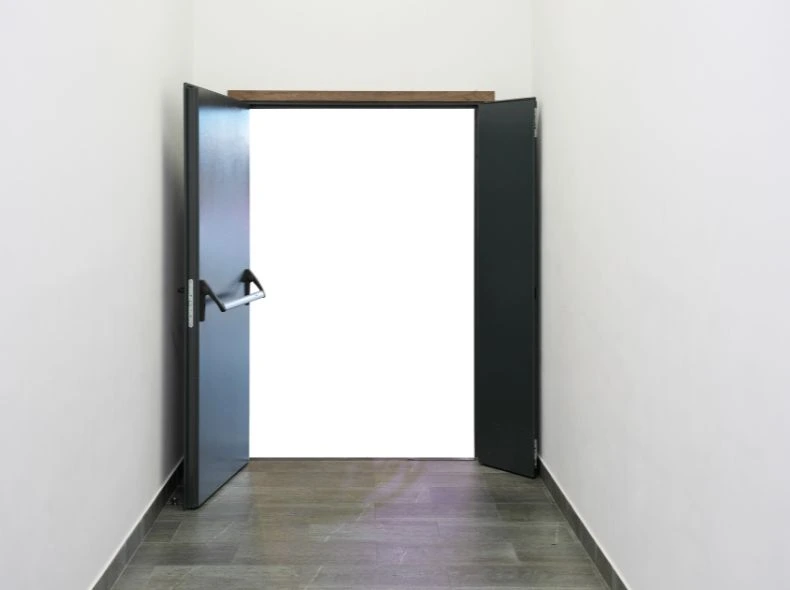
- Emergency exit doors with panic hardware
- Steel doors for industrial applications
- Customization for specific project requirements
6. Metaflex – Healthcare Specialist
Metaflex stands out among top fire door manufacturers by focusing on healthcare, commercial, and industrial sectors. Their fire doors are meticulously designed to offer unparalleled fire protection in critical environments where safety cannot be compromised.
Healthcare Focus:
- Hospital-grade fire doors with antimicrobial properties
- Clean room compatibility
- Specialized hardware for medical environments
- Regulatory compliance for healthcare facilities
7. Godrej Security Solutions – Trusted Brand Legacy
Godrej brings decades of security expertise to fire door manufacturing, serving residential, commercial, and industrial buildings. As one of India’s most recognized brands, Godrej ensures reliability and superior fire protection across diverse applications.
Brand Advantages:
- Established distribution network
- Comprehensive warranty programs
- Integration with broader security solutions
- Multi-sector application experience
8. Promat India – Etex Group Innovation
Promat India, part of the Etex Group, offers advanced fire protection solutions including innovative fire doors. The company is renowned for continuous innovation and high-performance products that meet international standards.
Innovation Focus:
- Advanced fire-resistant materials
- Integration with building management systems
- Sustainable manufacturing practices
- International quality standards
9. Navair International – Established Excellence
Operating since 1982, Navair International represents India’s foremost company in passive fire protection. Located in Barhi-Sonipat, Haryana, the company maintains rigorous quality standards with repetitive testing every five years.
Quality Assurance:
- Comprehensive passive fire protection range
- Steel and wooden door specialization
- Fire retardant paints for wood surfaces
- Extensive industry experience
10. Asiatic Fire System – Comprehensive Protection
Asiatic Fire System provides complete fire protection solutions, including specialized fire doors designed to prevent fire and smoke spread. The company focuses on comprehensive safety ecosystems rather than individual products.
System Integration:
- Fire doors as part of broader safety systems
- Smoke control integration
- Emergency evacuation planning
- Multi-building project capabilities
Key Selection Criteria for Fire Rated Door Manufacturers
Certification and Compliance Standards
BIS IS 3614:2021 compliance remains non-negotiable for any reputable fire door manufacturer. This standard specifies requirements for materials, design, construction, and fire resistance testing. Additionally, manufacturers should demonstrate:
- CBRI certification from Central Building Research Institute
- UL listing for international projects
- BS 476 compliance for British standards
- ISO 834-1 conformity for international recognition
Testing and Quality Assurance Protocols
Leading manufacturers subject their products to comprehensive testing regimens. Fire doors undergo evaluation for integrity (preventing flame passage), insulation (limiting heat transfer), and stability (maintaining structural performance).
Critical Test Parameters:
- Fire resistance duration: FD30, FD60, FD90, FD120, FD180 ratings
- Smoke leakage rates under standard conditions
- Hardware functionality under extreme temperatures
- Intumescent seal performance during heat exposure
Manufacturing Capabilities and Customization
Top fire door companies demonstrate advanced manufacturing capabilities including:
- Material Processing: Precision cutting, forming, and assembly of galvanized steel sheets, mineral wool cores, and honeycomb infill materials.
- Hardware Integration: Factory installation of fire-rated hinges, automatic door closers, panic bars, and specialized locking mechanisms.
- Customization Options: Size variations, finish selections, glazing options, and architectural integration capabilities.
Technology Innovations Shaping the Industry
Advanced Materials and Construction
Modern fire rated door manufacturers incorporate sophisticated materials to enhance performance while reducing weight. High-density mineral wool provides superior insulation properties, while honeycomb cores offer structural strength with reduced mass.
Intumescent technology has evolved significantly, with multi-stage expansion seals providing enhanced protection against both fire and smoke infiltration. These seals activate at different temperature thresholds, creating progressive barriers as fire intensity increases.
Smart Integration Features
Contemporary fire doors increasingly incorporate IoT connectivity and building management system integration. These features enable:
- Remote monitoring of door status and integrity
- Automatic reporting of maintenance requirements
- Emergency response coordination with building systems
- Predictive maintenance scheduling based on usage patterns
Sustainable Manufacturing Practices
Leading manufacturers embrace environmentally conscious production methods, utilizing recycled materials where possible and implementing energy-efficient manufacturing processes. This approach aligns with India’s sustainability goals while maintaining superior fire protection performance.
Application-Specific Requirements Across Sectors
Commercial Buildings and Offices
Commercial fire door applications require balance between functionality, aesthetics, and safety. Key considerations include:
- High-traffic durability: Doors must withstand frequent use while maintaining fire ratings
- Aesthetic integration: Seamless incorporation with architectural design elements
- Access control compatibility: Integration with electronic security systems
- Maintenance accessibility: Easy servicing without compromising safety features
Healthcare Facilities
Hospitals and medical centers impose additional requirements beyond basic fire protection. Healthcare-specific fire doors must accommodate:
- Antimicrobial surfaces to prevent infection spread
- Wide clearances for equipment and stretcher access
- Electromagnetic compatibility with medical devices
- Easy cleaning protocols for infection control
Industrial and Manufacturing
Industrial applications demand robust construction and specialized features. Industrial fire doors typically incorporate:
- Heavy-duty hardware for harsh operating conditions
- Chemical resistance for corrosive environments
- Explosion-rated configurations for hazardous locations
- Integration with process safety systems
Educational Institutions
Schools and universities require fire doors that balance safety with accessibility. Educational facility doors must provide:
- Child-safe operation with appropriate hardware
- Clear sight lines for supervision and security
- Vandal resistance while maintaining functionality
- Emergency egress optimization for rapid evacuation
Regulatory Landscape and Compliance Requirements
National Building Code 2025 Updates
The National Building Code 2025 introduces enhanced fire safety requirements, mandating advanced smoke detection systems and smart evacuation protocols. Buildings must now incorporate:
- Digital compliance verification through Building Information Modeling (BIM)
- Advanced fire suppression systems with pinpoint detection capabilities
- Climate-resilient construction standards for extreme weather events
- Universal design principles ensuring accessibility during emergencies
State-Level Variations
Different states implement additional requirements beyond national standards. Delhi Fire Service Act 2007 and Delhi Fire Service Rules 2010 establish specific protocols for the National Capital Territory. Manufacturers must understand regional variations to ensure comprehensive compliance.
International Standards Integration
Leading fire door manufacturers India increasingly align with international standards to serve multinational projects. This includes UL certification for North American markets, CE marking for European compliance, and BS 476 certification for British standards.
Installation and Maintenance Best Practices
Professional Installation Requirements
Proper installation remains critical for fire door performance. BIS-compliant installation requires:
- Certified installers trained in fire door specifications
- Frame alignment precision ensuring proper seal contact
- Hardware adjustment for optimal closing and latching
- Documentation completion for regulatory compliance
Maintenance Protocols and Scheduling
Regular maintenance ensures continued fire protection effectiveness. Comprehensive maintenance programs include:
- Monthly visual inspections of door operation and hardware condition
- Quarterly seal examinations for wear and proper alignment
- Annual professional assessments by certified technicians
- Documentation maintenance for regulatory compliance
Common Installation and Maintenance Issues
Fire door manufacturers frequently encounter installation challenges that compromise safety:
- Improper gap dimensions allowing smoke infiltration
- Incorrect hardware selection failing under fire conditions
- Inadequate frame preparation preventing proper seal contact
- Poor documentation practices complicating compliance verification
Cost Analysis and Value Engineering
Investment Considerations
Fire rated door costs vary significantly based on specifications, certifications, and customization requirements. Key cost factors include:
- Fire rating duration: Higher ratings (FD120, FD180) command premium pricing
- Material specifications: Steel gauge, core materials, and finish quality
- Hardware complexity: Basic latching versus sophisticated access control
- Certification requirements: Multiple standard compliance increases costs
Long-term Value Proposition
Quality fire door manufacturers deliver superior long-term value through:
- Extended service life reducing replacement frequency
- Lower maintenance costs through robust construction
- Insurance premium reductions for enhanced fire protection
- Regulatory compliance assurance preventing costly violations
Budget Optimization Strategies
Effective cost management involves strategic decision-making across multiple factors:
- Standardization benefits: Consistent specifications reducing unit costs
- Volume procurement leveraging bulk purchasing advantages
- Phased implementation spreading investment across project timeline
- Life-cycle cost analysis optimizing total ownership expenses
Future Trends and Market Evolution
Technology Integration Advancement
The fire door industry continues evolving through technological integration. Emerging trends include:
- Artificial intelligence for predictive maintenance scheduling
- Blockchain technology for certification verification
- Advanced materials offering superior performance characteristics
- Automated manufacturing improving precision and consistency
Sustainability Focus
Environmental consciousness increasingly influences manufacturer selection. Sustainable fire door production encompasses:
- Recycled material utilization reducing environmental impact
- Energy-efficient manufacturing processes minimizing carbon footprint
- End-of-life recyclability supporting circular economy principles
- Local sourcing strategies reducing transportation emissions
Market Consolidation Patterns
Industry consolidation continues as top fire door companies acquire smaller manufacturers to expand capabilities and market reach. This trend benefits customers through:
- Enhanced service networks providing broader geographic coverage
- Integrated solution offerings combining multiple safety technologies
- Improved quality consistency through standardized processes
- Competitive pricing through operational efficiencies
Frequently Asked Questions
What certifications should I look for when selecting a fire rated door manufacturer in India?
Prioritize manufacturers with BIS IS 3614:2021 certification, which is mandatory for fire doors in India. Additional certifications like UL listing, CBRI approval, and Certifire certification indicate comprehensive testing and quality assurance. The ISI mark on compliant doors signifies adherence to national safety standards.
How do I determine the appropriate fire rating for my building project?
Fire rating requirements depend on building height, occupancy type, and local regulations. Buildings over 15 meters require Fire Services Department approval, while commercial structures typically need FD60 or FD90 ratings. Consult with certified fire safety engineers and local authorities to determine specific requirements for your project.
What maintenance is required to keep fire doors compliant with safety standards?
Fire doors require monthly visual inspections, quarterly seal examinations, and annual professional assessments. Check door operation, hardware functionality, and seal integrity regularly. Maintain documentation of all inspections and repairs to demonstrate ongoing compliance with regulatory requirements.
Can fire doors be customized for architectural requirements while maintaining safety performance?
Yes, leading fire door manufacturers offer extensive customization options including size variations, finish selections, glazing options, and hardware configurations. However, all modifications must maintain BIS certification and fire rating performance. Work with manufacturers experienced in custom applications to ensure compliance.
What is the typical lifespan of a professionally manufactured fire door?
Quality fire doors from reputable top fire door companies typically last 15-25 years with proper maintenance. However, regulatory changes, building renovations, or performance degradation may necessitate earlier replacement. Regular professional assessments help determine optimal replacement timing while ensuring continued safety compliance.