
When a fire breaks out, every second counts. While smoke billows and temperatures soar, the difference between chaos and controlled evacuation often comes down to one critical component—fire rated doors. These aren’t ordinary doors you find in homes or offices. Fire Door Manufacturers have engineered these specialized barriers to withstand intense heat, contain flames, and prevent smoke from spreading. For building owners, architects, and facility managers across India, selecting the right fire door manufacturers has become an essential responsibility, not just a regulatory checkbox.
The Indian fire door market is experiencing remarkable growth, with projections showing a compound annual growth rate of 5.6% from 2025 to 2035. This surge reflects increased awareness of fire safety norms and stringent regulatory mandates. Yet, with numerous fire safety doors suppliers and manufacturers operating across the country, making an informed decision requires understanding far more than just product specifications. You must evaluate certifications, manufacturing processes, installation capabilities, and post-installation support.
This comprehensive guide walks you through the essential considerations for choosing fire rated doors suppliers that truly deliver on their promises. Whether you’re constructing a residential high-rise, establishing a pharmaceutical facility, or creating a modern office campus, this 2025 buyer’s guide provides actionable insights grounded in current standards, real-world applications, and expert recommendations.
Understanding Fire Rated Doors: The Basics
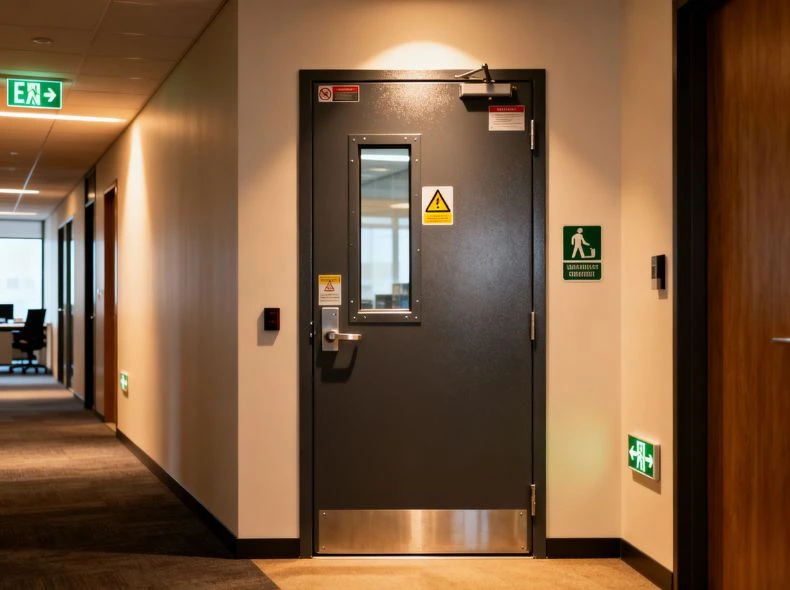
Before comparing fire door manufacturers, you need to understand what fire rated doors actually do. A fire-rated door isn’t just a thicker, heavier version of a regular door. Instead, fire-rated doors are meticulously engineered systems designed to withstand specific temperatures for predetermined periods. The entire assembly—door leaf, frame, hinges, seals, and hardware—works together to contain fire and smoke.
The core of a fire door typically contains fire-resistant materials such as mineral wool, intumescent seals, or specialized composites. Meanwhile, the door leaf itself might be constructed from steel, timber, or composite materials, depending on the required fire rating and application. Importantly, what makes a fire door effective isn’t just the materials; it’s the precision of assembly and the integration of components tested under rigorous laboratory conditions.
Fire Door Ratings Explained: FD30, FD60, FD90, and FD120
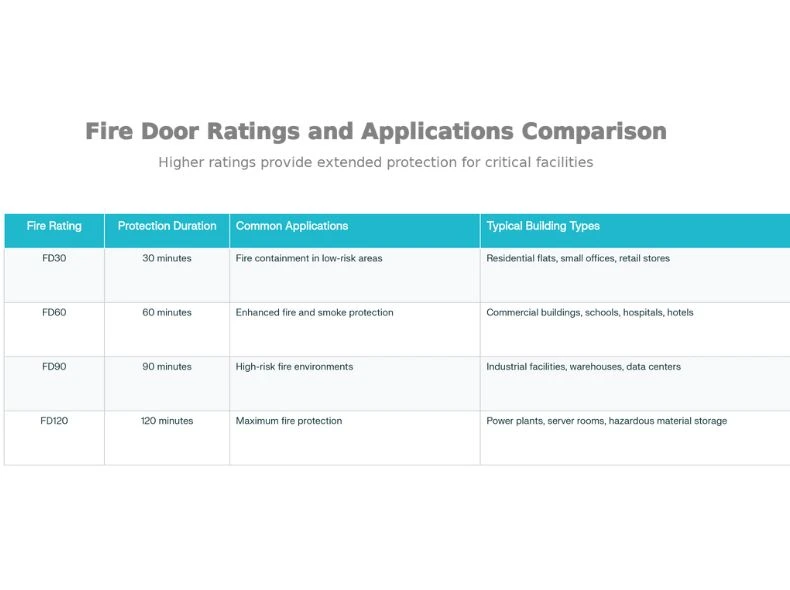
When evaluating fire door manufacturers, you’ll encounter fire resistance classifications designated as FD30, FD60, FD90, and FD120. These designations represent the number of minutes a fire door can withstand exposure to fire while maintaining its integrity and, in some cases, insulation properties.
FD30 fire doors offer 30 minutes of fire resistance, making them suitable for residential apartments, small commercial spaces, and low-risk occupancies. FD60 fire doors provide 60 minutes of protection and are commonly found in hospitals, hotels, schools, and higher-occupancy commercial buildings. For more hazardous environments, FD90 doors deliver 90 minutes of fire containment and are typically installed in industrial facilities, data centers, and warehouses. Finally, FD120 fire doors offer maximum protection, lasting 120 minutes, and are reserved for the most critical areas such as power plants, server rooms, and chemical storage facilities.
Fire Door Ratings Guide: Applications and Building Types
The selection of the appropriate fire rating depends on building occupancy classification, evacuation time requirements, and regulatory mandates under the National Building Code (NBC) of India. Therefore, choosing the right fire door manufacturers means finding partners who understand these distinctions and can recommend appropriate solutions for your specific context.
Current Regulations and Standards for Fire Doors in India (2025)
India’s fire safety landscape has evolved significantly, with updated standards and compliance requirements that directly impact fire door manufacturers and their customers. Understanding these regulations is crucial when selecting a manufacturer.
IS 3614:2021 – The National Standard
The most critical standard for fire safety doors in India is IS 3614:2021, issued by the Bureau of Indian Standards. This comprehensive revision represents a fundamental shift in how fire doors are designed, manufactured, tested, and installed. Unlike earlier versions, IS 3614:2021 addresses the complete lifecycle of fire doors—from design and manufacturing through installation and maintenance.
The standard defines essential requirements for door assemblies, including material specifications, core thickness, glass panel limitations, and smoke seal specifications. For instance, uninsulated fire doors are limited to a maximum glass panel area of 0.12 m², while insulated doors cannot exceed 0.06 m² for vision panels. These specifications ensure that fire-rated doors maintain their protective integrity without compromising visibility requirements in settings like hospitals and offices.
Critically, IS 3614:2021 mandates that manufacturers obtain test certificates from CBRI (Central Building Research Institute) or other NABL-accredited laboratories. Furthermore, when fire door manufacturers make changes to components or manufacturing processes, recertification becomes necessary. Test certificate validity is limited to five years, ensuring that certifications reflect current manufacturing standards.
BIS Certification and ISI Mark
When evaluating fire door manufacturers, always verify Bureau of Indian Standards (BIS) certification. The ISI mark on fire doors indicates that the product has undergone rigorous testing and meets nationally mandated safety standards. BIS certification covers integrity (whether the door can prevent flame passage) and insulation (whether the door prevents excessive heat from passing through).
Shakti Hormann, a leading manufacturer, demonstrates this commitment—their fire doors receive ISI marking for 120-minute integrity and 30-minute insulation, with additional certifications from international laboratories such as Warrington and TBW. This multi-level validation provides assurance that fire safety doors meet both Indian and international benchmarks.
NBC Compliance and State-Specific Requirements
The National Building Code (NBC) 2016 mandates fire-rated doors in specific building categories. Commercial buildings, educational institutions, hospitals, hotels, shopping malls, industrial facilities, high-rise residential buildings (above 15 meters), and assembly occupancies with capacity exceeding 50 people all require certified fire doors.
Beyond the NBC, state-specific requirements have become increasingly stringent. In 2025, Maharashtra has implemented mandatory fire safety insurance verification for license renewals. Karnataka requires quarterly compliance reports for high-risk buildings submitted digitally. Delhi NCR has increased penalties for non-compliance by 200-300%. These evolving requirements underscore why selecting experienced fire door manufacturers who stay current with regulatory changes is essential.
The Indian Fire Door Market: Growth and Opportunity
The fire door market in India is experiencing unprecedented growth, signaling both opportunity and increasing competition. Understanding this market landscape helps you make informed decisions about which fire door manufacturers to partner with.
Market Expansion and Growth Projections
India’s fire door market is projected to grow at a compound annual growth rate of 5.6% from 2025 to 2035, outpacing global growth rates of 4.5%. This acceleration reflects three primary drivers: increased commercial infrastructure development, rising industrial facility expansion, and growing awareness of fire safety standards among building owners and facility managers.
The market value for India reached approximately USD 3.76 billion in 2025, with sustained growth driven by regulatory mandates and heightened awareness. Major sectors contributing to this growth include healthcare facilities, IT parks, pharmaceutical manufacturing, data centers, hospitality, and residential high-rises.
This expansion creates both opportunity and challenge for fire door manufacturers. Competition intensifies, pushing innovation and quality improvements. Simultaneously, the proliferation of manufacturers—some adhering to rigorous standards and others offering substandard products—makes informed selection increasingly critical.
Sector-Specific Demand
Different sectors demand different fire door specifications from manufacturers. Understanding these applications helps clarify what fire rated doors your specific project requires.
Healthcare Facilities: Hospitals require FD60 doors with vision panels, quiet closing mechanisms, and infection-control considerations. Operating theaters need FD90 or FD120 doors. Pediatric and psychiatric units need specialized hardware designed to prevent harm. Therefore, fire door manufacturers serving healthcare must understand these nuanced requirements.
Pharmaceutical and Manufacturing: Clean room facilities require doors that maintain environmental controls while providing fire protection. FD90 and FD120 ratings are standard. Material compatibility is critical—doors must resist chemical exposure without compromising fire-protective properties.
IT and Data Centers: Server rooms and data centers typically require FD120 doors. These facilities house irreplaceable digital assets and must allow maximum evacuation time. Additionally, cable routing and infrastructure integration demand customization capabilities from fire door manufacturers.
Residential High-Rises: Multi-story residential buildings above 15 meters require FD30 to FD60 doors, depending on design and occupancy. Common areas, staircases, and fire compartments have different requirements. Economic considerations become important, making cost-effective options attractive to developers.
Key Criteria for Selecting Fire Door Manufacturers
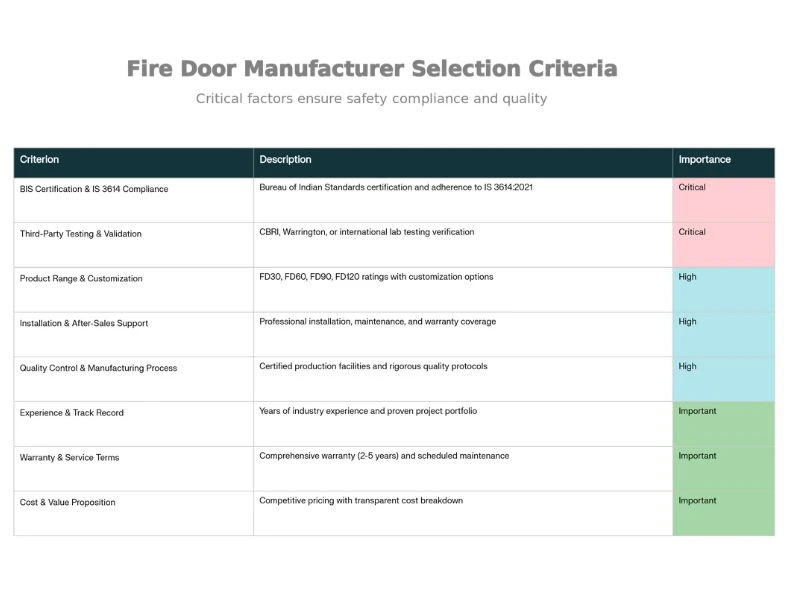
Choosing among numerous fire door manufacturers requires systematic evaluation. Understanding these critical criteria transforms selection from guesswork into strategic decision-making.
8 Essential Criteria for Selecting Fire Door Manufacturers in India
1. Certifications and Compliance Standards
The first consideration when evaluating any fire safety doors manufacturer is their certification portfolio. BIS certification is non-negotiable for operating in India. Verify the ISI mark and review the test certificate number and date. Ensure certificates are current—valid certificates should not exceed five years in age.
Beyond BIS, look for additional certifications from international testing laboratories. Warrington, TBW, Exova, and Underwriters Laboratory certifications demonstrate commitment to international standards. When fire door manufacturers maintain multiple certifications, they typically adhere to the most stringent requirements across all standards, which benefits you.
Request comprehensive test reports showing integrity, insulation, and stability performance. Reputable manufacturers provide transparent access to these documents. If a manufacturer hesitates to share certification details, consider this a red flag.
2. Manufacturing Process and Quality Control
Behind every certified door is a rigorous manufacturing process. The best fire door manufacturers invest heavily in quality control systems that monitor raw material selection, component procurement, assembly procedures, and final inspections.
Inquire about the manufacturer’s quality assurance protocols. Are they ISO 9001:2015 certified for quality management? What third-party audits do they undergo? How frequently do they conduct internal testing? Reputable manufacturers often conduct in-house fire ratings verification beyond regulatory requirements.
Material sourcing matters significantly. High-quality fire doors use premium galvanized steel sheets, properly selected core materials, and certified intumescent seals. Inferior materials lead to performance failures not immediately obvious until a fire occurs—an unacceptable risk.
3. Product Range and Customization Capability
Different applications require different door configurations. Leading fire door manufacturers offer comprehensive product ranges including hinged fire doors, double-action doors, sliding fire doors, and specialized configurations for specific industries.
Evaluate whether manufacturers can customize doors to your specifications. Can they provide specific fire ratings? Do they offer different vision panel options? Can they accommodate specialized hardware requirements? What finish options are available? The ability to customize ensures doors integrate seamlessly with your architectural vision while meeting fire safety requirements.
4. Installation and Professional Support
A fire door’s effectiveness depends entirely on proper installation. The best fire door manufacturers provide installation services or partner with certified installers who understand the specific requirements of fire-rated door assemblies.
Proper installation includes precise frame setting, correct seal placement, accurate hardware alignment, and comprehensive testing post-installation. Professional installers create documentation proving that doors have been installed per manufacturer specifications and relevant standards. This documentation is essential for regulatory compliance and insurance purposes.
Ask potential fire door manufacturers about their installation support. Do they provide guidance to builders and contractors? Do they conduct post-installation verification? What warranties cover installation quality? These questions reveal how seriously manufacturers take performance accountability.
5. After-Sales Service and Maintenance Support
Fire doors aren’t set-and-forget installations. They require periodic maintenance to ensure seals remain effective, hinges function properly, and hardware operates smoothly. Leading fire door manufacturers provide comprehensive after-sales support.
Inquire about maintenance schedules recommended by the manufacturer. How often should doors be serviced? What does a maintenance visit include? Do manufacturers offer maintenance contracts? What training do they provide to facility staff? Regular maintenance ensures doors remain effective throughout their operational lifespan.
6. Warranty Terms and Service Coverage
Warranty provisions directly reflect manufacturer confidence in product quality. Standard warranties typically cover 2-5 years for manufacturing defects. However, reputable manufacturers often structure warranties with extended service coverage periods.
For example, some manufacturers provide 2-year product warranties covering manufacturing defects, followed by 3 additional years of service warranty where maintenance costs are covered (though parts replacement may have additional charges). This tiered approach provides extended protection and demonstrates manufacturer confidence.
Examine warranty terms carefully. What’s covered? What’s excluded? Are there conditions that might void coverage? Do warranties cover labor costs or only materials? Clear, comprehensive warranty terms indicate a manufacturer standing behind their products.
7. Experience and Track Record
Experience matters in fire safety. Fire door manufacturers with decades of operational history have navigated regulatory changes, technology advancements, and diverse project requirements. Their track record reflects reliability and adaptability.
Research manufacturer history. How long have they operated? What major projects have they completed? Can they provide references from recent installations? Visiting completed installations provides valuable insights into workmanship quality and long-term performance.
Industry recognition matters too. Manufacturers recognized by industry associations, included in government approved vendor lists, or cited in case studies have demonstrated sustained quality and reliability. This recognition doesn’t happen accidentally—it results from consistent excellence over years.
8. Cost and Value Proposition
While cost shouldn’t be the sole determining factor, it’s certainly important. Fire door costs in India vary significantly based on fire rating, materials, customization, and manufacturer.
FD30 doors typically range from ₹35,000 to ₹50,000 per piece, or ₹14,000 to ₹20,000 per square meter. FD60 doors cost between ₹45,000 to ₹65,000 per piece (₹18,000-₹26,000 per m²). FD90 doors range from ₹60,000 to ₹85,000 (₹24,000-₹34,000 per m²). Premium FD120 doors cost ₹80,000 to ₹120,000 per piece (₹32,000-₹48,000 per m²).
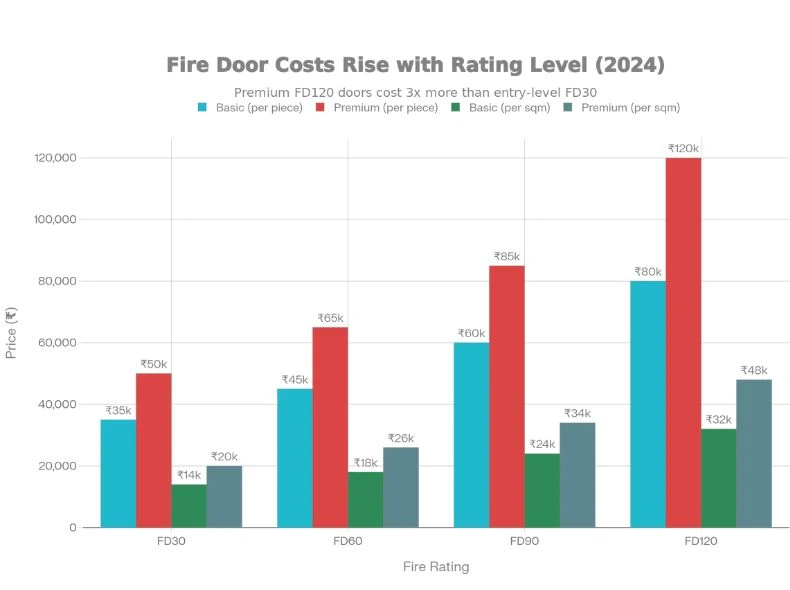
Fire Door Cost Breakdown by Rating in India (2025)
When evaluating costs, consider total cost of ownership—including installation, maintenance, warranty, and service. A lower-priced product requiring expensive maintenance and offering limited warranty may cost more overall than a premium product backed by comprehensive support.
Understanding Fire Door Applications by Sector
Different sectors have distinct fire door requirements based on occupancy type, hazard level, and regulatory mandates. Understanding these application-specific needs helps clarify what fire door manufacturers can deliver for your project.
Commercial Office Buildings
Modern office buildings require strategic fire door placement. Commercial complexes typically need FD30 to FD60 doors throughout, depending on compartmentation strategy. Reception areas, stairwells, lift lobbies, and mechanical rooms all require different considerations.
When selecting fire door manufacturers for commercial projects, prioritize those offering acoustic ratings alongside fire resistance. Many offices require sound control to minimize disruption. Vision panels become important in high-traffic areas to reduce collision risks. Automatic closing systems may be necessary for accessibility compliance.
Additionally, commercial spaces often demand aesthetic considerations. Modern glass and metal combinations, various finishes, and hardware options should be available. The manufacturer’s ability to balance safety, functionality, and design aesthetics becomes valuable.
Hospitals and Healthcare Facilities
Healthcare environments present unique challenges for fire door manufacturers. Hospitals require FD60 doors as standard, with FD90 or FD120 in critical areas. Operating theaters, intensive care units, and isolation rooms need specialized configurations.
Healthcare doors must accommodate frequent passage by personnel moving equipment, patients on gurneys, and emergency responders. Specialized hardware prevents entrapment while maintaining fire protection. Infection control requires smooth, cleanable surfaces without crevices where pathogens might harbor.
Quiet closing mechanisms are essential—loud slamming doors disrupt patients and create stress. Vision panels must meet fire rating requirements while allowing staff to monitor adjacent areas. Some facilities require lead-lined doors combining radiation and fire protection.
Experienced fire door manufacturers understand these nuanced requirements. They’ve worked with healthcare architects and facility managers to develop solutions that excel in all dimensions—safety, functionality, and operational integration.
Pharmaceutical and Manufacturing Facilities
Clean room and controlled environment manufacturing facilities have stringent requirements. These environments must maintain specific temperature, humidity, and contamination levels. Fire rated doors must integrate seamlessly without compromising environmental controls.
Manufacturers serving this sector typically provide specialized sealing systems, controlled air flow designs, and compatible finishing options. Material selection becomes critical—doors must resist chemical exposure without degrading protective properties. FD90 or FD120 ratings are typical for hazardous material storage and high-risk manufacturing areas.
Customization capabilities become essential. Generic doors rarely fit the specific geometric and functional requirements of industrial spaces. Leading fire door manufacturers invest in engineering support to design solutions meeting both fire safety and production environment requirements.
Data Centers and IT Infrastructure
Data centers represent an emerging segment demanding maximum fire protection. These facilities house irreplaceable digital assets requiring FD120 doors as standard. Fire duration extends evacuation time for complex infrastructure shutdown procedures and asset protection.
Fire door manufacturers serving data centers address unique challenges—high-density cable routing, redundant power systems, and specialized cooling infrastructure. Doors must accommodate substantial cable bundles and major infrastructure elements while maintaining fire-protective seals. Coordination with mechanical, electrical, and IT trades is essential.
The investment in superior fire protection reflects the extraordinary value of digital infrastructure. A data center fire causing extended downtime creates catastrophic financial losses far exceeding the cost of premium fire doors.
The Decision-Making Process: A Step-by-Step Approach
Choosing the right fire door manufacturers involves systematic evaluation rather than random selection. Following this structured approach increases likelihood of successful outcomes.
Step 1: Define Your Requirements
Begin by clearly articulating your project requirements. What building type are you constructing? What occupancy classification applies? What regulatory requirements mandate fire doors? Which areas require protection?
Understand space constraints—do standard door sizes fit, or do you need customization? What architectural style dominates—contemporary, traditional, industrial? Are sound control and specialized hardware requirements necessary?
Document these requirements clearly. This becomes your reference point for evaluating fire door manufacturers and a specification document for vendor communication.
Step 2: Research Potential Manufacturers
Research fire door manufacturers operating in your region. Identify companies with relevant experience—manufacturers serving your sector typically understand industry-specific requirements better than generalists. Search for certifications, verify credentials, and review available case studies and references.
Online research provides initial information, but industry connections matter. Consult with architects, builders, and facility managers about manufacturers they’ve worked with. Professional networks often provide candid insights unavailable through vendor marketing materials.
Step 3: Request Detailed Quotations
Contact shortlisted fire door manufacturers with your requirements. Request comprehensive quotations including product specifications, fire ratings, installation costs, warranty terms, and after-sales service details. Quotations should itemize costs clearly, showing door units, installation, testing, and any additional charges.
Compare quotations carefully, but remember that lowest cost rarely indicates best value. Consider total cost of ownership including maintenance, warranty coverage, and service availability.
Step 4: Verify Certifications and
Before proceeding, independently verify manufacturer certifications. Contact BIS directly if needed. Review test certificates—ensure they’re current and relevant to your specific requirements. Request references from recent projects and contact them directly.
When speaking with references, ask about product quality, installation professionalism, post-installation support, and whether doors have functioned as expected. Detailed questions about actual experiences provide insights beyond vendor-provided testimonials.
Step 5: Evaluate Installation and Support Capabilities
Schedule facility visits with shortlisted fire door manufacturers. Observe their manufacturing processes, quality control systems, and technical capabilities. Discuss installation procedures, quality assurance protocols, and how they handle project-specific challenges.
Assess communication quality and responsiveness. Professional manufacturers maintain clear communication throughout the procurement process. If a manufacturer seems dismissive or unclear during the sales process, imagine how difficult the relationship might become during installation or warranty service.
Step 6: Make Your Final Selection
Based on comprehensive evaluation, make your selection. Document all agreements clearly—specifications, timelines, pricing, installation procedures, and warranty terms. A detailed written agreement prevents misunderstandings and disputes later.
Once manufacturing begins, maintain regular communication with your fire door manufacturers representative. Clear communication throughout the process ensures final deliverables match requirements exactly.
Common Mistakes to Avoid When Selecting Fire Door Manufacturers
Understanding what not to do sometimes teaches more than what to do. These common mistakes often lead to unsatisfactory outcomes:
Prioritizing Cost Above All Else: The cheapest doors often mean cutting corners on materials, testing, or certification. When the fire occurs, cost savings evaporate against potential loss of life or property. Premium doors represent insurance against catastrophic outcomes.
Ignoring Certifications: Manufacturers operating outside regulatory frameworks cut corners undetectable until fires occur. “Nearly certified” or “almost compliant” doors create legal liability and endanger occupants.
Overlooking Installation Quality: Even properly manufactured doors fail if installed incorrectly. Rushing installation or using unqualified installers undermines safety. Professional installation by certified technicians ensures optimal performance.
Neglecting After-Sales Support: Fire doors require maintenance. Manufacturers offering minimal support leave you scrambling when maintenance issues arise. Long-term relationships with reliable manufacturers include proactive support.
Failing to Customize for Specific Needs: Generic doors sometimes create awkward compromises. Projects requiring specialized configurations benefit from manufacturers with customization capabilities.
Not Verifying References: Speaking directly with previous clients reveals issues vendor marketing never mentions. References provide invaluable insights into real-world performance.
Transition to Implementation: Next Steps After Selecting Your Manufacturer
Once you’ve selected your fire door manufacturers, the work continues. These next steps ensure successful implementation:
Finalize Technical Specifications: Work with the manufacturer’s technical team to finalize all specifications. Ensure architectural plans reflect the exact door configurations, dimensions, hardware, and finishes specified.
Coordinate with Other Trades: Install communication between fire door installation teams and other construction trades. Mechanical, electrical, and structural teams must understand the sequencing to avoid conflicts.
Schedule Pre-Installation Inspections: Before installation begins, both parties should verify that door frames, walls, and surrounding construction meet specifications. This prevents surprises that require costly rework.
Plan Installation Logistics: Coordinate installation timing to minimize disruption to ongoing construction and future facility operations. Establish clear protocols for worksite safety and quality verification.
Documentation and Testing: Ensure all post-installation testing is documented. Fire doors should undergo functional verification confirming proper closing, sealing, and hardware operation.
Training and Handover: Before project completion, facility staff should receive training on door maintenance, inspection procedures, and emergency protocols. This ensures long-term performance and compliance.
Cost Analysis: What You Should Budget for Fire Doors
Understanding cost components helps you budget accurately and evaluate whether quotes seem reasonable. Fire door pricing includes several elements:
Materials and Manufacturing: The actual door, frame, and hardware represent the primary cost driver. Premium materials command higher prices but deliver superior long-term performance. Specialized materials for specific applications (stainless steel for corrosive environments, lead-lined panels for radiation zones) increase costs substantially.
Customization and Engineering: Non-standard sizes, specialized hardware configurations, and custom finishes incur additional charges. The more customization required, the higher the costs.
Certification and Testing: Compliance with IS 3614:2021 requires professional testing from accredited laboratories. These costs are embedded in product pricing. Manufacturers offering multiple certifications typically price products higher to recover testing investments.
Installation Services: Professional installation by certified technicians costs ₹5,000 to ₹15,000 per door depending on complexity and location. Installation costs increase for difficult-access locations or complex architectural features.
Maintenance and Warranty: Extended warranty and maintenance programs typically cost 10-20% of initial product cost annually. These programs ensure long-term performance and compliance.
When evaluating total cost, consider the lifetime value. A premium door costing ₹120,000 with comprehensive 5-year warranty covering maintenance might deliver superior overall value compared to a ₹70,000 door with minimal warranty and support.
FAQ: Common Questions About Fire Door Manufacturers and Selection
Q1: What’s the difference between a fire-rated door and a fire door?
A: All fire-rated doors are fire doors, but the terms are sometimes used interchangeably. A fire-rated door specifically refers to doors that have been tested and certified to meet fire resistance standards like IS 3614:2021. A regular door not tested or certified to fire standards is simply a door, not a fire-rated door. When purchasing, always ensure products carry appropriate fire ratings matching your regulatory requirements.
Q2: How often should fire-rated doors be maintained?
A: Maintenance frequency depends on usage intensity and environment. Typically, professional inspection is recommended every six months. High-traffic areas may require quarterly inspections. Maintenance includes verifying seal integrity, checking hinge operation, confirming hardware function, and testing automatic closing mechanisms. Facility staff should conduct basic visual inspections monthly, checking for visible damage or seal degradation.
Q3: Can I upgrade my existing doors to fire-rated doors, or do I need to replace the entire frame?
A: It depends on the existing frame construction. If existing frames are properly constructed and certified for fire-rated doors, only the door leaf and hardware require replacement. However, most existing residential and commercial frames don’t meet fire-door specifications. Frame replacement is typically necessary, making complete door system upgrades more cost-effective than partial retrofits.
Q4: Are there fire doors available for specialized applications like clean rooms or hospitals?
A: Yes, leading fire door manufacturers offer specialized configurations for different applications. Clean room doors maintain environmental seals while providing fire protection. Hospital doors accommodate infection control requirements, specialized hardware, and acoustic ratings. Pharmaceutical facility doors resist chemical exposure. When selecting fire door manufacturers, verify their experience with your specific application sector.
Q5: What should I check before taking delivery of fire doors from the manufacturer?
A: Before accepting delivery, verify: (1) Fire rating matches specifications, (2) Dimensions and configuration match purchase orders, (3) Finish quality appears undamaged and as specified, (4) Hardware includes all specified components, (5) Certifications and testing documents accompany shipments, (6) Packaging and transportation prevented damage. Create a checklist matching purchase specifications and verify each item before accepting delivery.
Q6: What happens to fire door warranties if I don’t perform recommended maintenance?
A: Most manufacturers include maintenance as a warranty condition. Failure to perform recommended maintenance may void warranty coverage, as poor maintenance can compromise door performance. Reputable manufacturers clearly outline maintenance requirements in warranty terms. Understanding these obligations before purchase prevents disputes later.
Q7: Are there cost-effective fire door options without sacrificing safety?
A: Yes, but carefully. Lower-cost doors from reputable manufacturers meeting all IS 3614:2021 requirements provide excellent value. Where cost becomes problematic is when manufacturers cut corners on certification, testing, or materials. Standard door types in common sizes (as opposed to custom configurations) offer better value. Consider total cost of ownership—maintenance and warranty coverage matter as much as initial purchase price.
Conclusion: Making Your Fire Door Selection Decision
Selecting the right fire door manufacturers isn’t a transaction—it’s an investment in safety, compliance, and long-term performance. The decision process requires balancing certifications, product quality, manufacturing expertise, installation capabilities, and after-sales support within your budget constraints.
The Indian fire door market continues expanding, driven by regulatory mandates and growing safety awareness. This expansion brings both opportunity and complexity—more manufacturers offer solutions, but distinguishing quality from mediocrity requires careful evaluation. Fire doors represent critical safety infrastructure where failure consequences are catastrophic. This reality should dominate your decision-making process, appropriately prioritizing safety and reliability over marginal cost savings.
By following the structured evaluation process outlined here—defining requirements clearly, researching thoroughly, verifying certifications, checking references, and selecting manufacturers with proven track records—you significantly increase the likelihood of successful outcomes. Your fire-rated door installation will provide the protection occupants deserve, meet regulatory compliance requirements, and perform reliably throughout its operational lifespan.
Remember, fire safety is never the area for shortcuts. Invest in quality fire doors from reputable fire door manufacturers, ensure professional installation, and commit to regular maintenance.
This comprehensive approach ensures that when fire strikes—and statistically, it will strike somewhere—your building stands ready with proven protection.