A correctly designed, installed, and maintained best fire-rated door forms a vital part of the passive fire protection system in any industrial building. These specialized doors don’t just meet regulatory requirements-they create critical barriers that contain fires, prevent smoke spread, and buy precious time for evacuation and emergency response.
With NBC 2025 introducing stricter fire safety pathways and tighter approval controls, especially for high-risk industrial buildings, choosing the right fire rated door has never been more critical. This comprehensive guide walks you through everything you need to know about selecting, specifying, and installing the best fire rated door solutions for your industrial buildings, warehouses, and factories in India.
Explore KORINDIA’s Fire Rated Door Solutions
Choosing the right fire-rated door is essential for industrial safety and regulatory compliance.
Explore KORINDIA’s range of steel fire-rated doors designed for industrial and commercial applications.
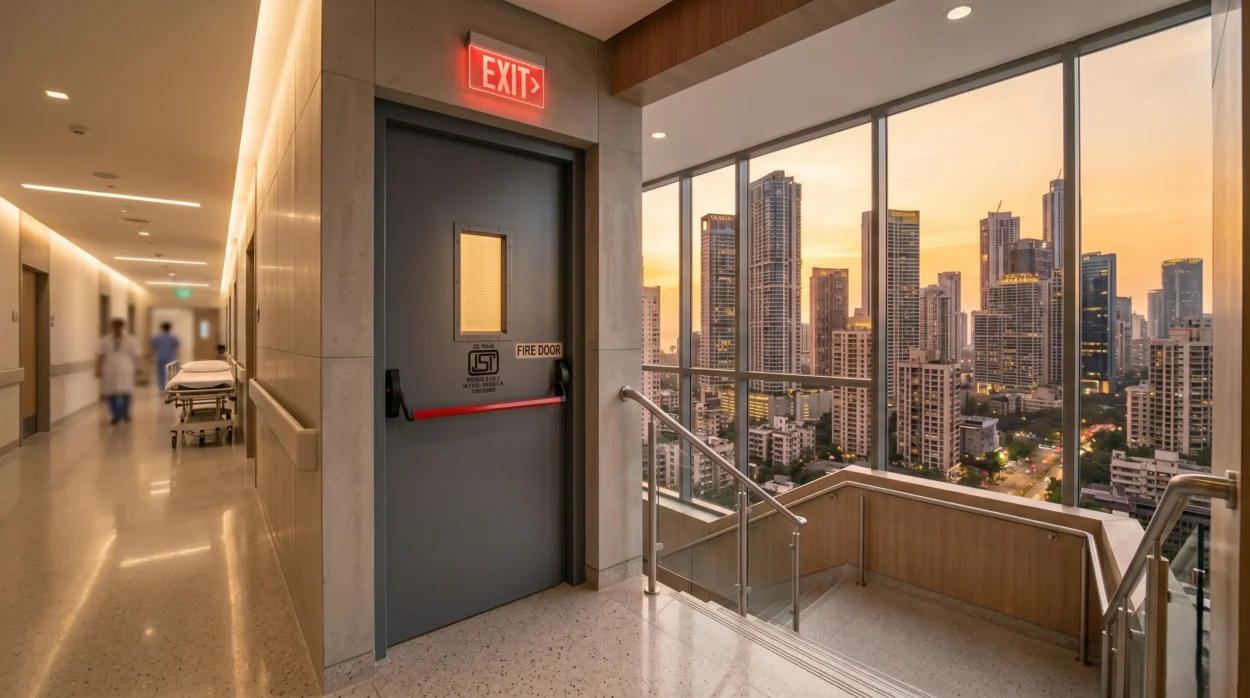
Steel Fire Rated Doors
Durable fire protection solutions designed for industrial buildings, warehouses, and commercial applications.
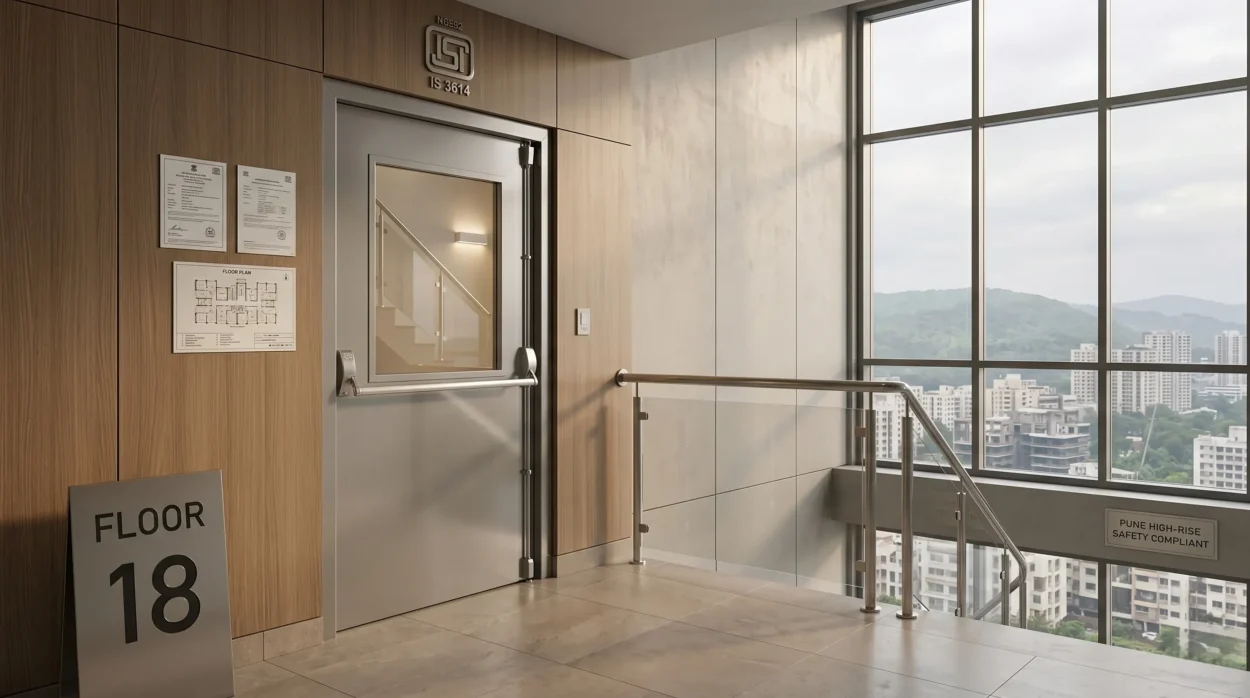
Steel Glazed Fire Doors
Fire-rated glazed door solutions combining safety, visibility, and modern design for commercial and industrial spaces.
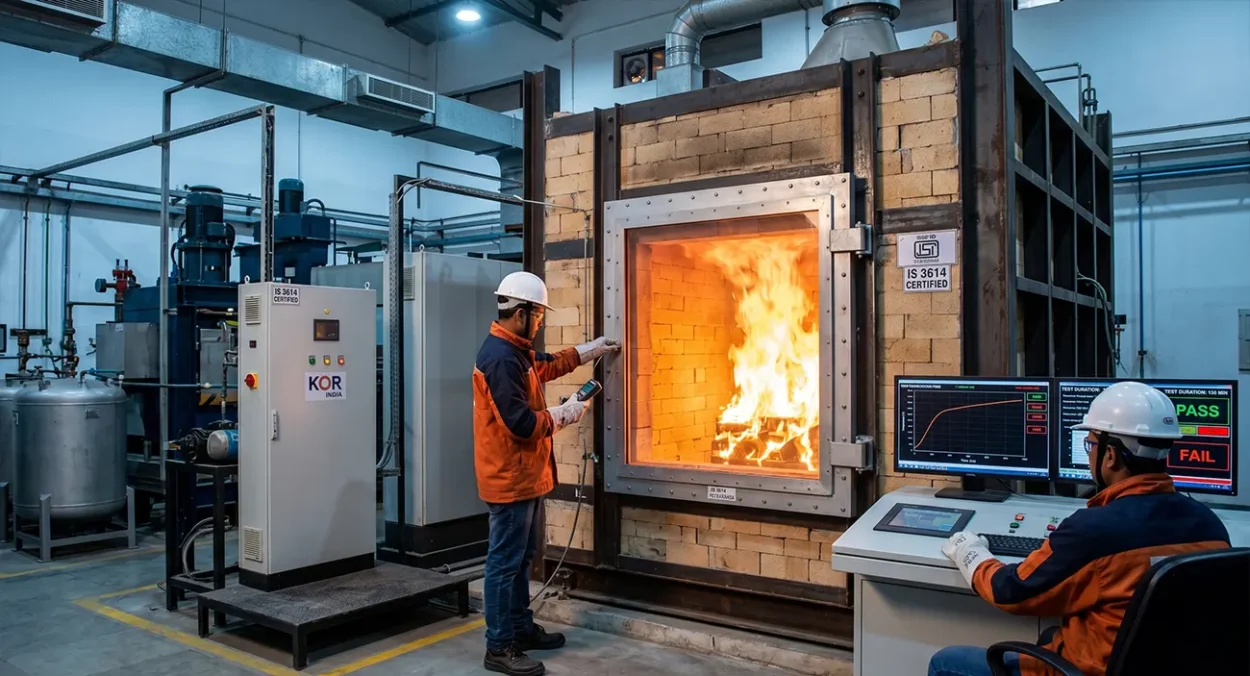
Fire Rated Industrial Doors
High-performance fire door solutions engineered for factories, warehouses, and demanding industrial environments.
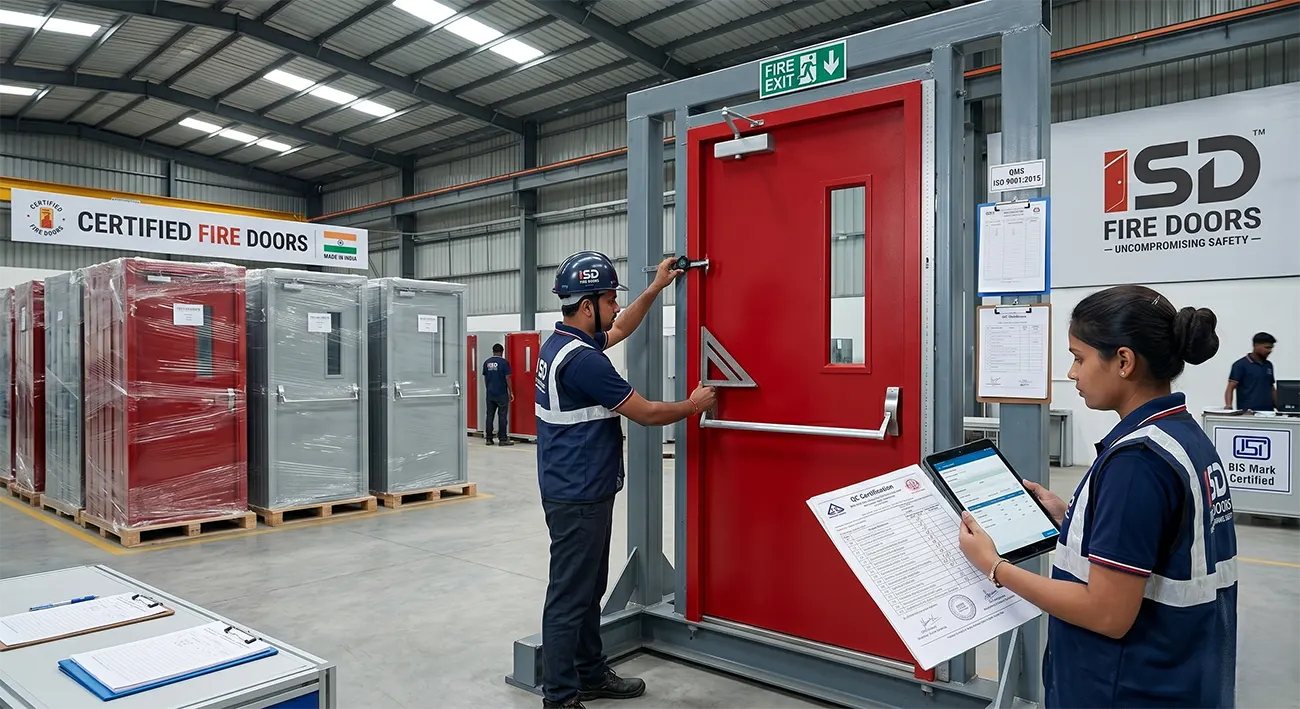
Vision Panel Steel Fire Doors
Steel fire doors with vision panels for improved visibility, safety, and efficient movement across industrial facilities.
Understanding Fire Rated Doors: The First Line of Defense
What Makes a Fire Rated Door Different?
Fire rated doors aren’t ordinary doors with a special label. They’re engineered assemblies designed and tested to resist fire penetration for specific durations-30, 60, 90, or 120 minutes-while maintaining structural integrity and preventing the passage of flames and toxic smoke.
The 2025 standards treat the fire door as one integrated system, not a mix-and-match of components. This means the entire door assembly-including the door leaf, frame, hardware, intumescent seals, and any glass components-must work together as a certified unit to achieve the stated fire resistance rating.
Think of it like a chain: the fire rating is only as strong as its weakest link. A 90-minute certified door leaf paired with non-certified hardware or improperly installed seals compromises the entire system’s performance during a fire emergency.
How Fire Ratings Work: Minutes That Matter
Fire door ratings indicate how long the assembly can withstand exposure to fire during standardized furnace testing while maintaining its barrier function. Here’s what each rating means for industrial applications:
| Fire Rating | Designation | Typical Industrial Applications |
| 30 minutes | FD30 / FRD 30 | Low-risk storage areas, office partitions within factories |
| 60 minutes | FD60 / FRD 60 | Industrial buildings, warehouse compartments, stairwell enclosures |
| 90 minutes | FD90 / FRD 90 | High-risk industrial settings, areas with flammable materials, mechanical rooms |
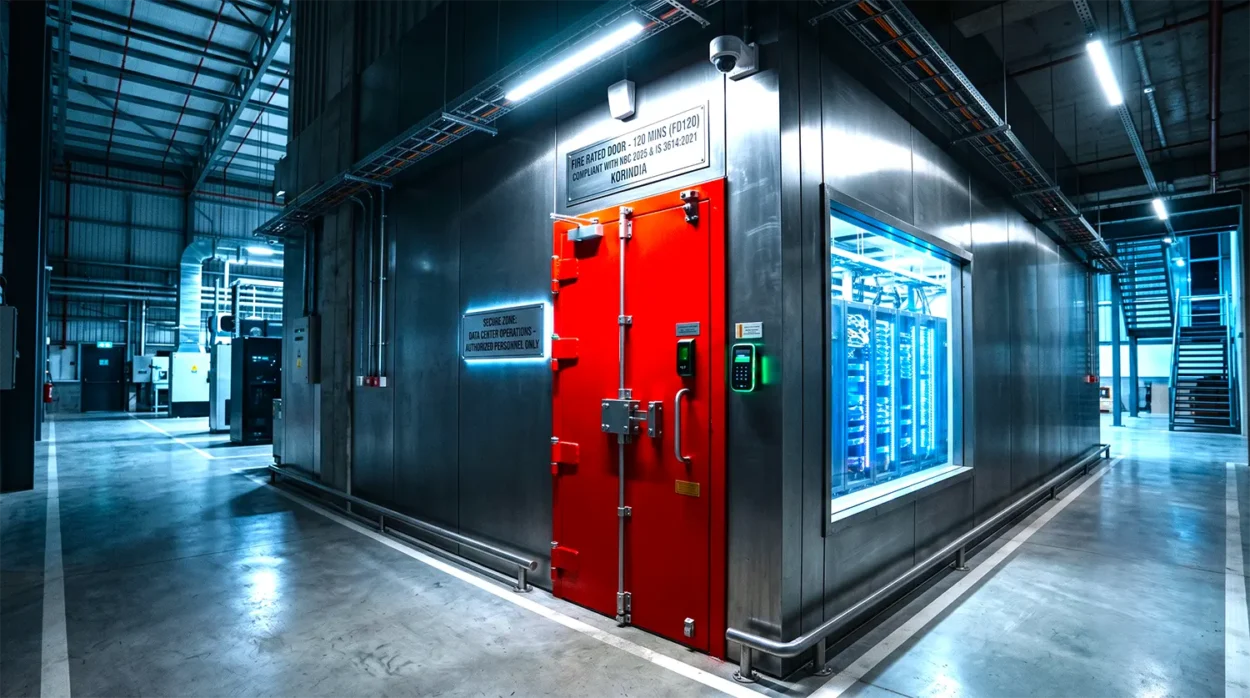
| 120 minutes | FD120 / FRD 120 | Critical facilities, data centres within industrial complexes, power plants, high-hazard storage |
The rating must match or exceed the fire resistance rating of the wall in which it’s installed. For example, a 2-hour fire-rated wall typically requires a minimum 90-minute fire door, while 1-hour walls need at least 45-60 minute rated doors depending on the applicable code.
NBC 2025 and Fire Door Compliance: What Changed?
The Regulatory Landscape
At the heart of India’s fire safety framework sits the National Building Code of India (NBC), Part 4-Fire and Life Safety. NBC 2016 has been the enforceable standard, but NBC 2025 (draft revision introduced in March 2025) proposes stricter requirements with clearer fire-safety pathways and tighter approval controls.
NBC 2025 Part 4 is now the primary reference for fire-rated door specifications, especially for high-risk buildings where fire-rated doors play a critical role. The new framework introduces:
- Stronger Regulatory Oversight: Clearer approval pathways and mandatory AHJ (Authority Having Jurisdiction) sign-off for tall and special-use structures
- Integrated System Approach: Fire doors must be specified and approved as complete assemblies, not component-by-component
- Risk-Based Classification: Buildings classified by risk level, with high-risk industrial units, chemical plants, and warehouses facing stricter certification requirements
Mandatory BIS Certification: IS 3614:2021
Beyond NBC requirements, the Bureau of Indian Standards has tightened control over fire doors through mandatory certification. Compliance with IS 3614:2021 is now compulsory for wooden and metal fire doors used in commercial, industrial, and high-rise buildings.
This BIS Quality Control Order (QCO) means:
- Fire doors must bear the official BIS licence / ISI mark
- Products undergo rigorous testing for fire resistance, smoke leakage, and mechanical strength
- Certification ensures tested compliance with fire resistance, structural integrity, and material specifications
NBC mandates that fire doors used in industrial buildings comply with IS 3614 for fire safety approvals and occupancy certificates. Without BIS certification, your facility may face delays in obtaining Fire NOC (No Objection Certificate) and occupancy approval.
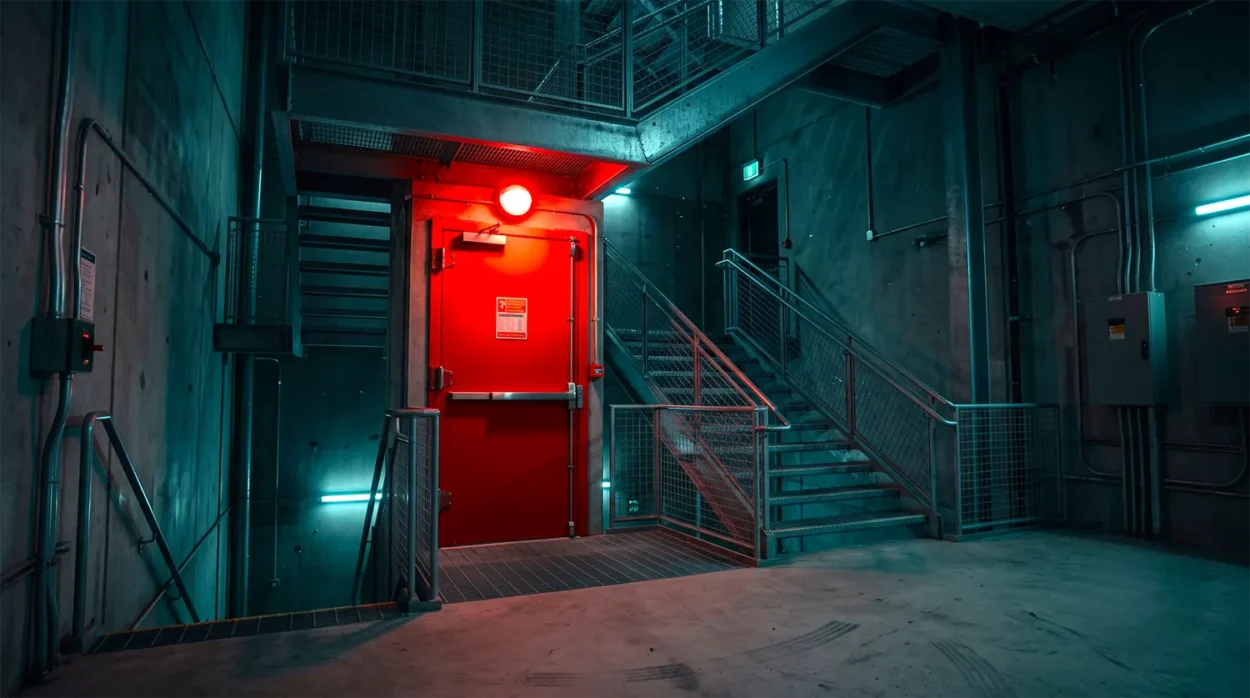
Where Fire Rated Doors Are Mandatory in Industrial Facilities
Under NBC 2016 and the evolving NBC 2025 framework, fire-rated doors are mandatory in specific locations within industrial buildings:
Compartmentation Requirements:
- Fire walls with 2–4 hours fire resistance between warehouse compartments
- Separation of high-risk areas like battery charging rooms and chemical storage
- Compartmentalized mezzanine floors and multi-rack storage areas
- Vertical fire barriers for high-ceiling warehouse bays
Egress and Safety Openings:
- Fire-rated doors at all staircase enclosures (minimum 60-minute rating for buildings above 15 metres)
- Fire-rated doors at lift lobby enclosures on each floor
- Fire-rated doors at service shaft openings
- Emergency exits from every compartment (minimum two exits required)
Special Industrial Applications:
- Fire-rated rolling shutters between warehouse sections
- Openings in occupancy separations between high-hazard areas
- Area separation walls in large industrial facilities
Fire safety approvals and Fire NOC compliance have become more technology-driven and harder to bypass in 2026, with high-risk industrial structures facing more frequent and detailed inspections.
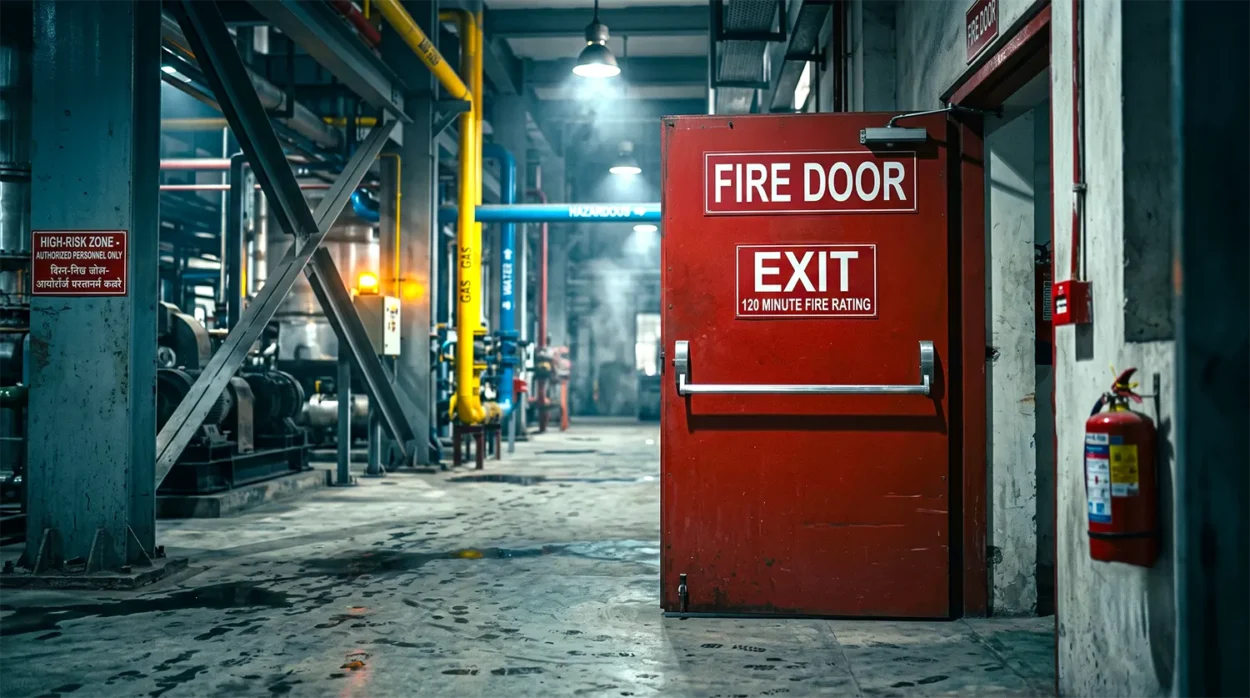
Steel vs. Wooden Fire Doors: Which Is Best for Industrial Use?
The Material Debate
Both steel and wooden fire doors can achieve certified fire ratings, but they differ significantly in durability, lifecycle cost, maintenance requirements, and suitability for industrial environments.
Steel Fire Doors: The Industrial Workhorse
Steel is the stronger choice above a 90-minute rating and in high-traffic industrial zones. Here’s why steel dominates industrial applications:
- Higher Fire Ratings: Steel doors can consistently achieve very high fire ratings (FD90, FD120, and beyond) with relative ease compared to timber
- Superior Durability: Steel doors resist dents, moisture, pests, and harsh industrial conditions better than wooden alternatives
- Heavy-Duty Performance: Ideal for high-traffic areas, loading docks, and zones with forklift or heavy equipment movement
- Long-Term Cost Efficiency: While initial cost may be higher, steel doors offer lower lifecycle costs in demanding industrial environments
Wooden Fire Doors: Viable for Specific Applications
Wooden fire doors remain fully compliant and cost-effective for certain industrial scenarios:
- Balanced Fire Protection: Typically provide moderate fire resistance ranging from 30 to 90 minutes
- Aesthetic Flexibility: Better suited for office areas within factories or client-facing industrial facilities
- Lower Initial Cost: Generally more budget-friendly for low to moderate risk areas
Compliance: Meet safety standards when properly certified to IS 3614:2021
Side-by-Side Comparison
| Feature | Steel Fire Doors | Wooden Fire Doors |
| Common Ratings | FD60, FD90, FD120 and beyond | FD30, FD60, up to FD90 |
| Durability | High-resists dents, moisture, pests | Moderate-may wear faster in harsh conditions |
| Weight | Significantly heavier, requires robust frames | Lighter, easier installation |
| Maintenance | Low-periodic inspection and lubrication | Moderate-may require refinishing over time |
| Industrial Suitability | Excellent for high-traffic, high-risk zones | Suitable for offices, low-risk compartments |
| Cost (Lifecycle) | Higher initial, lower long-term in harsh environments | Lower initial, potentially higher maintenance |
For warehouses, factories, and high-risk industrial buildings, steel fire rated doors typically offer the best balance of fire protection, durability, and compliance assurance.
Choosing the Right Fire Rating for Your Facility
Assessing Your Fire Risk
Selecting the appropriate fire rating isn’t about choosing the highest number-it’s about matching the door’s performance to your facility’s specific risk profile and regulatory requirements.
Consider These Factors:
- Building Height and Size: Buildings above 15 metres require minimum 60-minute fire-rated doors at staircase enclosures
- Storage Height: High-rise storage (≥ 9 metres) and large warehouses (>3000 sq. m) face stricter compartmentation requirements
- Hazard Classification: Hazardous goods storage requires compartmentation with 2–4 hour fire-rated walls and corresponding door ratings
- Occupancy Type: Manufacturing areas, chemical storage, and battery charging rooms demand higher ratings than general warehouse spaces
- Wall Rating: The door rating must align with the fire resistance rating of the surrounding wall assembly
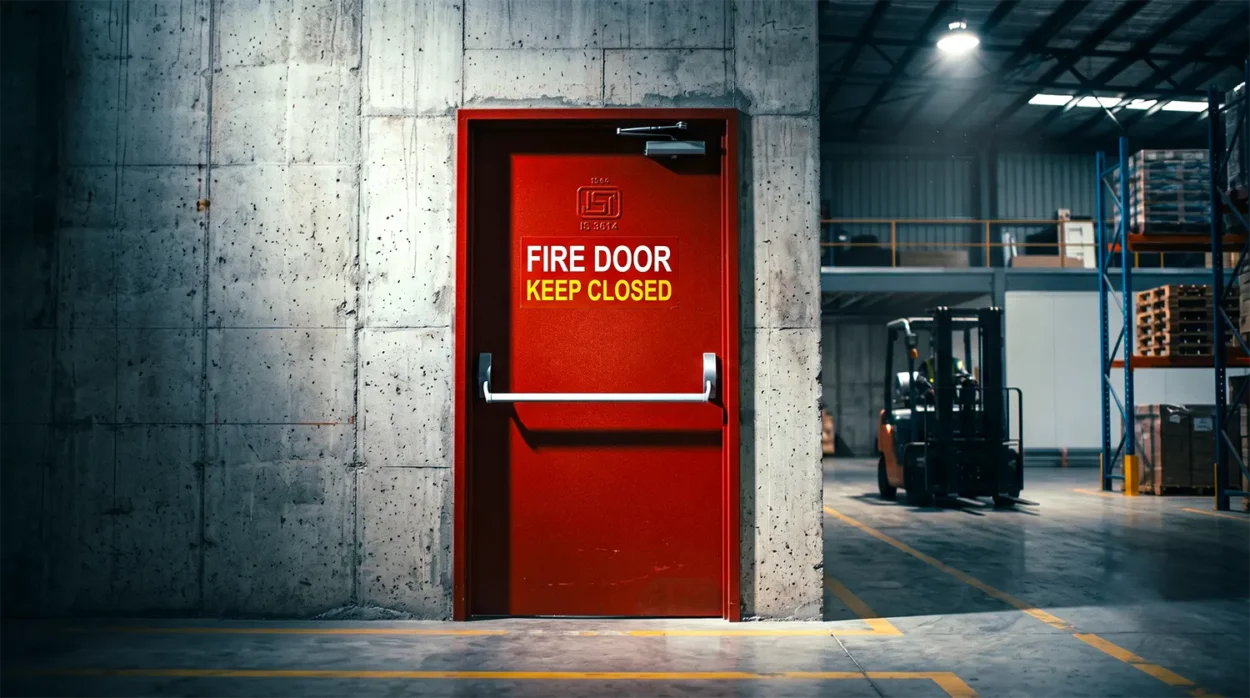
Rating Selection Guide by Application of a Fire Rated Door
| Industrial Application | Recommended Minimum Rating | Rationale |
| General Warehouse Storage | 60 minutes (FD60) | NBC compliance for compartmentation, adequate for moderate-hazard goods |
| High-Risk Storage Areas | 90 minutes (FD90) | Extended protection for flammable materials, high-ceiling warehouses |
| Chemical Storage Rooms | 90-120 minutes (FD90-FD120) | Critical containment for hazardous substances |
| Battery Charging Stations | 90 minutes (FD90) | Mandatory separation for high-risk areas |
| Stairwell Enclosures (>15m buildings) | 60 minutes minimum (FD60) | NBC 2016 requirement for egress protection |
| Data Centres / Control Rooms | 120 minutes (FD120) | Critical infrastructure protection, highest risk tolerance |
| Loading Dock Separations | 60-90 minutes (FD60-FD90) | High-traffic industrial zones with moderate fire risk |
| Office Partitions Within Factory | 30-60 minutes (FD30-FD60) | Low-risk administrative areas |
The 120-Minute Advantage of a Fire Rated Door
For critical industrial facilities, 120-minute fire rated doors offer the highest standard protection. The 120-minute rating covers the entire door assembly, including door leaf, frame, hardware, seals, and any glass components.
These doors are essential for:
- Power plants and energy facilities
- Data centres within industrial complexes
- High-hazard chemical storage
- Areas requiring maximum evacuation and response time
Key Components of a Compliant Fire Door Assembly
Beyond the Door Leaf
Remember: the fire rating applies to the complete assembly, not just the door leaf. Here are the critical components that must work together:
1. Door Leaf and Frame
- Must be certified together as a matched assembly
- Steel doors require proper gauge thickness and internal fire-resistant core
- Frames must be compatible with the door leaf and properly anchored to the wall structure
2. Intumescent Seals
- Expand when exposed to heat, sealing gaps between door and frame
- Prevent smoke and toxic gas passage during fire
- Must be installed continuously around the door perimeter
3. Fire-Rated Hardware
- Hinges, locks, latches, and closers must be fire-rated and compatible
- Self-closing mechanisms are mandatory for fire doors in most industrial applications
- Panic hardware or fire exit devices required for egress doors in high-occupancy areas
4. Glazing (If Applicable)
- Must use certified fire-rated glass, not ordinary glass
- Glazing size and location must comply with the door’s certification
- EW rating required for glazed fire doors under NBC 2025
5. Threshold and Bottom Seals
- Prevent smoke spread at floor level
- Must allow proper door closure without obstruction
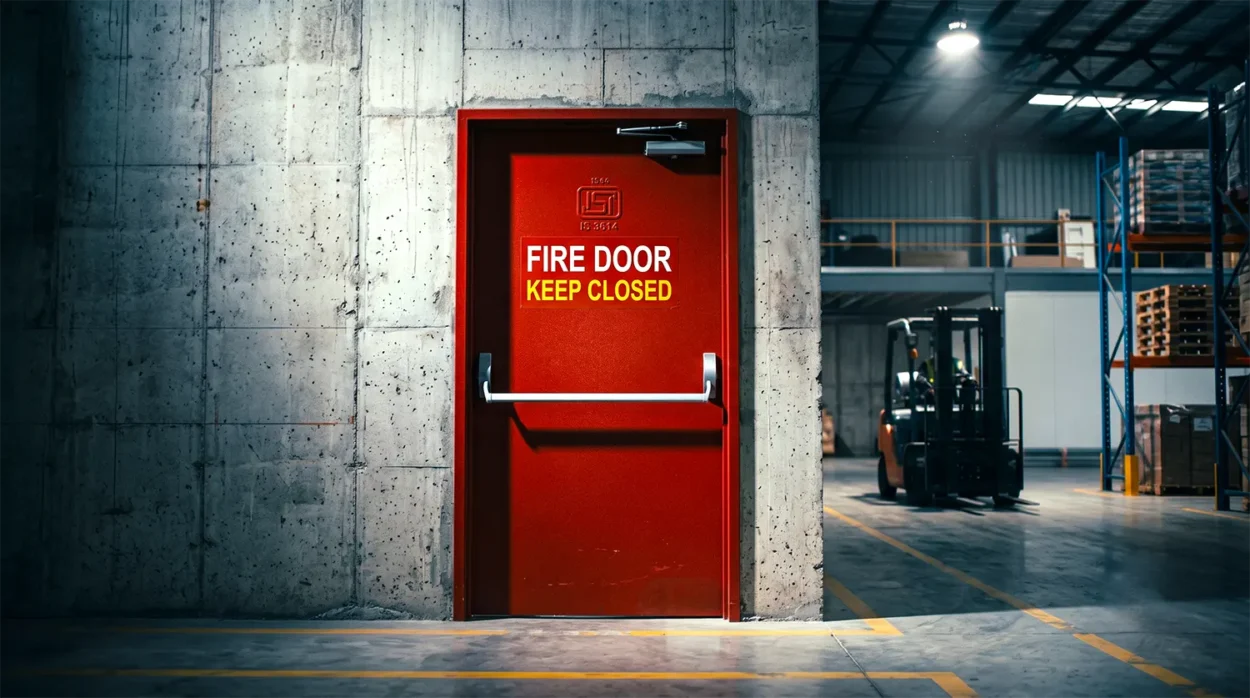
Fire Rated Door Installation Best Practices: Where Compliance Meets Reality
Professional Installation Is Non-Negotiable
Even the best fire rated door fails if installed incorrectly. NBC and IS 3614 compliance requires proper installation by trained professionals who understand fire door assembly requirements.
Critical Installation Checks:
- Gap Tolerances: Door-to-frame gaps must not exceed specified limits (typically 3-4mm) to ensure intumescent seals function properly
- Frame Anchoring: Frames must be securely anchored to the wall structure with appropriate fixings
- Clearance at Bottom: Bottom clearance must allow door swing while preventing excessive smoke passage
- Self-Closing Function: Doors must close and latch automatically from any open position
Hardware Alignment: All hardware must operate smoothly without binding or excessive force
Common Fire Rated Door Installation Mistakes to Avoid
- Mixing Components: Using non-certified hardware or seals voids the fire rating
- Improper Gaps: Excessive gaps prevent intumescent seals from functioning
- Missing Self-Closers: Fire doors that don’t self-close provide no protection
- Obstructed Operation: Pallets, equipment, or storage blocking door swing compromises egress
- Unsealed Penetrations: Gaps around frames or service penetrations allow smoke spread
Maintenance and Inspection: Keeping Your Fire Doors Compliant
Why Maintenance Matters
Fire safety rules in India emphasize that implementation and regular inspections need much more attention. A fire door that doesn’t close properly or has damaged seals offers false security during an emergency.
Recommended Inspection Frequency:
- Monthly: Visual checks by facility staff
- Quarterly: Detailed inspection by trained maintenance personnel
- Annually: Professional inspection and certification by fire safety experts
Fire Door Inspection Checklist
Use this checklist for routine fire door inspections: ✓ Door Leaf: No damage, warping, or holes; closes flush with frame
✓ Frame: Securely anchored, no gaps or damage
✓ Intumescent Seals: Intact, continuous, not painted over
✓ Self-Closing Device: Door closes and latches automatically from any position
✓ Hinges: All screws present and tight, no wear or damage
✓ Latch/Lock: Operates smoothly, engages properly
✓ Clearances: Gaps within specified tolerances (typically 3-4mm)
✓ Bottom Seal: Intact and making proper contact
✓ Signage: Fire door signage visible and legible
✓ Obstructions: No items blocking door swing or egress path
Documentation and Compliance Records
Maintain detailed records of:
- Installation certificates and BIS certification documents
- Inspection reports with dates, findings, and corrective actions
- Maintenance logs showing repairs and component replacements
- Fire NOC and occupancy certificate documentation
These records prove due diligence during Fire NOC inspections and facility audits.
Cost Considerations: Investing in Safety
Understanding Fire Door Pricing
Fire door costs vary based on rating, material, size, hardware, and certification level. While exact pricing depends on project specifics, here are general ranges for industrial applications in India:
Indicative Price Ranges (2025-2026):
- FD30 Wooden Fire Doors: ₹15,000 – ₹25,000 per door
- FD60 Steel Fire Doors: ₹35,000 – ₹55,000 per door
- FD90 Steel Fire Doors: ₹50,000 – ₹80,000 per door
- FD120 Steel Fire Doors: ₹75,000 – ₹1,20,000+ per door
Note: Prices vary by manufacturer, size, hardware specifications, and installation complexity.
Total Cost of Ownership of a Fire Rated Door
Look beyond initial purchase price. Consider:
- Installation Costs: Professional installation adds 15-25% to door cost but ensures compliance
- Maintenance Costs: Steel doors typically require less maintenance than wooden doors in industrial environments
- Replacement Cycle: Higher-quality, properly maintained fire doors last 15-20+ years
- Compliance Costs: Non-compliant doors risk Fire NOC delays, fines, or occupancy certificate issues
ROI of Proper Fire Protection
Investing in certified, properly installed fire rated doors delivers:
- Life Safety: Critical evacuation time for occupants
- Property Protection: Limits fire spread and structural damage
- Regulatory Compliance: Smooth Fire NOC and occupancy approval
- Insurance Benefits: Potential premium reductions for compliant fire protection systems
- Business Continuity: Faster recovery and resumption of operations post-incident
Why Choose KORINDIA for Industrial Fire Rated Doors
BIS-Certified Excellence
KORINDIA manufactures fire rated doors that comply with IS 3614:2021 and NBC 2025 requirements, ensuring your facility meets all regulatory standards. Our doors bear proper BIS certification and undergo rigorous testing for fire resistance, smoke leakage, and mechanical strength.
Complete Assembly Solutions
We don’t just supply door leaves. KORINDIA provides complete fire door assemblies-including certified frames, intumescent seals, fire-rated hardware, and professional installation guidance. This integrated approach ensures your fire doors perform as tested and certified.
Industrial Expertise
Our team understands the unique demands of warehouses, factories, and industrial facilities across India. From high-traffic loading docks to chemical storage rooms, we recommend the right fire rating and material for your specific application.
Technical Support and Documentation
We provide comprehensive documentation including:
- BIS certification and test reports
- Installation guidelines and compliance checklists
- Maintenance schedules and inspection templates
- Fire NOC support documentation
Customization for Industrial Applications
KORINDIA offers customized fire door solutions including:
- Oversized doors for industrial equipment access
- Specialized hardware for high-frequency use
- Glazed options with fire-rated glass for visibility
- Powder-coated finishes for harsh industrial environments
FAQ: Fire Rated Doors for Industrial Buildings
For most warehouse applications, NBC 2016 and NBC 2025 require minimum 60-minute fire-rated doors (FD60) for compartmentation and egress protection. High-risk storage areas, chemical rooms, and facilities with hazardous materials may require 90-minute or 120-minute ratings depending on the hazard classification and wall ratings.
Wooden fire doors can be used in low-risk industrial areas such as offices or administrative sections within warehouses, typically up to FD60 rating. However, for high-traffic zones, loading docks, and high-risk storage areas, steel fire doors are recommended due to superior durability and ability to achieve higher ratings (FD90, FD120).
Fire doors in industrial facilities should undergo monthly visual checks by facility staff, quarterly detailed inspections by trained maintenance personnel, and annual professional inspections by certified fire safety experts. Regular inspections ensure doors remain compliant and functional during emergencies.
No. Fire ratings apply to complete tested assemblies, not individual components. Installing fire-rated hardware on a non-certified door does not create a compliant fire door. Always use doors that are BIS-certified as complete assemblies under IS 3614:2021.
Non-compliant fire doors can delay or prevent Fire NOC approval and occupancy certificates. With NBC 2025’s stricter oversight and risk-based inspections, industrial facilities face more frequent and detailed compliance checks. Non-compliance may result in fines, operational restrictions, or increased liability in case of fire incidents.
Conclusion: Protect What Matters Most
Choosing the best fire rated door for your industrial building, warehouse, or factory isn’t just about meeting codes-it’s about protecting lives, assets, and business continuity. With NBC 2025 raising the bar for fire safety compliance and BIS making certification mandatory under IS 3614:2021, there’s never been a more critical time to invest in properly certified, professionally installed fire door systems.
Whether you need 60-minute doors for general warehouse compartments, 90-minute solutions for high-risk storage, or 120-minute protection for critical facilities, the right fire rated door forms an essential part of your passive fire protection strategy.
Ready to secure your industrial facility with compliant, high-performance fire rated doors? KOR India’s team of fire safety experts can help you select the right fire rating, material, and configuration for your specific application. From initial consultation through installation support and maintenance guidance, we’re committed to keeping your facility safe, compliant, and operational.
Contact KORINDIA today for a detailed assessment of your fire door requirements and discover how our BIS-certified, NBC-compliant fire rated door solutions can protect what matters most to your business.