Selecting reliable fire door manufacturers in India is a critical life-safety and structural compliance decision for any industrial, commercial, or institutional development. High-performance fire rated doors act as primary compartmentalization barriers, preventing the rapid spread of toxic smoke, radiant heat, and open flames during critical egress windows. However, with a crowded market of generic fabricators, choosing the right supplier for certified steel fire doors requires a deep understanding of Indian fire safety codes, metallurgical standards, testing certifications, and engineering precision.
How to Choose a Fire Door Manufacturer in India
To select the right fire door manufacturer in India, verify valid IS 3614:2021 licenses, fire test certificates issued by CBRI Roorkee or NABL-accredited labs, compliance with NBC 2016/2025, minimum 1.2mm Galvanized Iron (GI) construction, certified intumescent seal integration, and complete hardware compatibility.
Why Manufacturer Vetting Matters for Passive Fire Protection
In passive fire protection engineering, a fire door assembly is never merely a leaf of sheet metal; it is a meticulously engineered life-safety system. When a fire breaks out, the door must maintain structural integrity, stability, and thermal insulation under temperatures exceeding 1,000°C.
Procuring uncertified or substandard assemblies exposes asset owners, structural consultants, and project developers to substantial legal, financial, and life-safety hazards:
- Catastrophic Structural Failure: Inferior steel gauge thickness or uncalibrated core infill can cause door warping within minutes, creating thermal gaps that breach containment zones.
- Regulatory Shutdowns & NOC Denial: Local fire authorities enforce strict mandates under the National Building Code (NBC). Uncertified products can lead to denied Fire No Objection Certificates (NOC), stalling occupancy permissions.
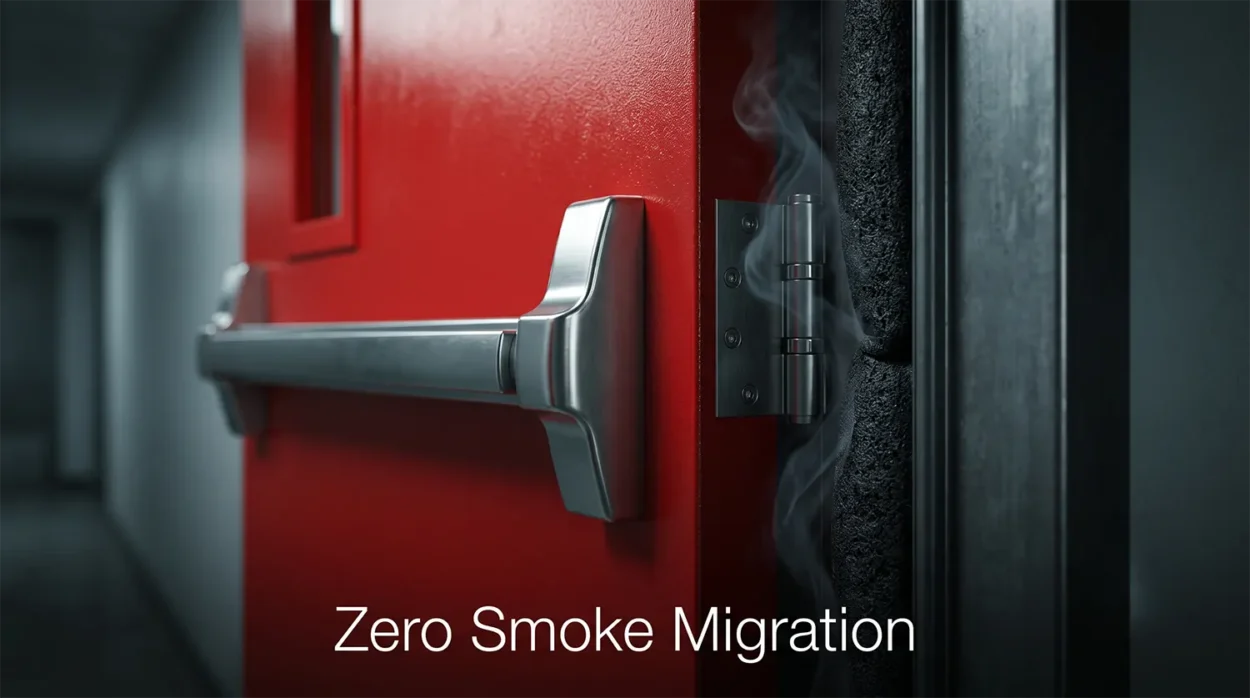
- Toxic Smoke Infiltration: Over 75% of fire-related fatalities stem from toxic smoke inhalation rather than direct burns. Doors without certified intumescent and acoustic perimeter seals fail to prevent smoke migration along escape routes.
Key Evaluation Criteria When Choosing Fire Door Manufacturers
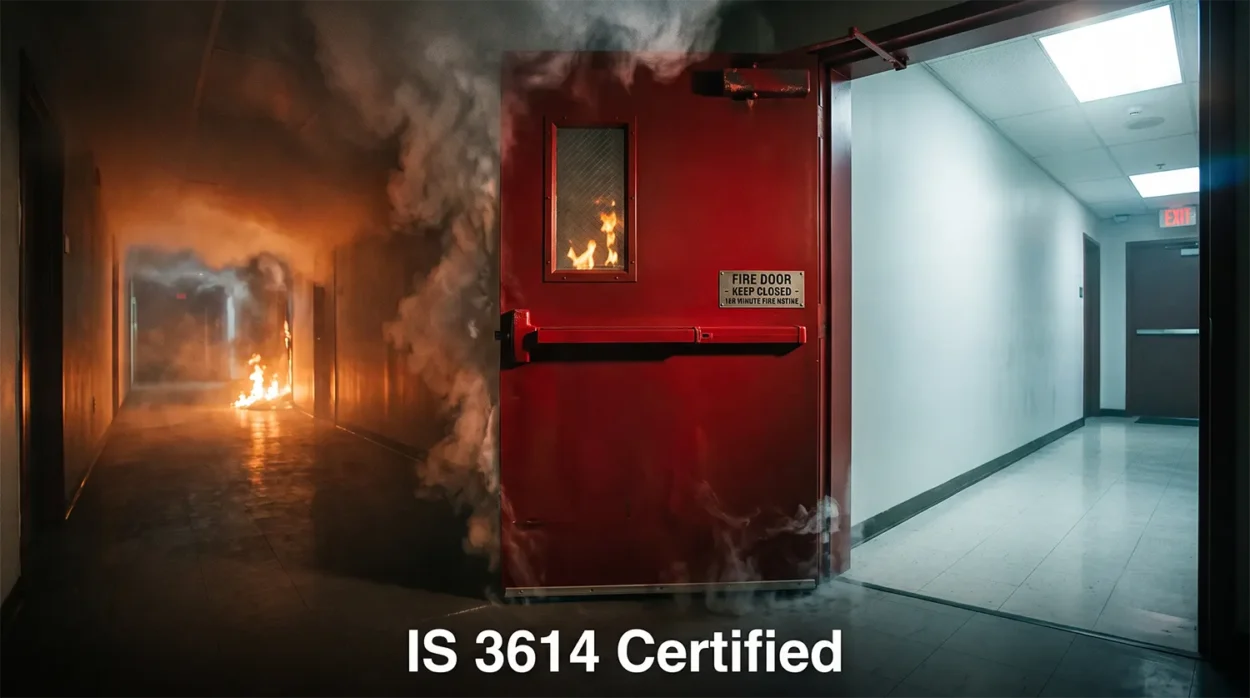
1. Mandatory Certifications: IS 3614 & NABL/CBRI Testing
The foundational benchmark for evaluating fire safety doors in India is adherence to national manufacturing and testing protocols. Never partner with a vendor that provides in-house or unverified laboratory claims.
Definition: IS 3614 Standard
IS 3614 is the Bureau of Indian Standards (BIS) specification governing metallic and non-metallic fire-rated doorsets, defining strict construction requirements, fire endurance ratings, smoke leakage thresholds, and mechanical cycle testing protocols.
Ensure the manufacturer holds an active Bureau of Indian Standards (BIS) license for IS 3614:2021. Furthermore, request full-scale type test reports from authoritative testing institutions such as the Central Building Research Institute (CBRI) Roorkee or NABL-accredited test facilities. Authentic reports must specify the exact door dimensions, infill density, ironmongery details, and the fire resistance duration achieved.
2. Core Material Integrity & Infill Quality
The longevity and thermal resistance of industrial fire doors depend on core engineering and raw material quality:
- Galvanized Iron (GI) Construction: Door leaves should be manufactured using a minimum of 1.2mm thick corrosion-resistant Galvanized Iron (GI) sheets, while door frames require high-yield GI steel of at least 1.5mm to 1.6mm thickness.
- Thermal Core Infill: Uncertified vendors often cut corners with loose mineral wool or combustible adhesives. Reputable manufacturers use high-density resin-bonded mineral rockwool (minimum 96–120 kg/m³ density) or ceramic fiber cores to deliver consistent insulation and structural rigidity under elevated temperatures.
- Protective Surface Finish: Doors exposed to humid, coastal, or corrosive industrial environments require pure polyester powder coating (minimum 60–80 microns) applied over automated pre-treatment lines to prevent premature oxidation.
3. Integrated Hardware & Certified Ironmongery
A fire door is only as reliable as its accompanying hardware. Panic exit devices, heavy-duty ball-bearing hinges, surface-mounted door closers, and mortise locks must be tested and certified as an entire doorset assembly.
Definition: Intumescent Seals & Vision Panels
- Intumescent Seals: Heat-reactive graphite perimeter strips that expand up to 25 times their initial volume at approximately 150°C–200°C, hermetically sealing perimeter gaps against flame and smoke.
- Vision Panels: Fire-rated, clear multi-laminate glazed openings integrated into fire doors to provide visual awareness across corridors without lowering fire resistance ratings.
Leading manufacturers build precision cutouts and internal structural reinforcements to support factory-fitted ironmongery from world-class architectural hardware brands, ensuring long-term mechanical reliability without compromising door integrity.
Technical Comparison: KOR India vs. Standard Commercial Doors
To clearly evaluate your supplier options, compare the technical engineering metrics of precision-engineered fire doors against generic commercial offerings:
| Engineering Parameter | KORIndia Fire Rated Doors | Standard Commercial Fabricators |
| Certification Standard | IS 3614:2021 & IS 3614 Part 2 Compliant | Uncertified / Self-declared claims |
| Testing Benchmark | Full prototype testing at CBRI Roorkee / NABL Labs | Unverified internal test sheets |
| Available Fire Ratings | FD 60, FD 90, FD 120 (60 to 120 Minutes) | Unverified; often limited to basic integrity |
| Door Leaf Material | Min. 1.2mm Galvanized Iron (GI) sheet | 0.8mm – 1.0mm Cold Rolled (CR) steel |
| Frame Material | Min. 1.6mm High-Tensile GI Profile | 1.2mm untreated mild steel |
| Infill Core System | High-density Rockwool / Ceramic Wool / Honeycomb | Low-density loose wool or raw foam |
| Perimeter Protection | Intumescent & Smoke Seals (Min. 10x4mm) | Basic rubber/EPDM or omitted entirely |
| Surface Coating | Automated 7-Tank Powder Coating (60+ Microns) | Hand-sprayed synthetic enamel paint |
| Hardware Compatibility | CE / UL certified panic bars, closers, and hinges | Non-rated generic architectural hardware |
Step-by-Step Procedure: How to Audit a Fire Door Supplier
Before releasing tenders or issuing purchase orders for large-scale infrastructure projects, follow this 4-step procurement verification workflow:
- Verify BIS License Authenticity:
Request the supplier’s Bureau of Indian Standards CML number for IS 3614. Cross-verify the validity and scope directly via the official BIS online portal to confirm that the specific door type, leaf dimensions, and ratings are covered. - Review Type Test Certificates:
Ensure the test reports from accredited institutions like CBRI Roorkee clearly illustrate the tested assembly configuration, including threshold details, vision panel glass make, and exact locking hardware. - Conduct an Industrial Plant Audit:
Inspect the manufacturing facility to evaluate automated CNC shearing, bending, and punching capabilities. Precise fabrication ensures the tight dimensional tolerances (3mm perimeter gaps) necessary for code-compliant fire sealing. - Inspect Project Track Record & Warranty Terms:
Evaluate whether the supplier has successfully completed installations for hospitals, data centers, metro stations, and high-rise commercial spaces. Confirm that comprehensive warranties cover hardware operation, paint adhesion, and door leaf stability.
Navigating Regulatory Compliance Across India & Delhi NCR
Building safety protocols across India are governed by local fire service authorities operating under the umbrella of the National Building Code (NBC).
What Are the Requirements for Fire Doors in Delhi NCR and Metro Hubs?
For high-density regions like Delhi NCR, Mumbai, and Bangalore, regional fire service guidelines enforce strict installation standards:
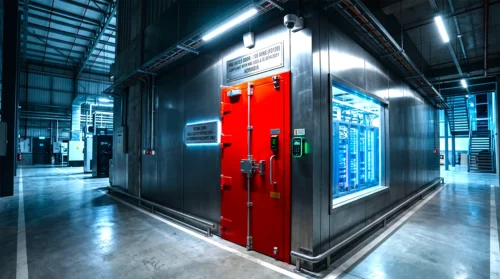
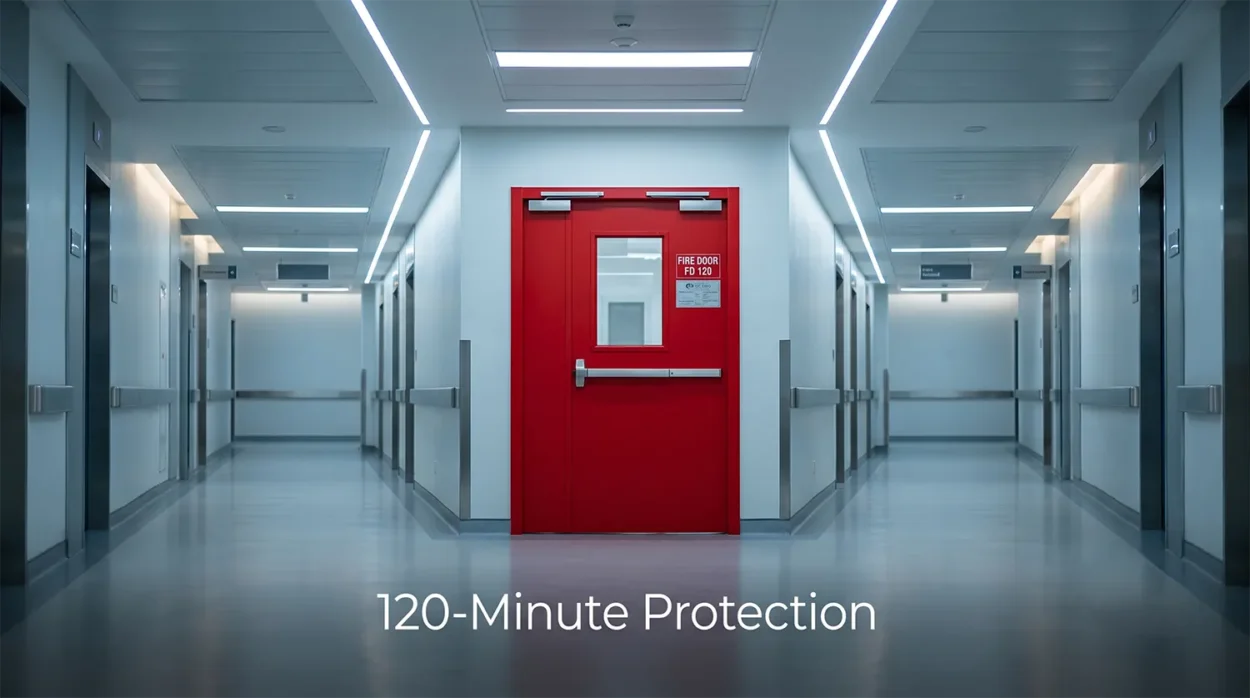
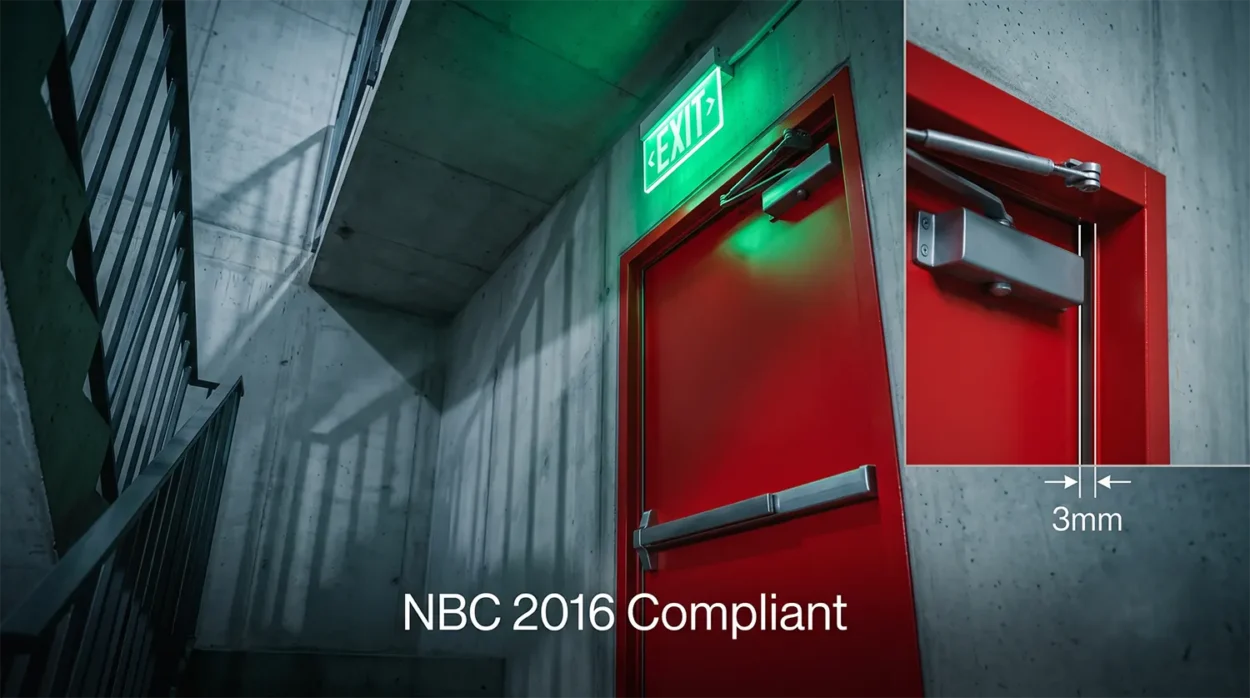
- NBC 2016 Fire Compartmentation: NBC 2016 Part 4 stipulates that fire exit staircases, lift lobby enclosures, and hazardous utility rooms (such as electrical substations and transformer rooms) must have minimum 120-minute (FD 120) rated fire doors.
- Self-Closing Mechanisms: All fire doors across emergency escape routes must be fitted with robust, certified hydraulic door closers or panic exit devices to guarantee fail-safe auto-closure upon evacuation.
- Perimeter Gap Tolerances: Site inspection mandates enforce a maximum clearance of 3mm between the door leaf and the frame along the top and vertical jambs, and a maximum of 8mm at the threshold (unless a drop seal is deployed). Exceeding these tolerances will result in inspection failure during final fire safety clearance.
Why Choose KOR India as Your Fire Door Partner?
Headquartered in Greater Noida, Uttar Pradesh, KORINDIA combines advanced international engineering standards with specialized domestic manufacturing expertise. Established as a strategic collaboration between Hallim Precision Co. Limited (South Korea)—an industry leader founded in 1983-and Hasa Engineering, KOR India delivers high-performance access solutions designed to withstand rigorous commercial and industrial conditions.
Manufacturing Excellence in Greater Noida
Operating from a specialized production facility in the Kasna Industrial Area (Site-5, Greater Noida), KOR India designs and manufactures full-scope fire rated doors, specialized clean room doors, sectional industrial doors, and lead-lined radiation shielding doors. Every door profile is engineered with automated CNC machinery, ensuring consistent dimensional accuracy and structural integrity across large volumes.
Complete Certification Traceability
All KOR India fire door models are fully tested and compliant with IS 3614:2021 and IS 3614 Part 2 standards, supported by testing conducted at CBRI Roorkee. Whether your project demands FD 60, FD 90, or FD 120 ratings, our certified assemblies provide proven containment against thermal radiation and smoke migration.
End-to-End Turnkey Delivery
sFrom pre-bid consultation and site safety audits to precision installation and Annual Maintenance Contracts (AMC), KOR India manages the entire product lifecycle. Our factory-trained installation crews guarantee that fire door assemblies satisfy the tight dimensional tolerances and hardware alignments mandated by regional fire inspectors.
Frequently Asked Questions (FAQs)
For patient wards and general corridors, 60-minute (FD 60) fire doors are often acceptable under standard egress designs. However, emergency fire stairwells, ICU compartments, operating suites, and server rooms require 120-minute (FD 120) rated doors under NBC 2016 guidelines to protect vulnerable occupants during extended evacuations.
A compliant commercial steel fire door leaf typically has an overall thickness of 46mm to 50mm, manufactured with a minimum of 1.2mm thick Galvanized Iron (GI) outer skins encapsulating a high-density rockwool or ceramic core.
Prices for BIS-certified, IS 3614-compliant steel fire doors generally range from ₹3,500 to ₹7,500 per square meter for basic single-leaf configurations, varying based on the fire rating (FD 60 vs FD 120), vision panel inclusion, powder-coat finish, and specialized panic hardware specifications.
Yes, vision panels can be incorporated into steel fire doors without lowering their safety rating, provided the glazed unit uses certified fire-rated, clear multi-laminate ceramic glass installed with fire-resistant gaskets and tested under IS 3614 guidelines.
Under industrial safety and NBC protocols, operational fire door assemblies should be inspected quarterly for latch engagement, perimeter seal integrity, closer tension, and clear clearance gaps. Comprehensive Annual Maintenance Contracts (AMC) are recommended to ensure hardware reliability during real-world emergencies.