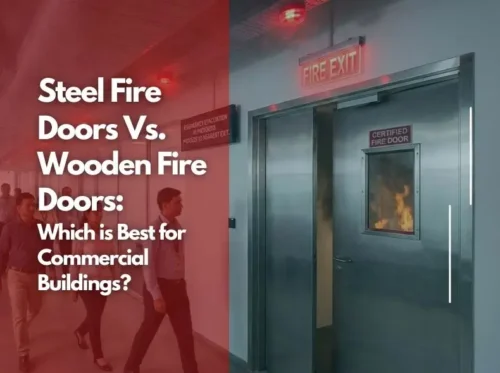
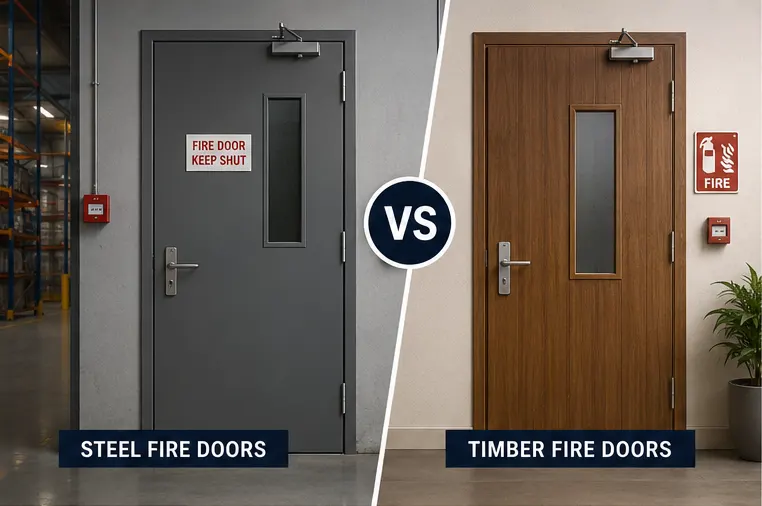
Choosing between steel fire doors and timber fire doors in India requires a strict analysis of structural integrity, regulatory compliance, and architectural intent. Selecting the best fire rated door material demands evaluating the structural survival of fire safety doors under intense thermal stress. For high-occupancy or heavy industrial projects, an industrial fire door comparison reveals that steel offers unmatched durability and strict adherence to Indian safety mandates.
Direct Answer Box (Featured Snippet Optimization)
When comparing steel fire doors vs timber fire doors India, steel is the superior choice for high-traffic industrial, commercial, and hazardous environments due to its non-combustible nature, 120-minute structural integrity, and structural resistance to warping. Timber fire doors are suitable for premium interior aesthetics but are limited by environmental sensitivity and higher long-term maintenance costs.
Technical Definitions
- IS 3614 Standard: The Bureau of Indian Standards (BIS) specification governing the components, testing methods, and performance criteria for fire-resistant door assemblies in India.
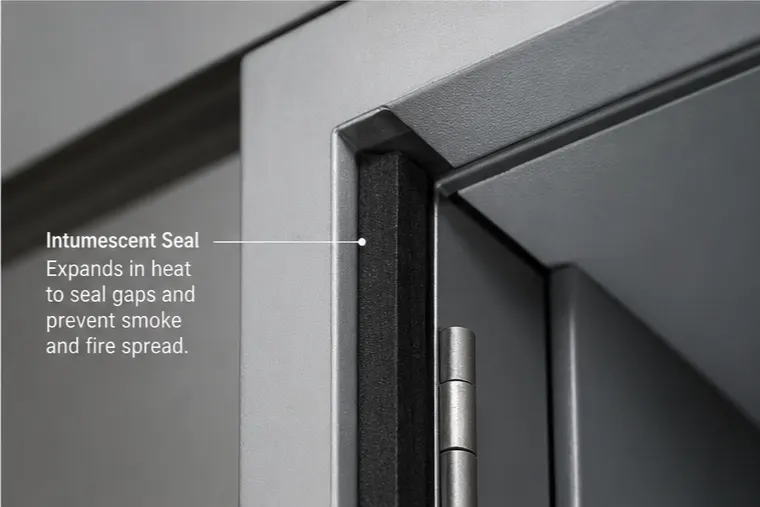
- Intumescent Seals: Specialized chemical strips installed along door frames that expand up to 25 times their original volume when exposed to heat above 120°C, sealing gaps to prevent smoke transmission.
- Vision Panels: Fire-rated, clear, or wire-reinforced glazed glass units integrated into fire doors to provide visibility without compromising thermal containment or structural integrity.
Steel Fire Doors: Comprehensive Technical Breakdown
The Pros of Steel Fire Doors
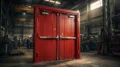
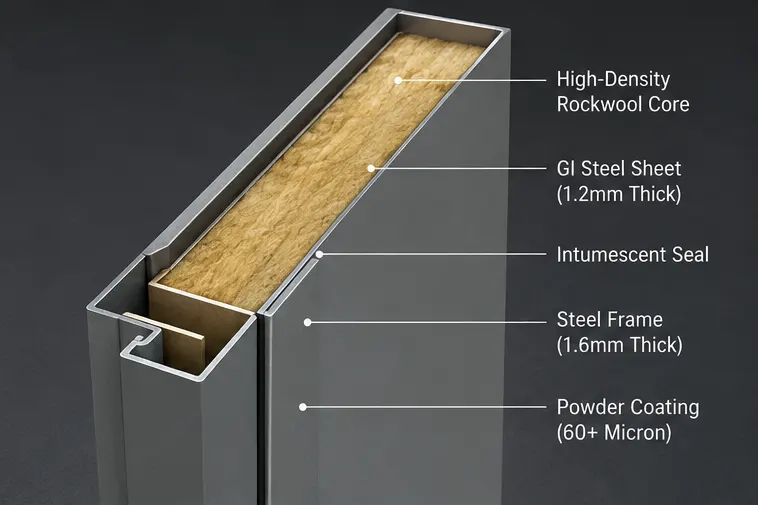
Steel fire doors manufactured by KORINDIA Precision Private Limited are constructed utilizing high-grade Galvanized Iron (GI) sheets. The door leaves use a minimum sheet thickness of 1.2mm, while the matching door frames feature a minimum thickness of 1.6mm. This heavy-duty composition ensures structural resilience under mechanical force and thermal stress.
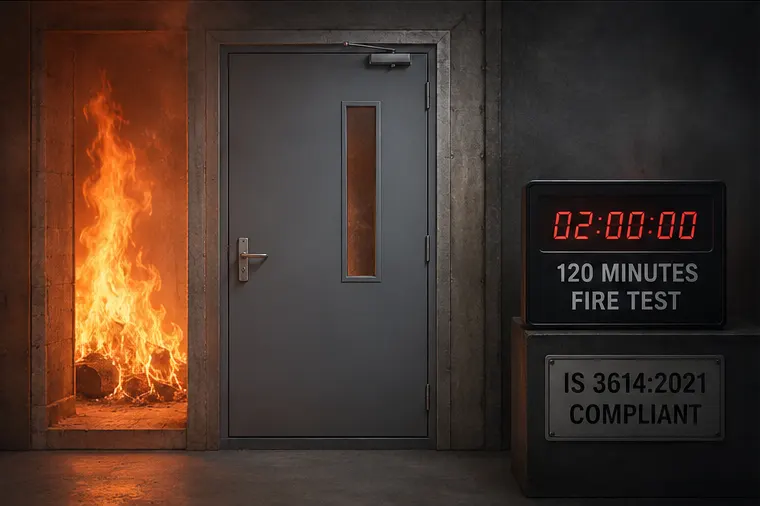
The primary structural advantage of steel is its non-combustible nature. When packed with high-density mineral wool or ceramic insulation, steel assemblies provide predictable, certified fire containment up to FD 120 (120 minutes). Additionally, our in-house manufacturing process in Greater Noida applies a high-durability powder coating of 60+ microns, rendering the doors resistant to corrosion, rust, and moisture degradation common to Indian climatic conditions.
The Cons and Limitations
The primary limitation associated with steel fire doors relates to aesthetic customization. While modern powder-coating techniques can mimic wood grains, steel lacks the tactile, organic texture demanded by luxury hospitality or high-end residential interiors. Furthermore, steel panels have a higher dead weight, requiring specialized structural wall reinforcements during installation.
Primary Industrial and Commercial Applications
- Industrial Manufacturing & Warehouses: High-risk production environments, chemical storage zones, and assembly lines.
- Commercial Hubs & Datacenters: Server rooms, electrical substations, and emergency escape stairs.
- Healthcare Infrastructure: Fire isolation zones in multi-specialty hospitals to support patient evacuation strategies.
Timber Fire Doors: Engineering and Structural Realities
The Pros of Timber Fire Doors
Timber fire doors are chosen primarily for architectural flexibility, interior design consistency, and acoustics. They provide natural thermal and sound insulation, making them ideal for corporate boardrooms, upscale hotels, and premium residential apartments. When treated with fire-retardant chemical pressure-impregnation, timber assemblies can meet lower-tier fire containment standards.
The Cons and Limitations
Unlike steel, wood is an inherently combustible material. Timber fire doors depend entirely on chemical treatments and the predictable charring rate of solid wood cores to delay structural failure. Over time, environmental factors like humidity shifts across Delhi NCR, Mumbai, or Bangalore cause timber to swell, warp, or contract.
Even a minor deviation in the structural tolerances of a timber door—such as exceeding the mandated 3mm gap profile—can allow smoke bypass and premature door failure. Furthermore, timber is susceptible to wood-boring organisms and rot, requiring frequent inspections to verify safety compliance.
Direct Material Comparison Matrix
The table below contrasts the mechanical and operational parameters of steel fire doors, treated timber doors, and standard unrated commercial doors.
| Performance Parameter | KOR India Steel Fire Doors | Treated Timber Fire Doors | Standard Commercial Doors |
| Fire Resistance Ratings | FD 60, FD 90, FD 120 (Up to 120 Mins) | FD 30, FD 60 (Rarely exceeds 60 Mins) | No Fire Rating (Fails < 5 Mins) |
| Core Material Composition | High-Density Rockwool (>96 kg/m³) / Ceramic | Solid Core Timber / Mineral Board Infill | Particle Board, Hollow Core, or Plywood |
| Structural Integrity | Excellent; zero warping under heat | Moderate; prone to warping/charring | Poor; ignites rapidly |
| Testing Standards Compliance | IS 3614:2021, NBC 2016, CBRI Roorkee | IS 3614 Part 2 (Specific Configurations) | Non-Compliant |
| Moisture & Pest Resistance | Absolute (60+ Micron Powder Coating) | Low; requires specialized anti-pest coating | Prone to rot, swelling, and termites |
| Hardware Compatibility | Precision reinforced for Dorset, Geze, Allegion | Surface-mounted; prone to screw loosening | Low-grade standard domestic hardware |
10-Year Lifecycle Cost Analysis
While the initial procurement cost of treated timber fire doors can occasionally run lower than precision-engineered steel fire doors, a 10-year lifecycle cost analysis demonstrates that steel offers better long-term value.
- Year 1–3 (Initial Installation and Settlement): Timber doors often require structural realignment within the first 24 months due to grain acclimation and humidity shifts. Steel fire doors, once fitted by factory-trained teams maintaining strict 3mm gaps, remain set.
- Year 4–7 (Operational Wear and Maintenance): Timber door assemblies require periodic re-application of fire-retardant polishes and replacement of worn intumescent smoke seals (minimum 10x4mm). KOR India’s factory-applied finishes remove the need for field repainting.
- Year 8–10 (Structural Replacement Cycles): In high-traffic commercial or industrial settings, timber doors exhibit impact damage, edge splitting, and hinge sag. KOR India’s steel fire doors are built to endure high impact without losing structural form, meaning they rarely require replacement within a 10-year cycle.
Compliance, Testing, and Regulations in India
Every fire door installed across commercial and industrial complexes must comply with national life safety mandates. The National Building Code (NBC) 2016, along with updated framework directives under NBC 2025, dictates that all critical escape routes, lift lobbies, and high-hazard industrial compartments must feature fire doors tested and certified to Indian Standards.
The Role of IS 3614:2021
The IS 3614:2021 standard mandates rigorous testing procedures to verify a door assembly’s resistance to extreme heat and pressure. The test evaluates:
- Structural Integrity: The capability of the door leaf to remain stable within its frame without forming gaps or cracks through which flames can pass.
- Insulation: The door’s ability to limit temperature rise on the unexposed face, protecting fleeing occupants from radiant heat.
- Smoke Containment: The deployment performance of integrated intumescent seals to block toxic gases.
KOR India products undergo structural testing at CBRI Roorkee (Central Building Research Institute) and NABL-accredited testing laboratories, ensuring that every door carries verifiable BIS license markings and traceable ISI certification.
Maintenance Requirements & Structural Integrity Protocols
To maintain compliance and preserve your structural fire rating, follow this systematic monthly maintenance procedure:
- Clearance Verification: Measure the perimeter gap between the door leaf and frame. The gap must not exceed 3mm to prevent high-temperature smoke bypass.
- Hardware Alignment Inspection: Check the operation of your fire-rated panic hardware, door closers, and hinges from manufacturing partners like Dorset, Geze, and Allegion. The door must close and latch firmly from any open angle without human intervention.
- Intumescent Smoke Seal Audit: Examine the perimeter smoke seals (minimum 10x4mm). Ensure they are firmly attached, free of paint coats, and show no signs of tearing or compression damage.
- Surface Quality Check: For steel doors, verify that the 60+ micron powder coating is free of deep structural gouges that expose raw metal to moisture. For timber doors, inspect for signs of organic moisture rot or core warping.
Final Recommendation by Project Type
Industrial Infrastructure & Infrastructure Hubs
For industrial settings, manufacturing plants, power installations, and heavy warehouses, Steel Fire Doors are the definitive requirement. Their structural strength, durability against mechanical impacts, and reliable FD 120 rating make them essential for industrial fire safety.
High-Occupancy Commercial Office Spaces & Hospitals
In commercial areas like lift lobbies, emergency stairwells, and structural escape routes, steel doors ensure full NBC compliance. In patient care areas where visibility is needed, specialized Vision Panel Fire Doors or Steel Glazed Fire Doors blend protection with clear sightlines.
Luxury Hospitality & Premium Residential Sectors
Where interior style is a priority, timber fire doors can be deployed within individual guestrooms or executive spaces to match the interior decor, provided they carry verifiable fire certifications. However, main service corridors, electrical ducts, and basement transitions must still use steel assemblies to create secure fire barriers.
Conversational Query Deep Dive
Which is better for a hospital: a 60-minute or 120-minute fire door?
Hospitals require a minimum of a 120-minute (FD 120) steel fire door for primary fire zones, structural escape stairwells, and ICU boundaries. Because patient evacuation takes longer, these facilities need the maximum available thermal isolation and smoke protection.
What is the price range for BIS-certified steel fire doors in India?
The total investment for a BIS-certified steel fire door varies based on dimensions, custom finishes, vision glass panels, and panic hardware options. While standard uncertified doors look cheaper initially, choosing certified doors protects you from regulatory non-compliance fines and structural failures. Contact KOR India’s Greater Noida team for an accurate project quotation.
What are the latest NBC 2016 requirements for fire exits in factories?
NBC 2016 requires that factory fire exits offer unobstructed escape routes using fire doors that open outward in the direction of travel. These doors must feature certified fire-rated panic bars, automatic self-closing mechanisms, and provide a minimum of 60 to 120 minutes of fire resistance, depending on the facility’s hazard classification.
Frequently Asked Questions
While some heavily treated timber doors can achieve high containment under controlled lab conditions, they are rarely practical for high-traffic environments. Over time, wood can warp and degrade, making steel the industry choice for reliable 120-minute structural protection.
KOR India uses high-density mineral rockwool (exceeding 96 kg/m³) or specialized ceramic wool cores. This design delivers excellent thermal isolation, structural sound reduction, and prevents heat transmission during fire emergencies.
According to national safety practices and KOR India’s maintenance guidelines, fire doors should undergo a basic operational inspection every month, with an intensive structural safety audit completed annually.
Yes. KOR India doors are built using corrosion-resistant Galvanized Iron (GI) steel and finished with a factory-cured powder coating thicker than 60 microns. This ensures long-term protection against humidity in coastal regions like Mumbai and Chennai.
Yes. KOR India designs and sells specialized Vision Panel Fire Doors. These units integrate fire-rated, clear glazed glass panels that maintain the full fire containment rating while providing clear visibility for emergency teams.