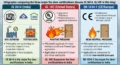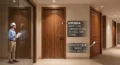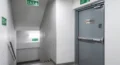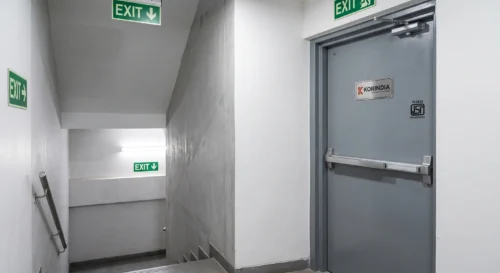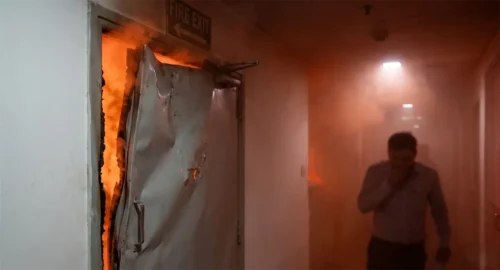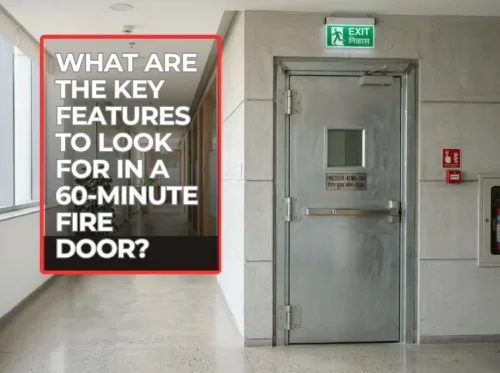
A fire door that has not been tested to a recognised standard is, structurally speaking, just a heavy door. It will not hold a fire compartment for even ten minutes once flame and heat reach the seals, hinges, or frame. This is exactly why IS 3614 standard fire doors exist – and why procurement teams, structural engineers, and QA inspectors across India keep running into three overlapping but very different certification systems: BIS (India), UL (United States), and CE (Europe).
If you have ever stared at a supplier’s spec sheet listing “IS 3614, UL 10C, EN 1634” and wondered which one actually matters for your project, you are not alone. This guide breaks down each standard, explains where they overlap and where they don’t, and shows what happens on Indian construction sites when the wrong certification – or no certification at all – ends up on a fire-rated opening.
Key Takeaways
- IS 3614:2021, issued by the Bureau of Indian Standards (BIS), is the only legally recognised product standard for fire doors sold or installed in India.
- Fire doors are now notified under the Steel Doors, Windows, Ventilators and Fittings (Quality Control) Order, so BIS licensing and the ISI mark are compulsory, not optional.
- UL 10C (USA) and EN 1634-1 (Europe/CE) use different furnace pressure conditions and are not interchangeable with IS 3614 – a UL-listed door does not automatically satisfy an Indian fire NOC.
- A door without a valid CBRI Roorkee or NABL-accredited test report can lead to a rejected fire NOC, a blocked occupancy certificate, and a denied fire-insurance claim after a loss.
- KORINDIA doorsets are tested as a complete assembly – leaf, frame, seals, and hardware together – with documentation available for every fire NOC submission.
What Is IS 3614 and Why Is It the Law of the Land for Fire Doors in India?
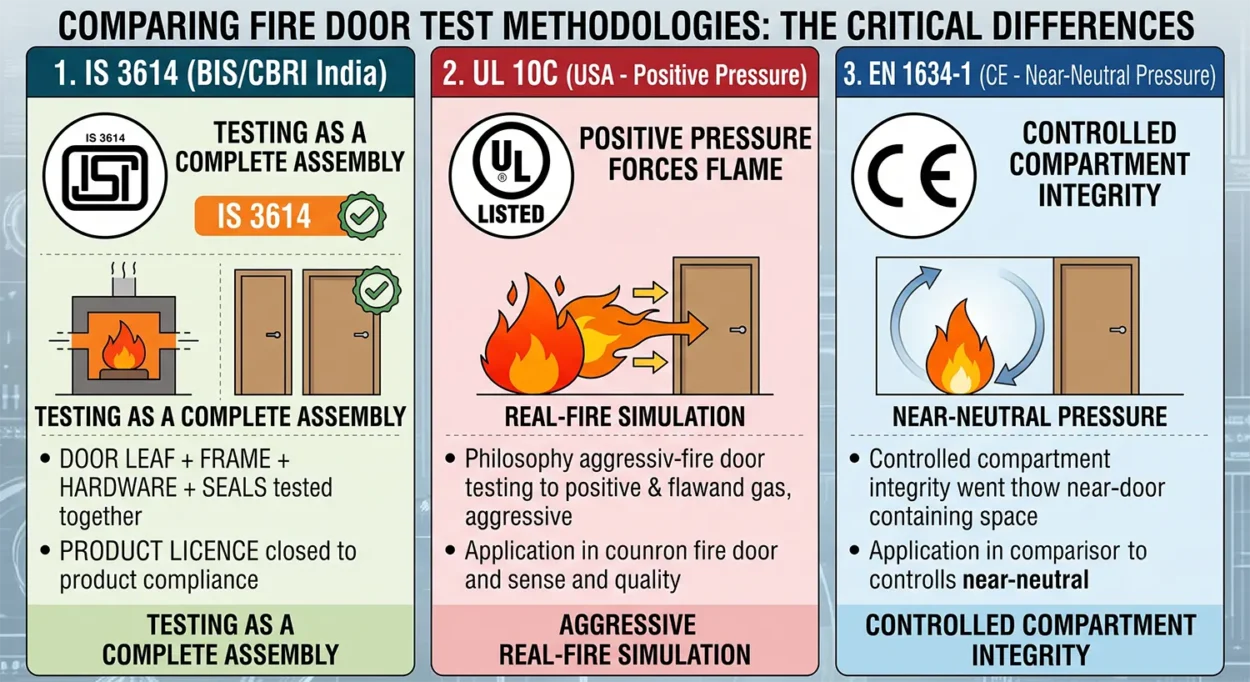
IS 3614:2021, titled Fire Doors and Doorsets – Specification, is the Bureau of Indian Standards document that governs materials, construction, intumescent and smoke seals, fire-rated hardware, automatic closing devices, and fire resistance performance for every fire door sold in India. The standard evaluates the complete doorset as an integrated assembly, meaning the door leaf, frame, hinges, latches, closing devices, and seals are all tested together rather than as separate parts.
This isn’t a voluntary quality mark anymore. Fire doors have been brought under the Steel Doors, Windows, Ventilators and Fittings (Quality Control) Order, making BIS certification and the ISI mark mandatory for any fire door manufactured or imported for sale in India, with non-compliance punishable under the BIS Act. That single regulatory shift changed fire door procurement from a “nice to have a report” conversation into a “no report, no legal sale” conversation.
IS 3614:2021 defines five fire resistance ratings, from FD30 up to FD180, and mandates that every certified door carry both the ISI mark and its fire rating label. If you’re a QA inspector reviewing a door schedule, the rating designation and the physical label on the hinge edge are your fastest first checks.
It’s worth noting the code landscape keeps moving. Recent updates around IS 3614:2023 and the newer National Building Construction Standards have tightened insulation requirements, requiring every shutter, frame, hardware set, seal, and closer to be certified together as one assembly from a single manufacturer – site-mixed combinations are explicitly no longer treated as a valid fire door. Engineers specifying doors today should confirm which revision their local fire authority is currently enforcing before finalising a BOQ.
BIS ISI Mark vs CBRI Test Report – Why You Need Both
This is where a lot of confusion sets in on Indian projects, and it’s a fair question for any QA inspector to ask: isn’t the ISI mark enough?
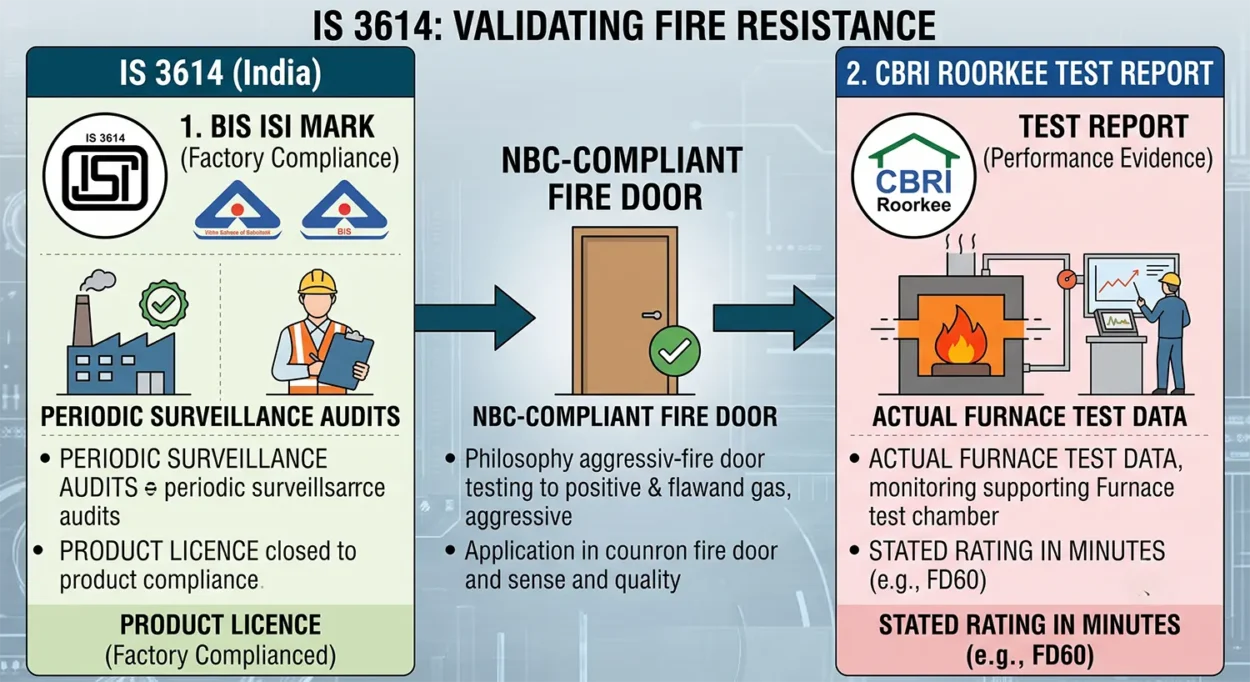
Not on its own. The BIS ISI mark confirms the manufacturer holds a valid product licence and is subject to periodic factory surveillance audits. The CBRI (Central Building Research Institute), Roorkee test report is the underlying fire-resistance evidence – the actual furnace test data that proves the doorset held integrity and insulation for its stated rating. CBRI Roorkee is treated as the benchmark government-approved laboratory for fire door testing, and a door is only considered NBC-compliant once it has been tested there or at an equivalent accredited facility.
Put simply: BIS licenses the factory and the product family; CBRI (or an equivalent NABL-accredited lab) proves the specific design actually survives fire. A genuine fire door should come with a documented paper trail – a test certificate from CBRI Roorkee, NTH, or an NABL-accredited fire-test lab stating the rating in minutes and describing the full tested assembly – plus a permanent label on the leaf itself carrying the manufacturer name, rating, and certificate number. Ask any supplier for both documents. A door with an ISI mark but no traceable CBRI report – or one where the report describes a different hardware configuration than what’s actually being supplied – is a red flag procurement teams should never wave through.
How Does UL Certification Compare to IS 3614?
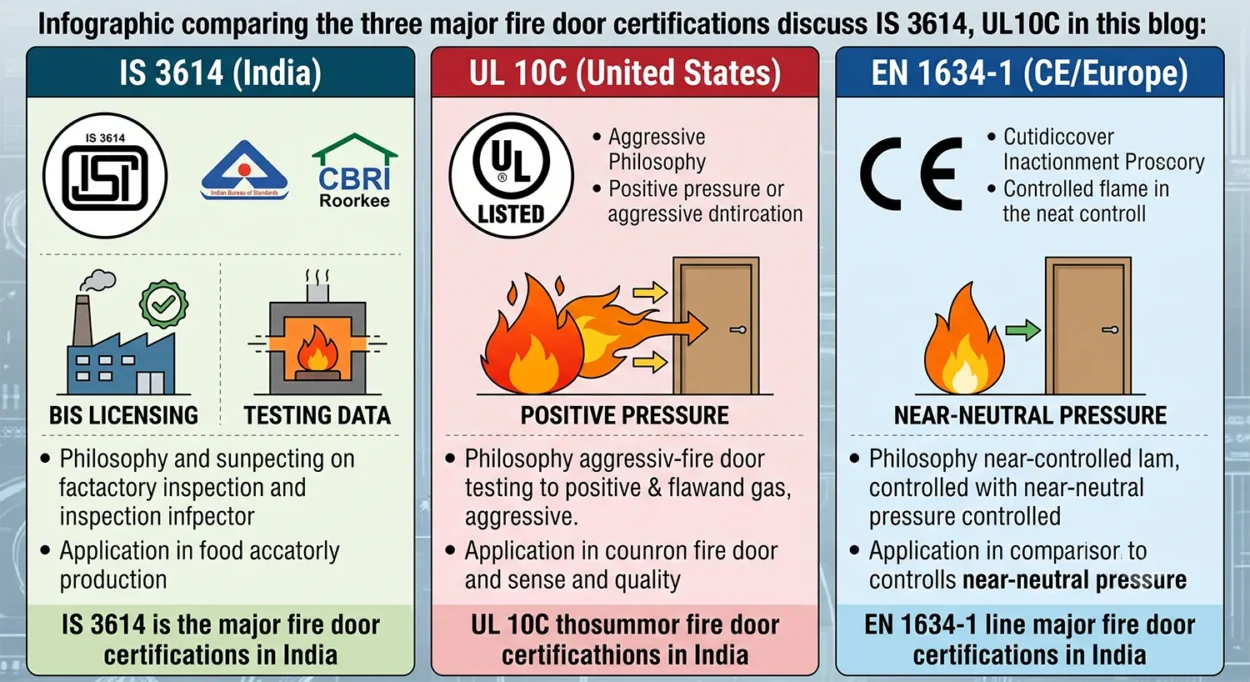
UL 10C, the American testing standard from UL Solutions, is built around a genuinely different fire philosophy than the Indian or European systems. EN 1634-1 emphasises compartment integrity under controlled, near-neutral furnace pressure, while UL 10C tests under positive pressure conditions that push flame and hot gas against the door more aggressively, closer to real fire behaviour.
That difference in test philosophy is exactly why a “UL certified” claim doesn’t automatically transfer to an Indian project. A European test report may not satisfy a fire authority that expects UL documentation, and a UL listing does not automatically substitute for CE-related documentation on a European job – the two systems are not interchangeable certificates. The same logic applies in reverse on Indian sites: a fire NOC officer working off IS 3614 and NBC provisions is looking for a CBRI or BIS-recognised report, not a UL file number. Where UL certified fire doors India claims genuinely matter is on projects with an American design consultant, an international hospitality brand, or a facility explicitly specified to NFPA 80. In those cases, a dual-tested doorset – one carrying both IS 3614 and UL 10C data – gives the specifier flexibility without re-testing. For international projects, dual-certified fire-rated hardware and doorsets are increasingly preferred precisely because they satisfy cross-market documentation requirements.
What About CE Marking – Does It Apply to Indian Projects?
CE marking, governed by EN 1634-1 under Europe’s Construction Products Regulation, works on a declaration-based system rather than a listing-based one. The manufacturer’s engineers design the assembly, have a representative sample tested by a Notified Body, and then declare its performance through a Declaration of Performance – with the manufacturer carrying full legal liability for that declared claim, while the Notified Body validates the test and audits factory production control rather than certifying the design itself.
CE certification for fire door hardware covers conformity with a cluster of EN standards – EN 1935 for hinges, EN 12209 for locks, EN 1154 for closers, EN 1906 for handles, EN 1125 for panic devices, and EN 1303 for cylinders – with the assembly tested under EN 1634 to withstand fire for 30, 60, 90, or 120 minutes depending on rating. For a project physically located in India, CE marking has no statutory standing with a fire NOC authority – it isn’t a substitute for IS 3614 and BIS licensing. It becomes relevant only when Indian-manufactured doors are being exported to Europe, or when a European design consultant on an Indian project wants dual documentation for their own internal compliance records. Treat CE and UL as additional market credentials layered on top of the mandatory IS 3614 base, never as a replacement for it.
The Real Cost of Uncertified Fire Doors on Indian Sites
Here’s the part that should worry every contractor and project manager: an uncertified or misdocumented fire door rarely fails quietly. It fails at the two moments a project can least afford it.
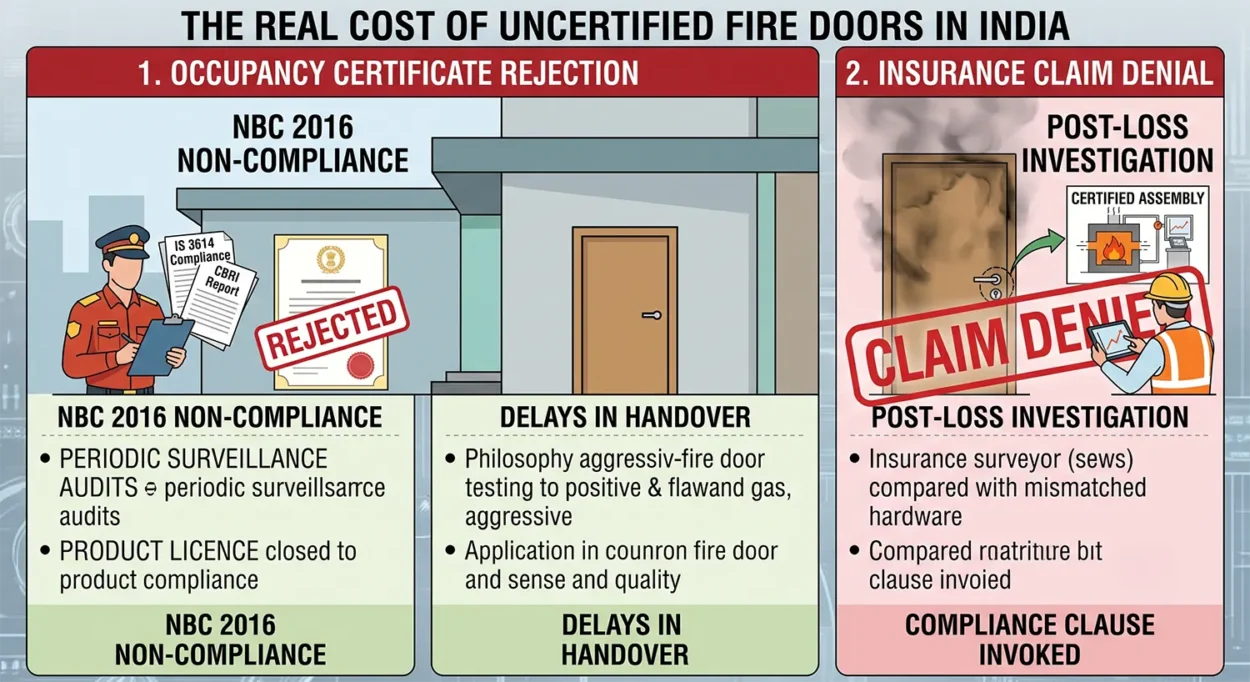
Occupancy certificate rejection. Under the National Building Code, fire doors used in commercial, industrial, and high-rise residential buildings must comply with IS 3614 to obtain fire safety approvals and occupancy certificates. A fire officer reviewing the door schedule against the submitted certificates will flag any mismatch – wrong rating, missing hardware certification, or a doorset assembled on-site from parts that were never tested together – and hold the occupancy certificate until it’s corrected.
Insurance claim denial. This is the consequence contractors underestimate most. If a fire event occurs and the insurer’s post-loss investigation finds the “fire door” installed was never actually tested as the assembly the certificate describes – mismatched hardware, an unlisted hinge, a site-substituted seal – the policy’s compliance clause can be invoked to deny the claim entirely, leaving the building owner exposed for structural and liability losses that could have run into crores.
Rework and delay cost. Turning up to an inspection with the wrong certification system for the market – for instance, only EN 1634-1 documents where UL 10C is expected – typically means spending significant time translating requirements, both technically and administratively, rather than closing the inspection. On a live construction schedule, that translation time is measured in weeks, not hours. Newer code frameworks are also shifting personal liability toward the specifier: drawings approved with non-compliant fire doors can expose the signing engineer to direct responsibility if a fire incident occurs. That single clause should change how every structural consultant reviews a fire door submittal.
BIS vs UL vs CE: A Quick Comparison for Specifiers
| IS 3614 (BIS/CBRI) | UL 10C | EN 1634-1 (CE) | |
| Governing body | Bureau of Indian Standards | UL Solutions (USA) | Notified Bodies under EU CPR |
| Test pressure | Furnace test per IS protocol, CBRI/NABL labs | Positive pressure, real-fire simulation | Near-neutral, controlled compartment conditions |
| Legal status in India | Mandatory – statutory under BIS Act & QCO | Not statutory; supplementary only | Not statutory; supplementary only |
| Typical ratings | FD30 to FD180 | Up to 3 hours | EI 30 to EI 240 |
| Who accepts it | Indian fire NOC authorities, AHJs | US/Canadian fire marshals, NFPA 80 projects | EU building control, EEA specifiers |
| Certification model | Product licence + factory audit + furnace test | Product listing, file-number verifiable | Manufacturer’s Declaration of Performance |
How KORINDIA Tests and Documents Every Fire Door
We get asked the same question on almost every project call: “How do we know your doors are genuinely certified, not just built to a spec sheet that mentions IS 3614?”
Fair question, and here’s our answer in practice, not marketing language:
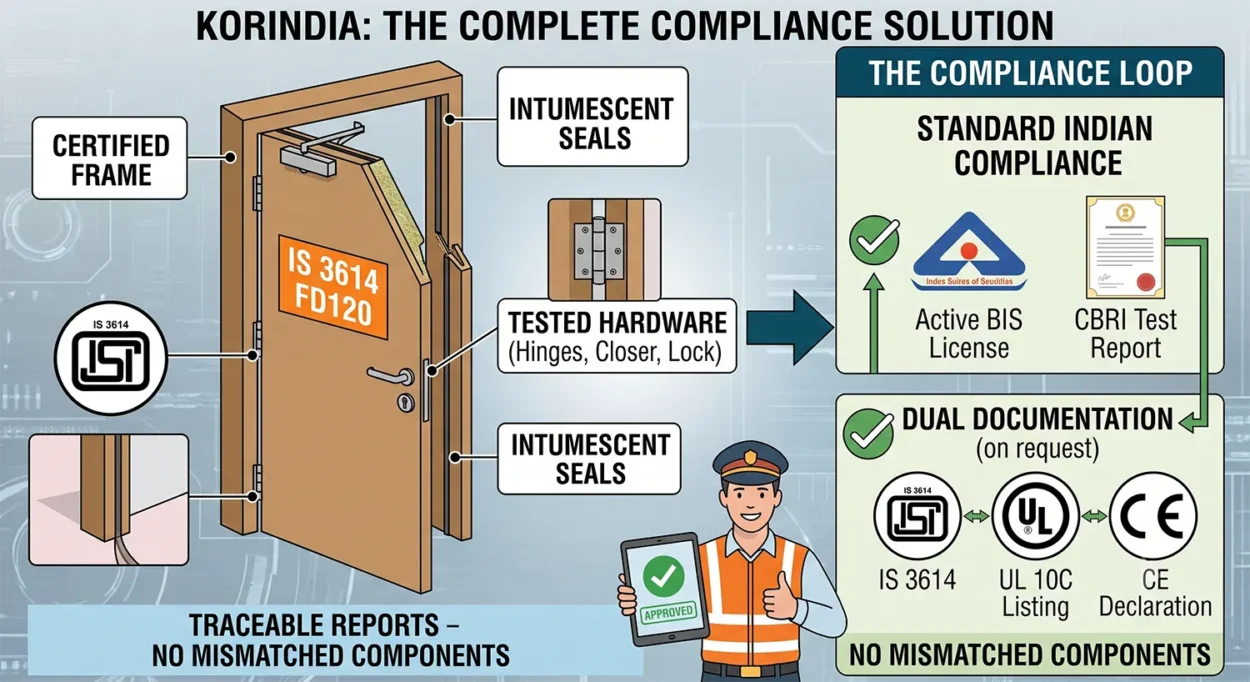
- We test the whole doorset, not the leaf alone. Every KORINDIA fire door is furnace-tested with its actual frame, hinges, intumescent seals, and closing hardware – the exact combination that ships to your site. Swap any component after the test and the rating is void; we don’t let that happen on our end.
- We hold an active BIS licence under IS 3614, subject to the Bureau’s periodic surveillance audits, and every unit leaving our factory carries the ISI mark and a permanent rating label on the hinge edge.
- Our test reports are traceable, not just referenced. When you request documentation for a fire NOC submission, you get the CBRI or NABL-accredited lab report, the certificate serial number, and the BIS licence details – the same paper trail a fire officer or insurance surveyor will ask for.
- We provide dual documentation on request for projects that need UL or CE reference alongside IS 3614, so international consultants and Indian fire authorities are both satisfied without redesign.
If your last fire door supplier handed you a spec sheet with no serial number, no lab name, and a rating claim you couldn’t independently verify – that’s precisely the gap we built our QA process to close.
A Procurement Checklist Before You Sign the Purchase Order
Before any fire door line item gets approved, run it through this:
- Ask for the BIS licence number and cross-check it against the manufacturer name on the quotation.
- Request the CBRI/NABL test report and confirm the tested assembly matches what’s actually being quoted – leaf thickness, hinge model, seal type, closer model.
- Check the rating label matches the door schedule, not just the brochure.
- Confirm hardware is certified within the same assembly, not sourced separately and bolted on later.
- For export or dual-market projects, ask specifically whether UL or CE documentation exists, and for which exact configuration.
- Keep the documentation on file for the life of the building – insurers and fire NOC renewals will ask for it again.
Isn’t it worth an extra day of document verification against the cost of a rejected occupancy certificate six months into handover? Most project managers who’ve been through it once never skip this step again.
Frequently Asked Questions
IS 3614:2021 is the Bureau of Indian Standards specification for fire doors and doorsets. It is mandatory – fire doors fall under a Quality Control Order, meaning BIS licensing and the ISI mark are legally required for manufacture, import, or sale in India, with penalties for non-compliance under the BIS Act.
Not by itself. Indian fire authorities work from IS 3614 and CBRI/BIS documentation. A UL 10C listing can supplement a submission for international consultants but does not replace the mandatory Indian certification for statutory approval.
BIS certification licenses the manufacturer’s factory and product line under periodic audit. The CBRI Roorkee report is the actual furnace test evidence proving a specific doorset design achieved its stated fire rating in minutes.
Yes. If a fire loss investigation finds the installed door doesn’t match its certified assembly – different hardware, an unlisted hinge, or a site-modified seal – insurers can invoke compliance clauses to deny the claim, even if the building otherwise had a valid fire NOC.
CBRI test certificates are typically valid for three years, with annual surveillance audits from BIS and, in many states, additional inspection cycles required by local fire authorities.
Final Word
Certification jargon aside, the underlying question for any procurement manager, architect, or QA inspector is simple: can you prove, on paper and under a furnace test, that this exact door will hold for its rated minutes? IS 3614 gives India a mandatory, legally enforceable answer to that question. UL and CE remain valuable for international projects but were never designed to substitute for it. KORINDIA builds every doorset to be defensible in front of a fire officer, an insurance surveyor, or an audit – not just a spec sheet.
If you’re finalising a door schedule and want to verify what “certified” should actually look like on paper, Talk to KORINDIA’s technical team before you place the order, not after the inspection.